












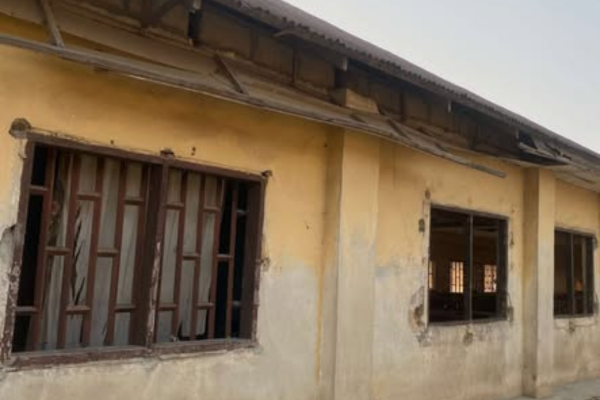
been more difficult to ignore. At Community Comprehensive Secondary School,
Four Towns, Uyo a public secondary school located steps away from the
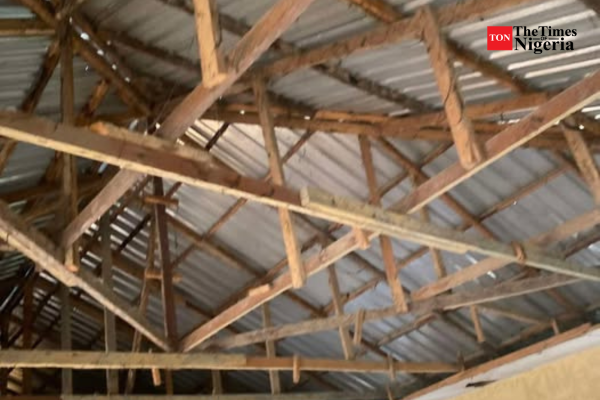
Akwa Ibom State Secretariat in the heart of the state capital roofs are caving in,
walls are crumbling, and classrooms that should be full of learning are barely
standing. This is not happening in a forgotten rural community. It is happening in
plain sight, at the center of government.
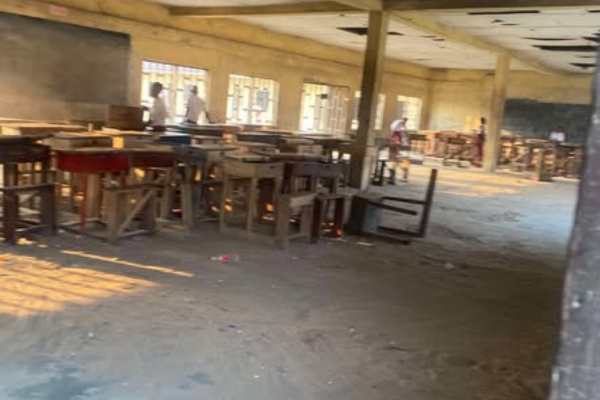
The dilapidated condition of this school is a stark and painful example of the
crisis facing public education across the state a state that has received
trillions of naira in revenue over the past few years. Despite
being one of Nigeria’s most oil-rich states, with vast federal allocations and
substantial budgetary inflows, many public school facilities remain in severe
disrepair, lacking the basic infrastructure children need to learn, grow, and thrive.
Akwa Ibom State operates hundreds of public schools, with 244 secondary
schools currently under government oversight. Yet despite this wide
network, concerns about the physical condition of these institutions continue to
mount. Parents, community leaders, civil society organizations, and education
stakeholders have repeatedly raised alarms calling for urgent renovation,
functional classrooms, equipped laboratories, and better teacher deployment across
the board.
The calls have largely gone unanswered. And the buildings keep crumbling.
While there have been isolated interventions most notably a classroom block
renovation carried out by Keystone Bank at this very same
Community Comprehensive Secondary School such efforts remain limited in scope
and do not come close to addressing the widespread, systemic decay affecting the
entire public education system. Corporate goodwill, however welcome, is not a
substitute for government responsibility.
This is part of a broader pattern we have documented across the state.
Read our earlier report on the state of education funding in Akwa Ibom
to understand how deep this crisis runs.
“The deplorable state of this school is not just an education issue it is a
human rights issue. Children deserve safe and functional learning environments,
especially in a state that has received over ₦2.53 trillion in the last 32 months.”
Inibeghe Effiong
, Human Rights Activist & Lawyer
Effiong’s words carry the full weight of legal and moral authority. Nigeria is a
signatory to the United Nations Convention on the Rights of the Child,
which guarantees every child the right to quality education within a safe and
functional environment. The
UNICEF Nigeria education framework
equally recognizes infrastructure as a core pillar of educational access and quality.
When a school located steps from the State Secretariat looks like this, those
international commitments ring completely hollow.
The contrast is impossible to ignore. Akwa Ibom State has received over
₦2.53 trillion in revenue across the last 32 months alone. That
is a figure large enough to comprehensively renovate every single one of the state’s
244 public secondary schools and still have funds remaining. Yet the money has
not found its way into these classrooms.
What makes this even harder to stomach is the mounting evidence of public funds
being channeled toward expensive vehicle acquisitions and other expenditures for
political elites while schoolchildren sit in classrooms with collapsed roofs
and broken walls. The public school infrastructure crisis in Akwa Ibom is not a
resource problem. It is a priority problem. And that distinction matters enormously
when lives and futures are at stake.
This report makes one thing clear: comprehensive reform of public school
infrastructure across Akwa Ibom State is no longer optional it is overdue.
Citizens and policymakers must work together, with genuine urgency and full
transparency, to ensure that the state’s substantial revenue flows directly into
quality education for every child, regardless of where they live or what their
parents earn.
The children sitting inside Community Comprehensive Secondary School today cannot
wait for another budget cycle, another promise, or another ribbon-cutting ceremony
on a project that never materializes. They are in those classrooms right now.
They deserve safe walls, functional roofs, proper desks, equipped labs, and teachers
who are supported and fairly deployed. They deserve what every child in every
private school in Uyo takes for granted.
They deserve better. And the government of Akwa Ibom State has both the resources
and the responsibility to deliver it.