






















Kano teenagers drowned fleeing phone snatchers
It was supposed to be an ordinary afternoon. Two young men, full of life, dreams,and the quiet anxieties thacome with growing up in an increasingly unsafe city, spent their final hours together talking about life, about the future,and about the rising insecurity on Kano’s streets.
Neither of them could have imagined that those would be their last hours.
A friend who was with them later recalled spending time with Sadiq and Auwal Isyaku that day, engaging in deep conversations about life and the dangers lurking around their community conversations that, in the cruelest
twist of fate, seemed to foreshadow the tragedy that was only hours away.
The Incident That Shook Kumbotso
On the afternoon of Monday, March 6, 2026, around 4:04 PM, two 18-year-old brothers
Sadiq Isyaku and Auwal Isyaku were at Ring Road, Kureken Sani, in the Kumbotso Local
Government Area of Kano State, when they were allegedly pursued by suspected phone
snatchers.
In a desperate attempt to flee their attackers and preserve their safety, the two brothers ran and in that frantic, terrifying dash, they fell into an open water body nearby.
A distress call was placed to emergency services by one Muhammed Abba, who reported
seeing two bodies floating in the open water.
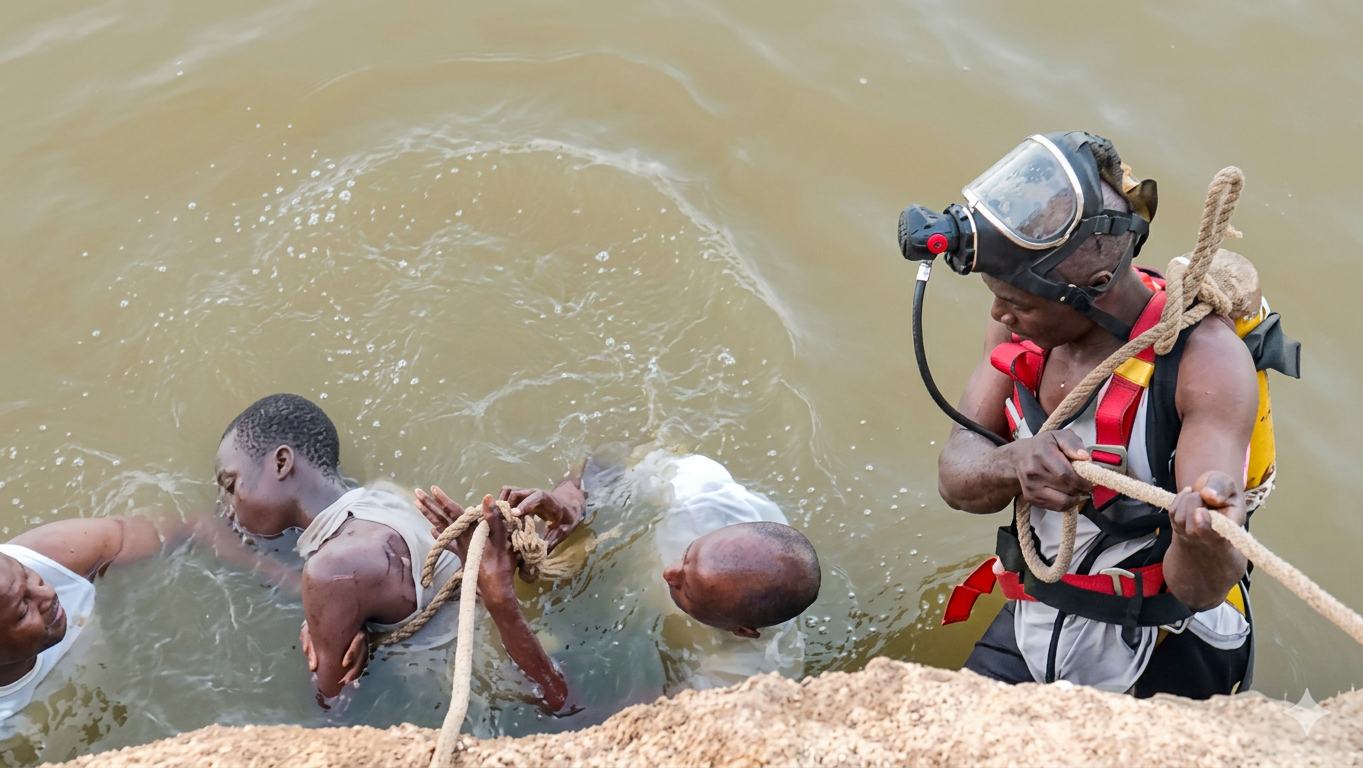
The Kano State Fire Service swiftly mobilised a rescue team from their headquarters to the scene.
Upon arrival, responders worked quickly to pull the brothers from the water, but both were recovere unconscious.
Despite all efforts, they were later confirmed dead.
Their bodies were subsequently handed over to their grieving father, Ibrahim Shehu, a resident of Unguwa Uku Quarters in Kano.
“In the process of trying to save themselves, they accidentally fell into the pond.”
Alhaji Sani Anas, Director, Kano State Fire Service
A Community in Mourning
The news of the boys’ deaths sent shockwaves through the Kumbotso community and
beyond.
Neighbours, classmates, and social media users across Nigeria expressed profound grief and outrage.
What made the tragedy even more heart-wrenching was the account shared by a close friend that just hours before their deaths, the boys had sat together discussing the very insecurity that would claim their lives.
The irony was not lost on anyone: two young men, aware of the dangers around them, taken by those very dangers before the sun had fully set.
For the family of Ibrahim Shehu, no words can capture the magnitude of losing two
sons in a single evening both gone, both 18, both with their entire lives still ahead of them.
Fire Service Praised for Swift Response
The Kano State Fire Service, through its Public Relations Officer Saminu Yusuf Abdullahi, confirmed the incident and commended the professionalism and speed of its rescue team.
Despite the tragic outcome, the agency noted that emergency responders arrived at the scene promptly after receiving the distress call.
The Fire Service also extended its condolences and provided support to the victims’father.
Officials further appealed to members of the public to take precautionary measures around open water bodies and to keep children and young people away from such hazards.
Kano’s Long Battle with Phone Snatching
The deaths of Sadiq and Auwal are not isolated in a vacuum they represent the latest chapter in Kano’s long, painful struggle with phone snatching and street crime.
Over the past few years, the menace has claimed lives, maimed residents, and terrorised communities across Kano’s metropolitan areas.
Hotspots like Dorayi, Sheka, Zango, Fagge, and Kofar Mata have repeatedly featured in reports of violent robbery, with attackers frequently wielding knives and other sharp objects.
In response to mounting public pressure, the Kano State Government deployed 380 specially trained Anti-Phone Snatching Marshals in October 2025 part of a broader plan to eventually field 600 operatives across the state under the Special Anti-Phone Snatching and VIP Protection Guards.
The marshals underwent two weeks of paramilitary training covering surveillance, self-defence, community policing, and defensive driving.
Governor Abba Yusuf’s administration framed the initiative as a decisive step toward reclaiming Kano’s streets from criminal elements.
Security agencies also intensified operations on their end.
The Kano State Police Command’s “Operation Kukan Kura” led to the arrest of over 3,000 suspects in 2025 alone, with the Commissioner of Police declaring at year’s end that phone snatching and thuggery were “gradually becoming a thing of the past.”
Yet the deaths of two teenagers in the very first weeks of 2026 serve as a sobering reminder that criminality continues to endanger innocent lives on Kano’s streets.
A Wake-Up Call for Lasting Solutions
The tragedy of Sadiq and Auwal is more than a news story it is a mirror held up to a society still struggling to guarantee the safety of its youngest members.
These were not soldiers or law enforcement officers.
They were teenagers, walking home, trying to live ordinary lives in a city where that simple act has become
dangerously complicated.
For many residents and analysts, the recurring nature of these tragedies points to the need for more structural intervention: better lighting and safety barriersnear open water bodies, stronger community policing initiatives, faster judicialaction against apprehended suspects, and sustained efforts to address the root causes of youth crime poverty, unemployment, and lack of opportunity.
As Kano mourns two bright young lives lost to a moment of panic and danger, the
urgent question now is whether this loss will serve as a turning point or yet another tragedy quietly buried beneath the next news cycle.
Sadiq and Auwal Isyaku deserved better. So does every resident of Kano.