



















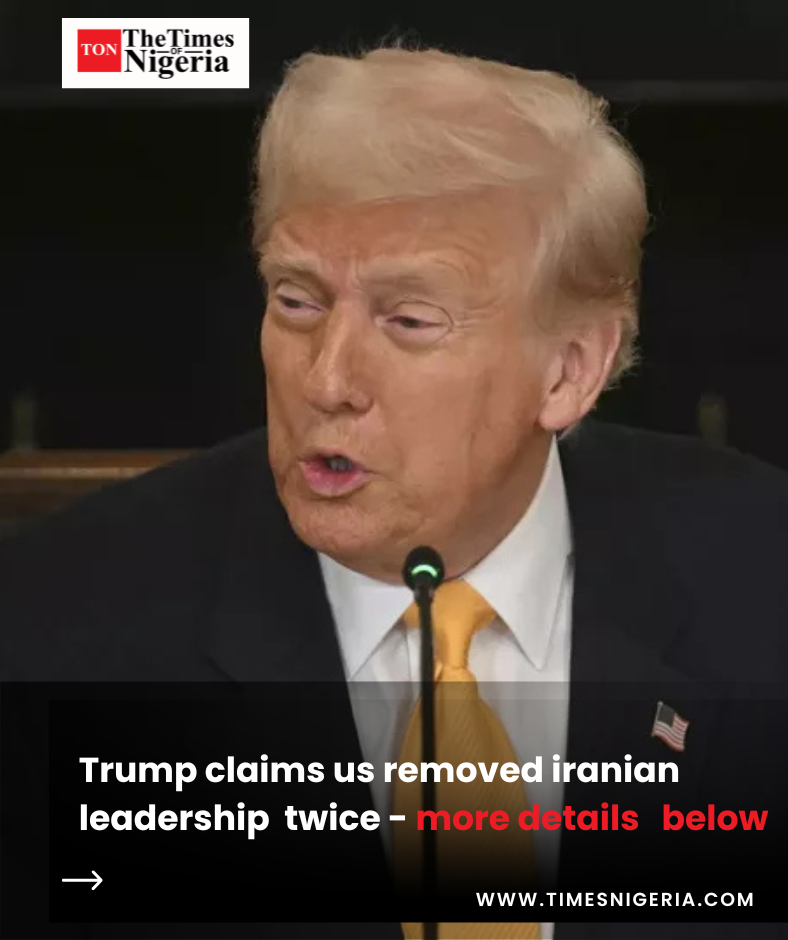
Trump Claims US Removed Iranian Leadership Twice
In a statement that has since sparked widespread debate, President Donald Trump declared on Wednesday, March 11,
that the United States has successfully removed Iran’s leadership on two separate occasions.
The remarks were made during a visit to Thermo Fisher Scientific in Cincinnati, Ohio, where Trump was touring the facility alongside Ohio Governor Mike DeWine and company CEO Marc Casper as part of a broader push to highlight American manufacturing and job growth.
While addressing reporters and onlookers about the ongoing US military operations in the Middle East,
Trump offered a confident and controversial assessment of the situation on the ground.
He described the conflict as moving faster than anyone anticipated, calling it “way ahead of schedule.”
He went on to boast that US forces had knocked out most of Iran’s military infrastructure, including its command structure, not just once, but twice.
“We’ve removed their leadership twice, and now they’ve come up with a new group. Let’s see what happens to them.”
The Context Behind the Claim
Trump’s remarks came on the heels of a broader military campaign against Iran dubbed “Operation Epic Fury”
which began on February 28, 2026, when the US and Israel launched a coordinated air assault targeting
Iran’s military infrastructure, nuclear facilities, and top leadership.
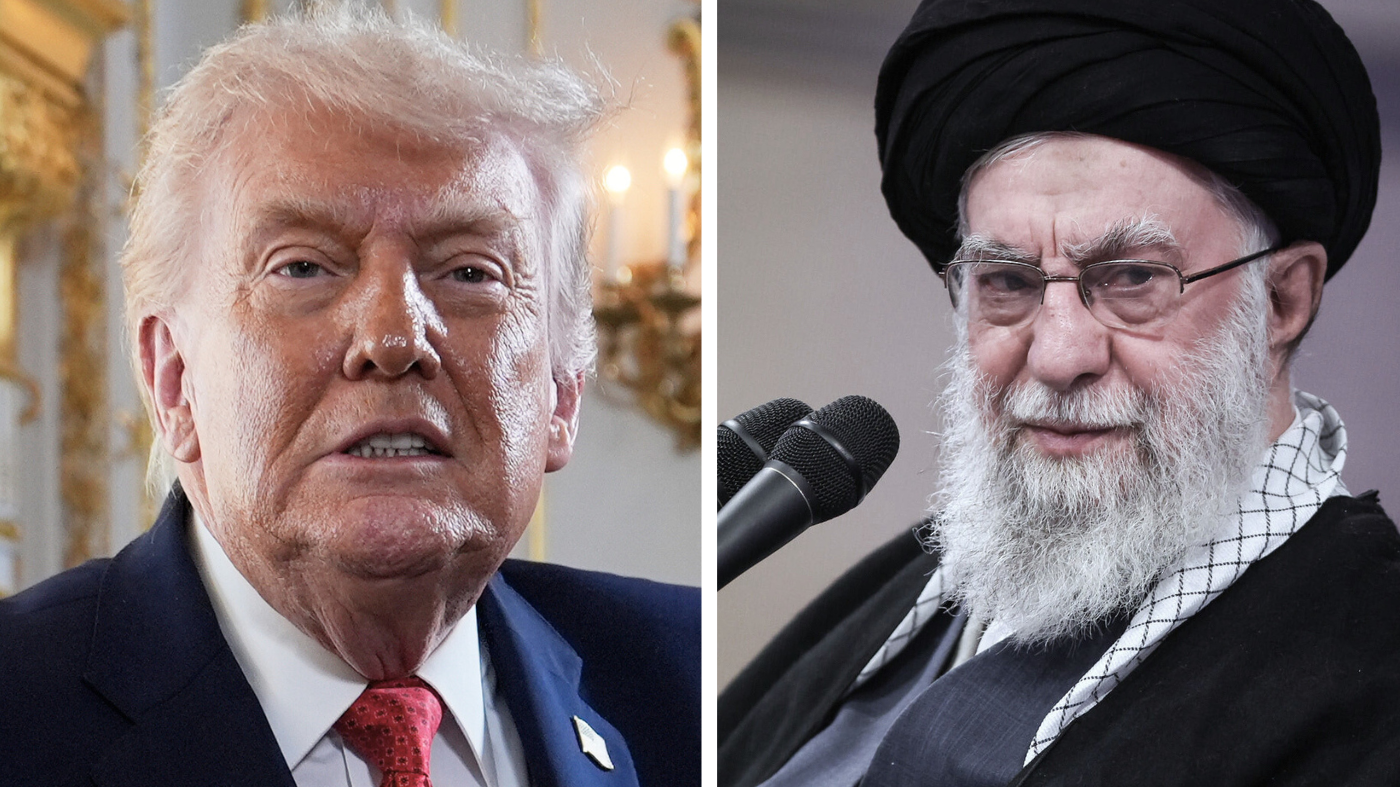
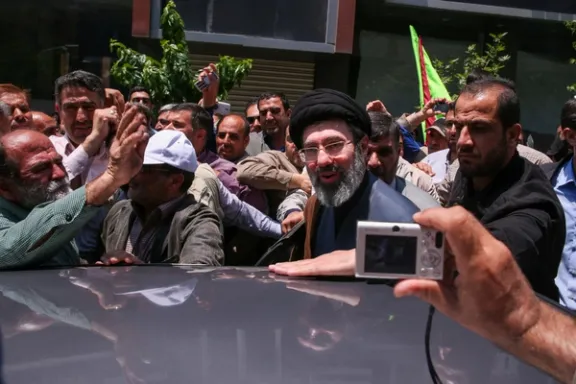
Among those killed in the early strikes was Supreme Leader Ayatollah Ali Khamenei, whose son Mojtaba Khamenei has since assumed leadership of the Islamic Republic.
Israel wasted no time warning that the new supreme leader could also become a target if the current regime remained in power.
By “twice,” Trump appeared to be referencing two waves of leadership elimination one during strikes earlier
in his second term in mid-2025 that degraded Iran’s military command, and the more recent February 2026 campaign
which killed Khamenei and dozens of senior Iranian officials, including the commander of the Islamic Revolutionary Guard Corps and the country’s defense minister.
Trump’s claims, however, have not gone unchallenged.
Fact-Checkers Weigh In
CNN and other outlets have been quick to scrutinize the president’s statements, noting several contradictions
in his broader narrative.
At different points in his Ohio address, Trump asserted that US forces had completely wiped out every Iranian military asset, yet in the same breath acknowledged that only “most” not all of Iran’s naval power had been eliminated.
He cited a 90% reduction in Iranian missile launchers and an 83% decline in drone launchers, though independent verification of those figures remains unavailable. Critics pointed out that these numbers don’t add up to the “total wipeout” Trump had implied.
Meanwhile, PBS News reported that fact-checkers found other Trump claims from the same period including
statements about nuclear deals and Iran’s weapons rights to be demonstrably false.
The broader concern is that the president’s fluid description of the conflict, alternately calling it an “excursion,” a “field trip,” and a full-scale war, has left both the public and international observers confused about the true scope and objectives of the mission.
Reactions and Mixed Opinions
Predictably, Trump’s comments have ignited a storm of reactions across the political spectrum.
Supporters cheered the declarations as evidence of American strength and decisive leadership, with some Republicans rallying behind the president’s confident tone.
Senator John Fetterman, notably one of the few Democrats to publicly back the strikes, defended the military campaign as a necessary response to a regime he described as a serious threat to regional and global stability.
On the other side, the Democratic National Committee was sharp in its condemnation.
DNC Chairman Ken Martin accused the president of prioritizing his own ego over the safety of American service members abroad and the financial wellbeing of families at home, citing rising gas prices now averaging $3.58 per gallon nationally, up from below $3 just weeks prior as a direct consequence of the conflict and its disruption to Strait of Hormuz oil traffic.
International observers have also raised alarms.
The International Energy Agency announced the release of 400 million barrels from strategic stockpiles to offset oil shortages after shipments through the Strait of Hormuz came to a near-complete halt.
Oil prices breached $100 per barrel for the first time in four years, rattling global energy markets.
What Comes Next?
Despite the bold declarations, the war is far from over. Iran has continued launching retaliatory
strikes against US military positions across the Gulf region, including air bases in Saudi Arabia,
Qatar, Kuwait, and Iraq.
US Central Command confirmed it is systematically dismantling Iranian air capabilities, while Defense Secretary Pete Hegseth insisted the Iranian military is “badly losing.”
Yet the emergence of new Iranian leadership and continued missile activity suggest that the conflict is entering a complex new phase.
Whether Trump’s claim of removing Iran’s leadership twice proves to be a turning point or a premature declaration remains to be seen.
What is clear is that the ripple effects economic, geopolitical, and humanitarian are only beginning to unfold on the world stage.