




















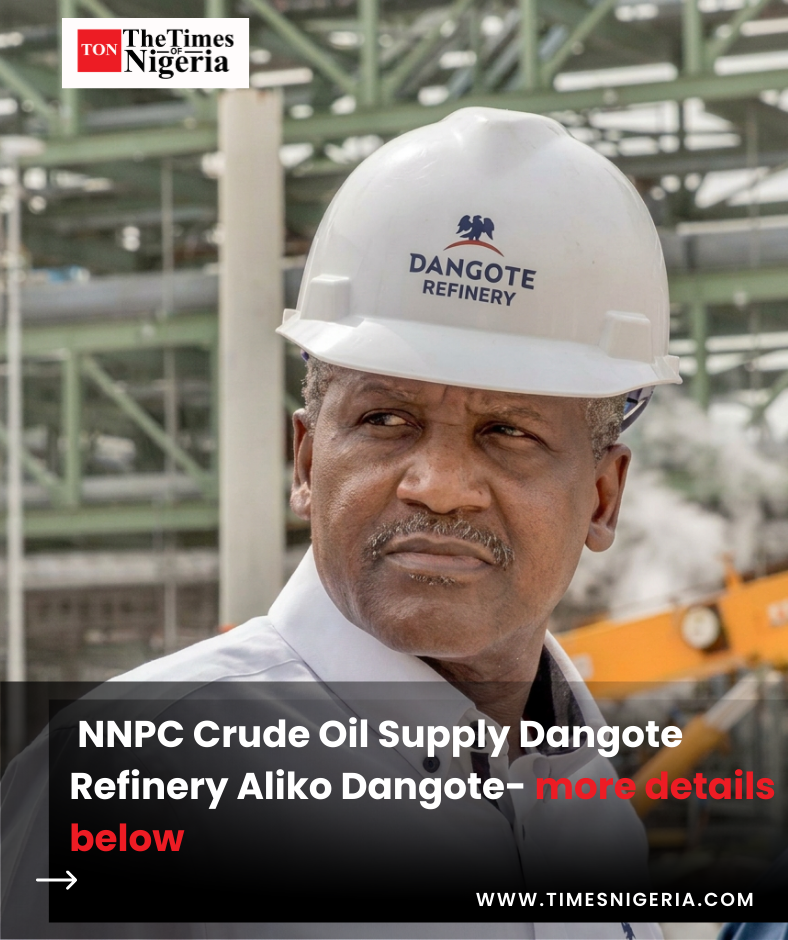
NNPC crude oil supply Dangote refinery
Nigeria’s NNPC Ltd has launched fresh talks with international and local oil producers to ramp up crude output even as rising tensions around the Strait of Hormuz send shockwaves through global energy markets.
The Supply Squeeze at Dangote
At the heart of Nigeria’s current energy pressure is the Dangote Petroleum
Refinery Africa’s largest single-train refinery, with a nameplate capacityof 650,000 barrels per day (bpd).
The $20 billion Lekki-based facility has become central to Nigeria’s energy security agenda, but it is operating under severe feedstock strain.
Under the naira for crude arrangement, the refinery is entitled to roughly13 to 14 crude cargoes per month from NNPC.
In reality, it has been receiving just five less than half of its requirement.
To bridge this gap, Dangote has had to source additional crude from international traders at market prices,
adding significant cost pressure to its operations.
Despite the strain, the refinery’s chief executive David Bird confirmed that the facility is currently running at full 650,000 bpd capacity and reaffirmed its commitment to supplying the domestic market first provided NNPC sustains its access to Nigerian crude.
NNPC Moves to Close the Gap
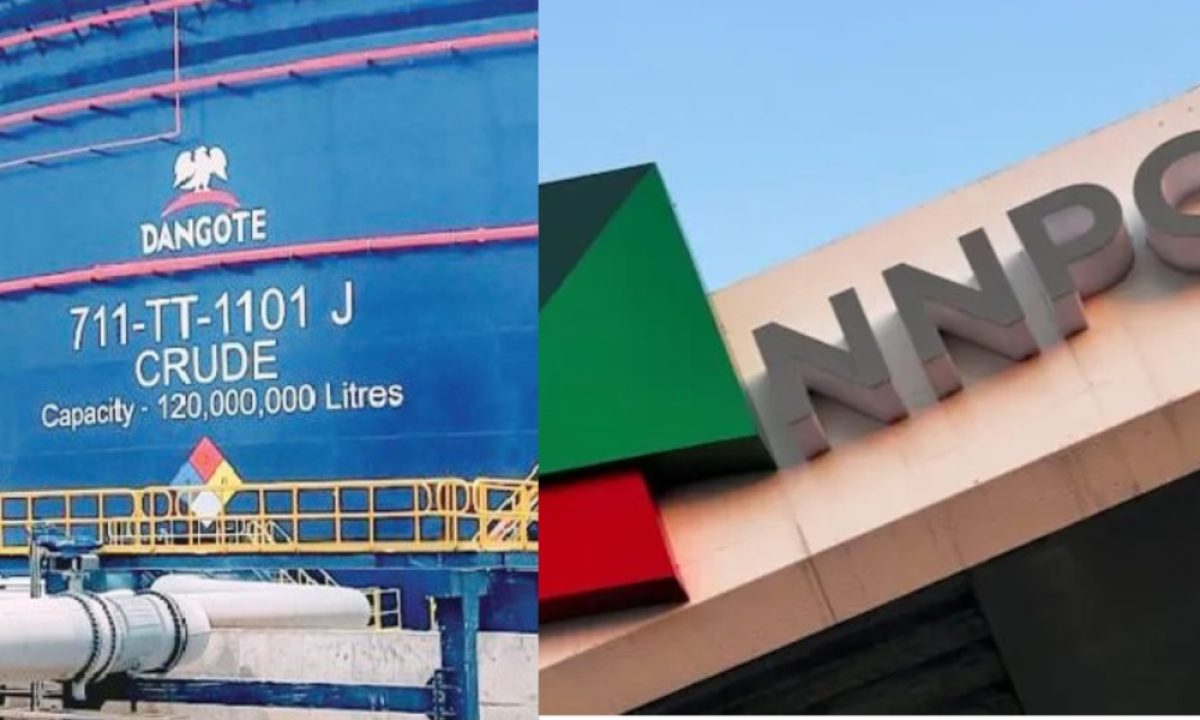
In response, the Federal Government through NNPC has begun leveraging its global crude trading network to source third-party crude for the refinery at competitive international rates.
The company has also confirmed it is in active discussions with both local and international producers to boost output.
Key production figures paint an encouraging picture.
NNPC reported crude oil and condensate output of:
Jan 2026: 1.64M bpd
Dec 2025: 1.55M bpd
Target: 2M bpd within 2 years
Long-term: 3M bpd by 2030
Supporting this push is Nigeria’s newly unveiled Cawthorne crude grade a light, sweet blend comparable to Bonny Light set to begin export in the third week of March 2026.
The launch is expected to lift national output to approximately 1.7 million bpd.
NNPC is also targeting $30 billion in new upstream investment by 2030.
Hormuz Crisis Adds a Dangerous Dimension
While Nigeria navigates its internal supply challenges, a geopolitical shock has sent global energy markets into turmoil.
Since late February 2026, the Strait of Hormuz the narrow waterway through which approximately 20% of the
world’s daily oil and gas supply flows has been effectively shut down.
Following military strikes that resulted in the killing of Iran’s Supreme
Leader, the Islamic Revolutionary Guard Corps (IRGC) declared the strait closed, threatening any vessel linked to the US, Israel, or their allies.
Several tankers have been struck, shipping insurance suspended, and major lines including Maersk and CMA CGM have halted transits entirely.
The IEA coordinated the largest emergency reserve release in history, with G7 nations agreeing to release
400 million barrels to cushion the shock.
What This Means for Nigeria
For Nigeria, the Hormuz crisis is a double edged sword.
Higher global oil prices could boost government revenue, but the disruption simultaneously drives up the cost of internationally sourced crude squeezing the very supply chains that Dangote depends on for feedstock from global traders.
Industry experts have cautioned that unless the naira-for-crude policy is fully implemented and domestic crude supply to the Dangote Refinery is substantially increased, Nigerian consumers will continue to absorb the shocks of global price volatility at the pump.
NNPC’s ongoing discussions with producers locally and globally are therefore not merely strategic ambition.
They are an urgent, time sensitive response to a rapidly deteriorating global energy environment.
The coming weeks will determine whether Nigeria can insulate its citizens from the worst of the storm or whether pump prices climb even further.