




















Nigeria electricity crisis
Across Nigeria’s vast northern belt and into its crowded southern cities, a familiar but
worsening reality has settled in darkness, heat, and the quiet desperation of people whose daily lives depend on electricity they simply cannot get.
This is not a temporary inconvenience.
It is a full blown national emergency one built over decades, and now cracking open under the pressure of a blistering 2026 heatwave.
Life on Less Than an Hour of Power
In Kano’s Unguwa Uku and Hotoro Dan Marke neighbourhoods, residents describe receiving electricity for no more than an hour a day and even that meagre window often arrives deep in the night when it is least useful.
Across Sokoto, the picture is even bleaker, with many communities reporting complete darkness for days at a stretch.
Kaduna,Katsina, Jigawa, Gombe, Zamfara the list of affected states reads like a roll call of abandonment.
In total, 17 of Nigeria’s 19 northern states have been engulfed by extended blackouts, leaving residents and businesses to improvise or simply go without.
The consequences are immediate and visceral.
Students crowd into eateries and radio stations to charge laptops and phones, paying between ₦100 and ₦500 for the privilege.
Cold store owners watch meat, fish and vegetables spoil. Barbers, welders and tailors sit idle.
Hospitals that once treated power outages as a minor inconvenience now run almost entirely on diesel generators when they can afford the fuel.
In Bauchi, local radio stations have scaled broadcasts back to news bulletins only, unable to sustain
normal programming without reliable electricity.
“We hardly get electricity for more than one hour.
Sometimes it comes late at night, which does us little good.”
Ahmad Ibrahim
Resident Kano
“I cannot count the houses that have switched to solar.
Many people have simply given up on public electricity.”
Habibu Abdullahi
Resident ·
Kano
“I’ve lost tens of thousands of naira in spoiled stock. Cold storage is useless without power.”
Sylvester Agbu
Cold Store Owner ·
Northern Nigeria
“Without power, my electric motorcycle is useless. I can’t charge it and it’s killing my income.”
Kabiru Ahmed
E Bike Rider
Kano
A Grid That Keeps Collapsing
The technical data behind the human suffering is staggering.
On January 23, 2026, all eleven distribution companies from Abuja and Ikeja to Kano, Kaduna, Enugu and Yola
simultaneously recorded zero load allocation as the national grid collapsed completely.
Power generation plunged from over 4,500 megawatts to as little as 24 megawatts within minutes, with every single one of the 23 connected generation plants losing output.
Four days later, the grid collapsed again.
That marked the second total failure within a single week a sobering milestone even by Nigeria’s grim standards.
These collapses do not occur in isolation.
Since the sector was privatised in 2013, Nigeria has recorded at least 108 grid failures.
The Nigerian Electricity Regulatory Commission has flagged that grid frequency continues to oscillate outside its acceptable range, a technical indicator that the system remains inherently unstable.
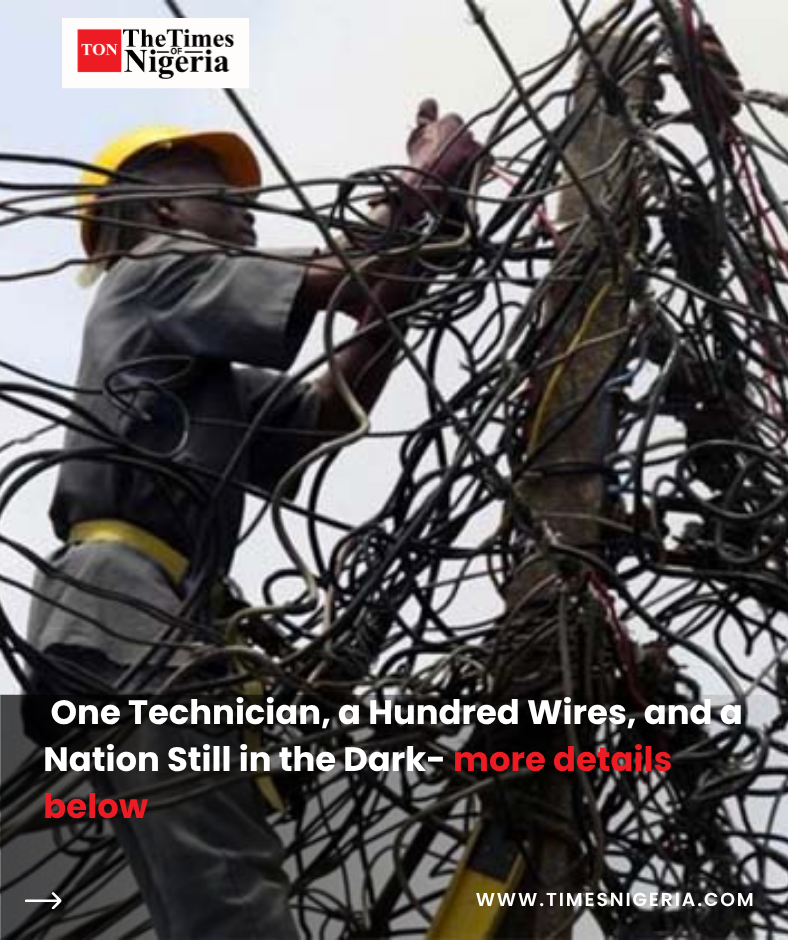
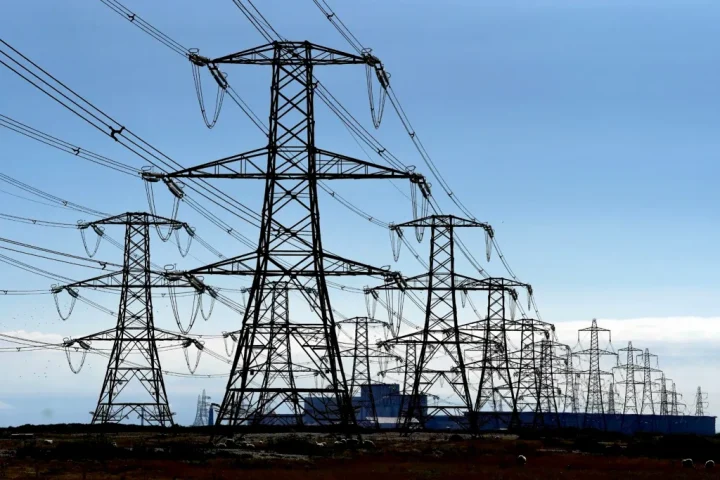
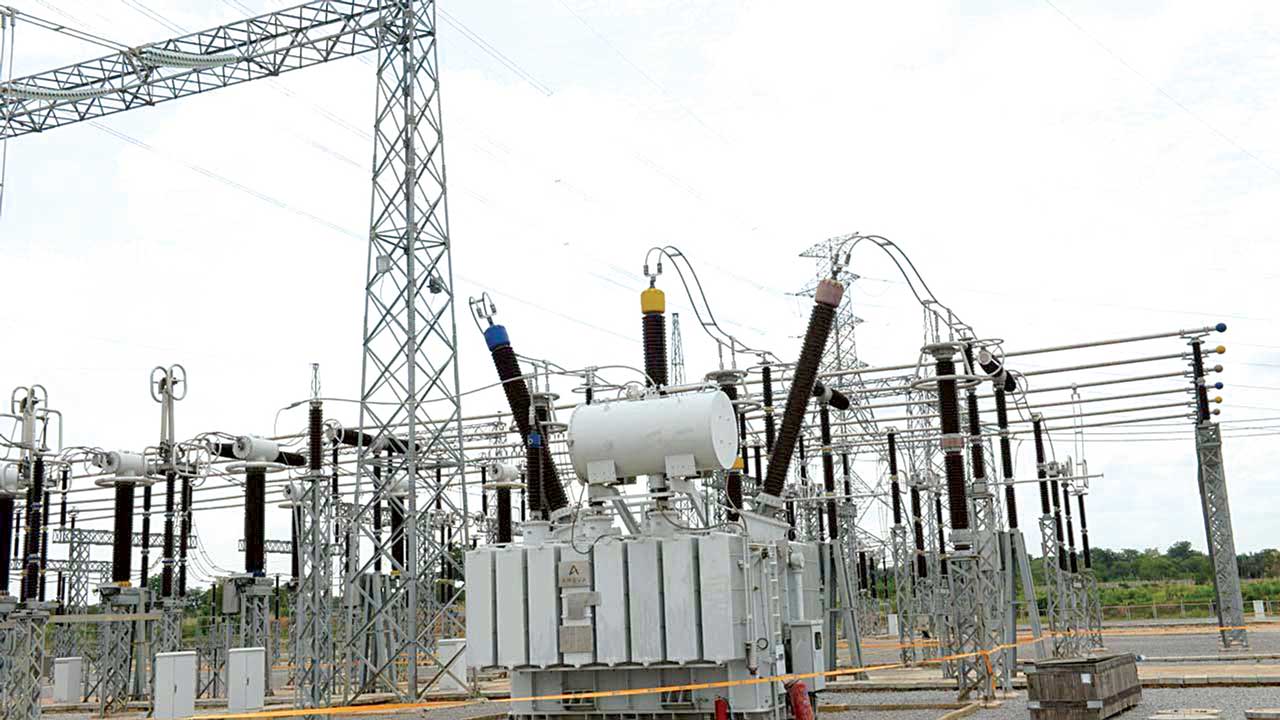
The transmission network the arteries through which generated power flows to homes and businesses is ageing, undermaintained, and critically vulnerable to vandalism.
In northern Nigeria, attacks on high-voltage transmission towers, including targeted strikes in the volatile Shiroro corridor of Niger State, have knocked entire regions offline for weeks at a time.
“This is not a routine disruption. It is an economic emergency. From Lagos to Kano, from Enugu to Sokoto, households and businesses are enduring days without power, sweltering nights without relief, and an economy steadily suffocating under the weight of energy failure.”
The Structural Rot Beneath the Blackouts
The current crisis is not simply the result of a bad week or a broken pipe.
It is the predictable outcome of systemic failures that experts have been warning about for years.
Gas shortages are the most immediate cause thermal power stations, which generate roughly 70% of Nigeria’s electricity, have seen gas supply fall sharply, forcing plant after plant to cut output or shut down entirely.
As of mid-March 2026, 16 of 33 power plants connected to the national grid had stopped generating altogether.
The CEO of the Association of Power Generation Companies has publicly warned that operators can no
longer afford basic plant maintenance amid the sector’s crippling financial pressures.
Beneath the gas crisis lies a deeper liquidity collapse.
Distribution companies (DisCos) recover only a fraction of what they bill, hamstrung by estimated metering, customer default, and infrastructure that loses power before it reaches the end user.
That shortfall cascades upward
DisCos cannot fully pay transmission companies, which cannot fully pay generators, which cannot fully pay gas suppliers.
The entire value chain is starved of cash.
The sector’s accumulated debt now runs into the trillions of naira a burden that has prompted President Tinubu to approve a ₦4 trillion bond to clear verified debts owed to generation companies and gas suppliers.
Root Causes of the Crisis
- Sharp gas supply decline to thermal plants the backbone of Nigeria’s generation mix
- 16 of 33 power stations offline as of March 17, 2026
- Over 108 grid collapses since privatisation in 2013
- Aged transmission infrastructure and over 200 recorded acts of vandalism in five years
- DisCos collecting far below billed amounts, choking the entire sector’s cash flow
- Over ₦7 trillion in interventions post-privatisation with little sustained improvement
- 85 million Nigerians 43% of the population still entirely off-grid
The Economic Wound: $29 Billion a Year
The Nigerian Association of Chambers of Commerce, Industry, Mines, and Agriculture has estimated that industries in blackout affected states experienced a 60% drop in productivity at the height of the northern outages.
When aggregated nationally, power outages are estimated to cost Nigeria’s economy roughly $29 billion annually approximately 2% of GDP.
That figure represents factories that could not run, cold rooms that could not preserve food, workshops that sat silent and small businesses that permanently shuttered.
Meanwhile, the informal energy market has exploded.
Forty thousand megawatts of privately owned diesel and petrol generators now hum across the country many times the output of the national grid.
For those who can afford them, generators provide relief.
For the majority who cannot, darkness is simply the default.
Since fuel subsidy removal in 2023, generator operating costs have surged dramatically
The Federal Government’s own Presidential Villa saw its generator fuel budget leap more than 5,000% in two years, from ₦30.68 million in 2023 to ₦1.99 billion in the 2025 budget.
Government Promises: Familiar Words, Familiar Gaps
Official responses have not been lacking in ambition.
The 2026 Federal Budget allocated ₦1.09 trillion for electricity capital projects.
The Power Minister has announced that more than $2 billion was mobilised over the past two years for sector transformation, and that installed generation capacity rose to 5,300 megawatts in 2024.
Solar electrification projects worth billions of naira are underway in Kano, Oyo, and other
states.
A national transmission upgrade programme promises a multi grid approach with built in redundancies.
Yet Nigerians have heard these promises in various forms for two decades.
The Obasanjo administration spent an estimated $16 billion on power with negligible results.
The 2013 privatisation that was meant to unleash private sector efficiency delivered
instead a fragmented, deeply indebted market.
Each new administration has pledged transformation each has handed the next government an unreformed sector.
What remains is a system producing far less power than a country of 220 million needs, a transmission network held together by repairs and prayers, and a billing system that cannot sustain the investment the sector desperately requires.
What Analysts Say Must Happen
- Clear verified debts owed to gas suppliers and GenCos to unlock stranded generation capacity
- Introduce cost reflective tariffs supported by targeted subsidies for low income households
- Hold DisCos accountable for metering, infrastructure investment and revenue collection targets
- Build a multi grid transmission system with regional redundancy to end cascade failures
- Fully implement the 2023 Electricity Act to activate competitive state level energy markets
- Deploy technology drones, smart sensors, CCTV to protect transmission towers from vandalism
- Massively scale off-grid solar and mini-grid solutions for rural and underserved communities
The Light at the End or the Dark Ahead?
Nigeria’s electricity problem is fundamentally solvable.
The country has abundant gas, exceptional solar irradiation, significant hydro potential and a young, entrepreneurial population.
What it has consistently lacked is the combination of political will, regulatory consistency and financial discipline needed to translate those assets into reliable power.
The 2023 Electricity Act, if genuinely implemented, could open the door.
The ₦4 trillion debt bond, if well targeted, could restore the generation sector’s liquidity.
The growing mini grid and solar sector could light millions of homes independent of a grid that has proven too fragile to trust.
But until those possibilities become realities, Nigerians will keep counting the minutes.
An hour of power in Kano.
Zero megawatts across the national grid.
Cold drinks that can’t be kept cold, food that spoils before morning, children who study by
candlelight and entrepreneurs who dream in the dark.
The crisis is real, it is deepening, and it demands more than another budget line and another broken promise.