
























Tinubu’s minister set to resign
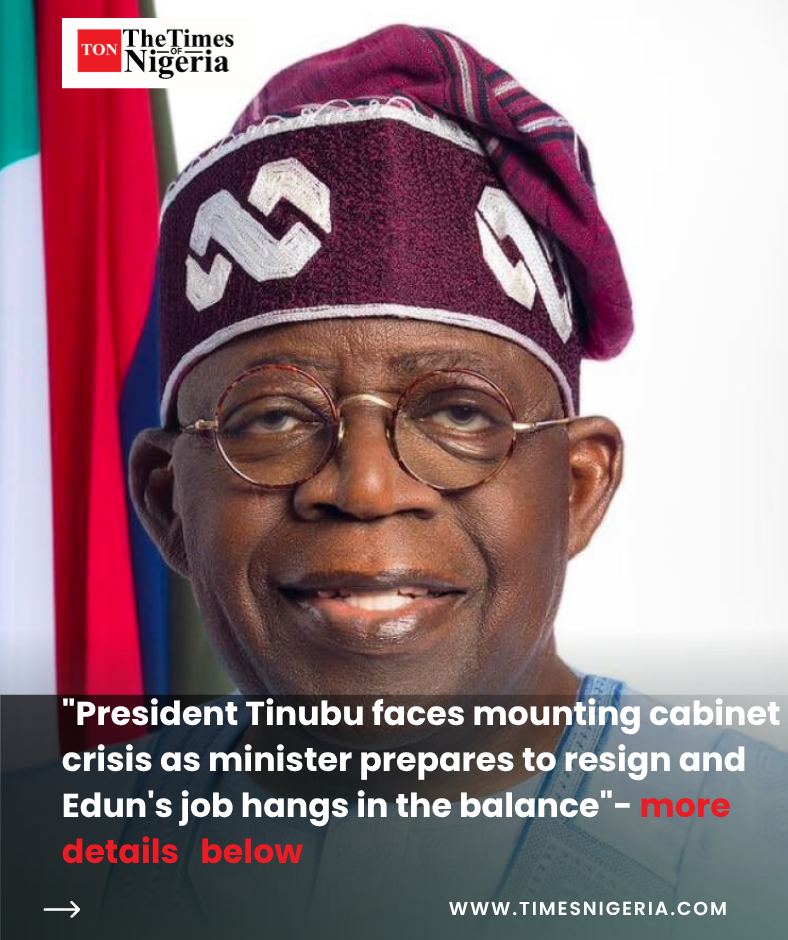
A significant political upheaval is currently brewing within President Bola Tinubu’s administration as credible sources reveal that Tinubu’s minister set to resign voluntarily, while Finance Minister Wale Edun faces mounting pressure that could lead to his removal from office.
This development marks one of the most dramatic moments in the current administration’s cabinet stability.
The unfolding crisis has sent shockwaves through Nigeria’s political landscape, with insiders suggesting that the resignations and potential sackings could trigger a broader cabinet reshuffle.
The situation highlights growing concerns about the performance of key ministers and the administration’s ability to deliver on its economic promises to Nigerians.
Details of the Ministerial Crisis
According to reliable sources within the presidency, Tinubu’s minister set to resign has been confirmed by multiple government officials who spoke on condition of anonymity.
The identity of the minister preparing to step down has not been officially disclosed, but the development is reportedly connected to internal disagreements over policy direction and implementation strategies.
Simultaneously, Finance Minister Wale Edun is facing intense scrutiny over his handling of Nigeria’s economic challenges.
Critics have pointed to persistent inflation, naira devaluation, and the controversial fuel subsidy removal as areas where the Finance Ministry’s performance has fallen short of expectations.
These concerns have reportedly reached President Tinubu’s desk, prompting serious considerations about Edun’s future in the cabinet.
Background to the Resignation and Sacking Pressure
The current ministerial crisis did not emerge in isolation.
Since President Tinubu assumed office, his administration has faced significant economic headwinds, including rising cost of living, foreign exchange challenges, and public discontent over economic reforms.
The pressure on the economic management team, particularly the Finance Minister, has intensified as Nigerians demand tangible improvements in their living conditions.
Sources close to the presidency indicate that the minister who is set to resign has been contemplating this decision for several weeks, citing personal reasons and the challenging political environment.
Meanwhile, the call for Edun’s removal has been gaining momentum among both political allies and opposition figures who believe fresh leadership is needed in the Finance Ministry to restore confidence in Nigeria’s economic direction.

Political Reactions and Stakeholder Responses
The revelation that Tinubu’s minister set to resign has triggered mixed reactions across Nigeria’s political spectrum.
Opposition parties have seized upon the development as evidence of dysfunction within the administration, while government supporters argue that cabinet adjustments are normal in any administration seeking to optimize performance.
Civil society organizations have called for transparency in the resignation and potential sacking process, urging President Tinubu to prioritize competence and integrity in any replacement appointments.
Economic analysts have warned that uncertainty in key ministerial positions could further undermine investor confidence and complicate Nigeria’s economic recovery efforts.
Political commentators suggest that if the resignation materializes and Edun is indeed sacked, President Tinubu would need to move quickly to reassure markets and the public that his administration remains firmly in control of the nation’s economic agenda.
Implications for Tinubu’s Administration
The potential departure of a cabinet member and the possible sacking of the Finance Minister represent critical tests for President Tinubu’s leadership.
The situation raises important questions about cabinet cohesion, policy effectiveness, and the administration’s ability to navigate Nigeria’s complex economic and political challenges.
As Tinubu’s minister set to resign and pressure mounts on Edun, observers are watching closely to see how the President handles this crisis.
His response will likely set the tone for future cabinet management and send important signals about his tolerance for underperformance and his commitment to accountability.

What Comes Next
In the coming days and weeks, all eyes will be on the Presidential Villa as the situation continues to unfold.
If the resignation is accepted and Edun is removed, President Tinubu will face the challenge of appointing replacements who can command public confidence and deliver results on critical economic fronts.
The confirmation that Tinubu’s minister set to resign also opens discussions about broader cabinet restructuring.
Political analysts suggest this could be an opportunity for the President to bring in fresh perspectives and technical expertise to address Nigeria’s mounting challenges, particularly in the economic sector.
Conclusion
The developing story of Tinubu’s minister set to resign alongside the mounting pressure on Finance Minister Wale Edun represents a pivotal moment for the current administration.
As Nigeria grapples with significant economic difficulties, the stability and effectiveness of the cabinet become even more critical.
President Tinubu’s handling of this ministerial crisis will be closely scrutinized as a measure of his leadership capacity and commitment to delivering good governance.
Whether these changes ultimately strengthen or weaken the administration will depend largely on the quality of replacements and the clarity of policy direction that emerges from this period of uncertainty.
Nigerians await official confirmation and further details about which minister is set to resign and whether the Finance Minister will indeed face the sack.
The coming days promise significant political developments that could reshape the trajectory of the Tinubu administration.