

























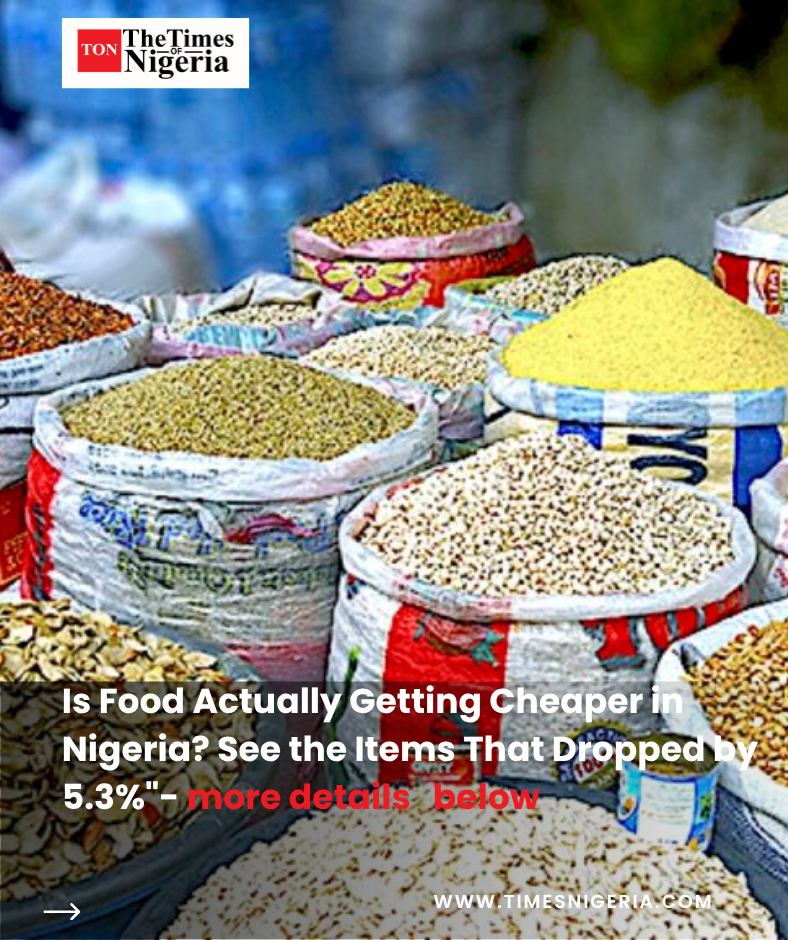
food prices fall in Nigeria
In a significant development for Nigerian consumers, the Federal Government has confirmed that food prices fall in Nigeria, with essential commodities including rice, yam, and other staple items recording a 5.3 percent decrease.
This marks a notable shift in the country’s economic landscape, offering much-needed relief to households that have struggled with rising food costs in recent months.
The announcement comes at a critical time when food inflation has been a major concern for policymakers and citizens alike.
The reduction in prices signals potential improvements in supply chain efficiency and government intervention strategies aimed at stabilizing the market.
Official Government Announcement on Price Reduction
According to the Federal Government’s latest economic report, food prices fall in Nigeria has been documented across multiple market indicators.
The 5.3 percent decline affects several key food items that form the backbone of Nigerian cuisine and daily consumption.
Rice, one of the most consumed staples in the country, has seen particularly notable price adjustments alongside yam, beans, and other essential commodities.
Government officials attribute this positive trend to improved agricultural output, enhanced distribution networks, and strategic policy interventions designed to boost local food production.
The price reduction is expected to ease the financial burden on millions of Nigerian families who spend a significant portion of their income on food.

Which Food Items Are Affected by the Price Drop?
The food prices fall in Nigeria announcement specifically highlights several staple items. Rice, which has experienced significant price volatility in previous months, now shows measurable decline across major markets. Local varieties and imported rice have both registered price reductions, making this essential grain more accessible to average consumers.
Yam, another dietary staple particularly important in southern and central Nigeria, has also become more affordable.
Other items experiencing price decreases include beans, garlic, tomatoes, and vegetable oil all crucial components of Nigerian meals.
Market surveys indicate that these reductions are being felt across urban and rural marketplaces, though the extent varies by region.
Government Measures Behind the Price Decline
The Federal Government’s strategic interventions have played a crucial role in ensuring that food prices fall in Nigeria.
Initiatives such as increased support for local farmers, improved access to agricultural inputs, and enhanced security in farming communities have contributed to better harvest outcomes.
Additionally, government policies aimed at reducing posth arvest losses and improving storage facilities have helped maintain stable supply levels.
The reduction in importation costs for certain food items, coupled with favorable foreign exchange policies for agricultural commodities, has also contributed to the overall price decline.
Economic Impact and Consumer Relief
The confirmation that food prices fall in Nigeria represents more than just statistical data it translates to real economic relief for ordinary citizens.
With food accounting for a substantial portion of household expenses, especially among low and middle-income earners, this price reduction could improve purchasing power and overall quality of life.
Economic analysts suggest that if this trend continues, it could help moderate the country’s overall inflation rate, which has been a persistent challenge.
Lower food prices may also reduce pressure on wages and potentially stimulate spending in other sectors of the economy.
Market Reaction and Expert Analysis
Market traders and consumers have responded cautiously but optimistically to reports that food prices fall in Nigeria.
While some remain skeptical about the sustainability of these reductions, many acknowledge witnessing tangible decreases in their daily market purchases.
Economic experts emphasize that maintaining this downward trend will require sustained government commitment, continued investment in agriculture, and stability in key economic indicators such as exchange rates and fuel prices.
They also stress the importance of monitoring to ensure that these benefits reach end consumers and aren’t absorbed by intermediaries in the supply chain.
Looking Ahead: Sustainability of Price Reductions
While the news that food prices fall in Nigeria by 5.3 percent brings immediate relief, questions remain about the long term sustainability of these reductions.
Experts recommend continued policy support for agriculture, infrastructure development, and security improvements in farming regions to ensure stable production.
The Federal Government has indicated its commitment to building on this positive development through additional interventions and close monitoring of market dynamics.
For Nigerian consumers, this announcement offers hope that the challenging period of extreme food inflatiomay be gradually coming under control, potentially marking a turning point in the country’s economic recovery efforts.