
























Israeli chief of staff warns military collapse
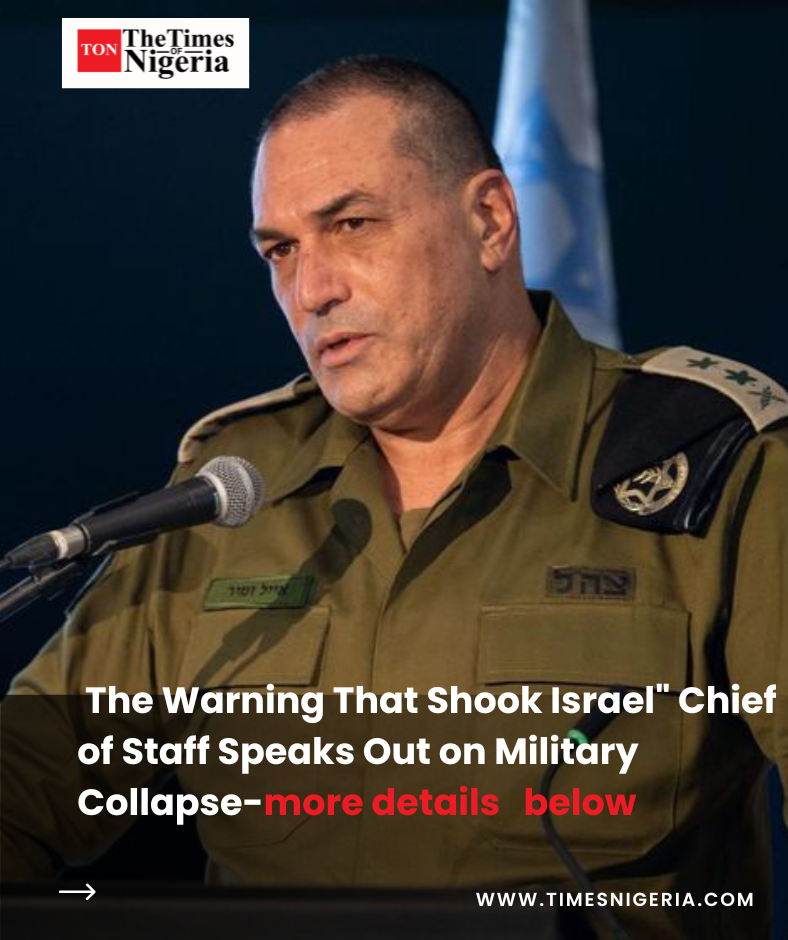
In a development that has sent shockwaves through Israel’s defense establishment and political corridors, the Israeli chief of staff warns military collapse could become a reality if the Israel Defense Forces (IDF) continue to operate without a clearly defined political and strategic endgame.
The stark warning, delivered by the country’s top military officer, underscores growing tensions between Israel’s military leadership and its political decision makers amid prolonged military operations in Gaza and on multiple fronts.
What Happened “Israeli Chief of Staff Warns Military Collapse Is a Growing Risk”
The warning came from the highest echelons of Israel’s military command. According to reports first published by Legit.ng and corroborated by multiple Israeli media outlets, the IDF’s chief of staff issued a pointed and unusually public caution that the armed forces cannot sustain open ended military campaigns without suffering severe institutional damage.
The statement represents one of the most direct challenges from the military to the country’s civilian leadership since the current conflict began.
The chief of staff emphasized that military force alone cannot resolve the complex political and security challenges Israel faces.
Without a coherent strategy that integrates diplomatic objectives with military operations, the IDF risks exhausting its personnel, depleting critical resources, and ultimately facing a structural breakdown.
This is the core of why the Israeli chief of staff warns military collapse is not merely hypothetical but an operational concern rooted in observable trends.
The Underlying Tensions Between Military and Political Leadership
The warning did not emerge in a vacuum.
For months, reports have surfaced about deepening friction between Israel’s senior military commanders and the political leadership led by Prime Minister Benjamin Netanyahu.
Military officials have reportedly expressed frustration over the absence of a clearly articulated “day after” plan for Gaza a political framework that would define what victory looks like and what governance structure would replace Hamas control.
Without such a framework, the IDF finds itself engaged in repeated clearing operations in areas it has already swept, facing a resilient insurgency that reconstitutes itself in zones the military has vacated.
This cycle of re engagement is precisely why the Israeli chief of staff warns military collapse is becoming an increasingly plausible scenario.
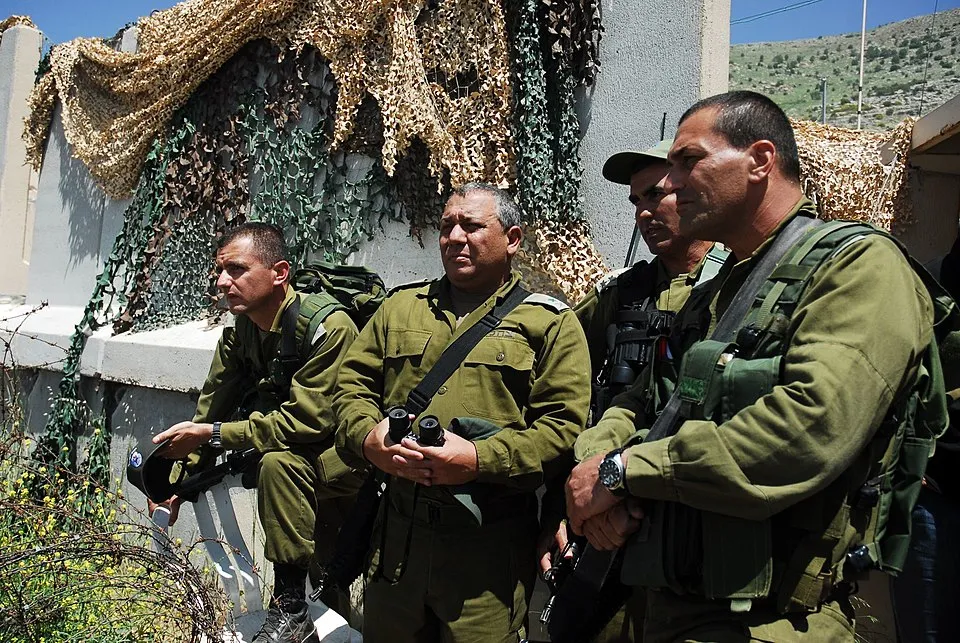
Troops are being redeployed to the same locations, reservists are being called up for extended tours, and the strain on equipment and morale is mounting steadily.
Impact on IDF Personnel and Military Readiness
One of the most critical dimensions of the warning relates to the human cost of sustained operations.
Israel’s military relies heavily on its reserve forces, and the prolonged mobilization has disrupted the civilian economy, strained families, and created fatigue among units that have been rotated through combat zones multiple times.
Reports indicate that some reservist units have experienced declining enlistment rates and growing reluctance among personnel to report for additional duty cycles.
The chief of staff’s remarks also touched on the readiness posture of the IDF along other potential fronts, including the northern border with Lebanon and Hezbollah.
With significant resources committed to Gaza operations, military planners have raised concerns about the IDF’s ability to respond effectively to a major escalation on a second front.
This multi front vulnerability is a key reason the Israeli chief of staff warns military collapse must be taken seriously by policymakers.
Defense analysts have noted that the IDF, while one of the most technologically advanced militaries in the world, is not designed for prolonged occupation style operations.
Its strength lies in rapid, decisive campaigns with clear objectives.
The current open ended engagement runs counter to the force’s institutional design and operational doctrine.
Reactions From Israeli Officials and the Public
The warning has generated a firestorm of reactions across Israel’s political spectrum.
Opposition leaders seized on the statement as evidence that the government lacks a coherent war strategy and is placing the military in an untenable position.
Some members of the Knesset called for an emergency session to discuss the military’s operational sustainability and to demand a comprehensive strategic review.
Supporters of the current government, however, pushed back against the chief of staff’s remarks, arguing that military leaders should not publicly challenge civilian authority during wartime.
Some coalition members accused the military establishment of overstepping its role and attempting to influence political decisions that fall outside its mandate.
Despite this pushback, the gravity of the situation remains undeniable when the Israeli chief of staff warns military collapse in such unambiguous terms.
Among the Israeli public, the reaction has been mixed but increasingly anxious.
Polls conducted in recent weeks show growing concern about the direction of the conflict, with a significant portion of respondents expressing doubt that current military operations will achieve lasting security.
The chief of staff’s warning has amplified these concerns and intensified the national debate about the war’s trajectory.

Broader Security Concerns and Regional Implications
The implications of this warning extend well beyond Israel’s borders.
Regional observers and international defense analysts have noted that any significant degradation in IDF capability would alter the security calculus across the entire Middle East.
Israel’s military deterrence has long been a cornerstone of regional stability, and any perception of institutional weakness could embolden adversaries including Hezbollah, Iranian backed militias in Syria and Iraq, and other non-state actors.
Furthermore, the warning has drawn attention from Israel’s key allies, particularly the United States.
American defense officials have privately expressed concern about the sustainability of Israeli military operations and have reportedly urged Israeli leaders to develop a comprehensive political strategy for Gaza.
The fact that the Israeli chief of staff warns military collapse publicly suggests that internal channels of communication between the military and political leadership may have reached an impasse.
International humanitarian organizations have also weighed in, noting that prolonged military operations without a clear political framework increase the risk of civilian casualties and deepen the humanitarian crisis in Gaza.
The chief of staff’s warning, while focused on institutional military concerns, indirectly highlights the broader costs of a conflict without a defined resolution.
What Comes Next “The Path Forward for Israel’s Military and Political Leadership”
The path forward remains uncertain, but the chief of staff’s warning has undeniably forced the issue into the center of Israel’s national conversation.
Military analysts suggest that several steps could address the concerns raised, including the development of a comprehensive political military strategy for Gaza, a realistic assessment of achievable objectives, and a phased plan for transitioning from active combat operations to a sustainable security posture.
There are also calls for greater coordination between the military and political echelons, with some proposing the establishment of a joint strategic planning body that would integrate defense, diplomatic, and intelligence perspectives into a unified approach.
Such a body could help bridge the gap between military realities and political ambitions that has been at the heart of the current crisis.
As Israel navigates this critical juncture, the warning from its top military officer serves as both a wake up call and a demand for accountability.
When the Israeli chief of staff warns military collapse, it is not a statement made lightly.
It reflects the professional judgment of a military leader who understands the limits of force and the consequences of strategic ambiguity.
Whether Israel’s political leadership heeds this warning may well determine the country’s security trajectory for years to come.
The coming weeks and months will be decisive.
The international community, regional stakeholders, and the Israeli public will be watching closely to see whether this moment of institutional candor leads to meaningful strategic change or becomes another chapter in the growing disconnect between Israel’s military capabilities and its political direction.