












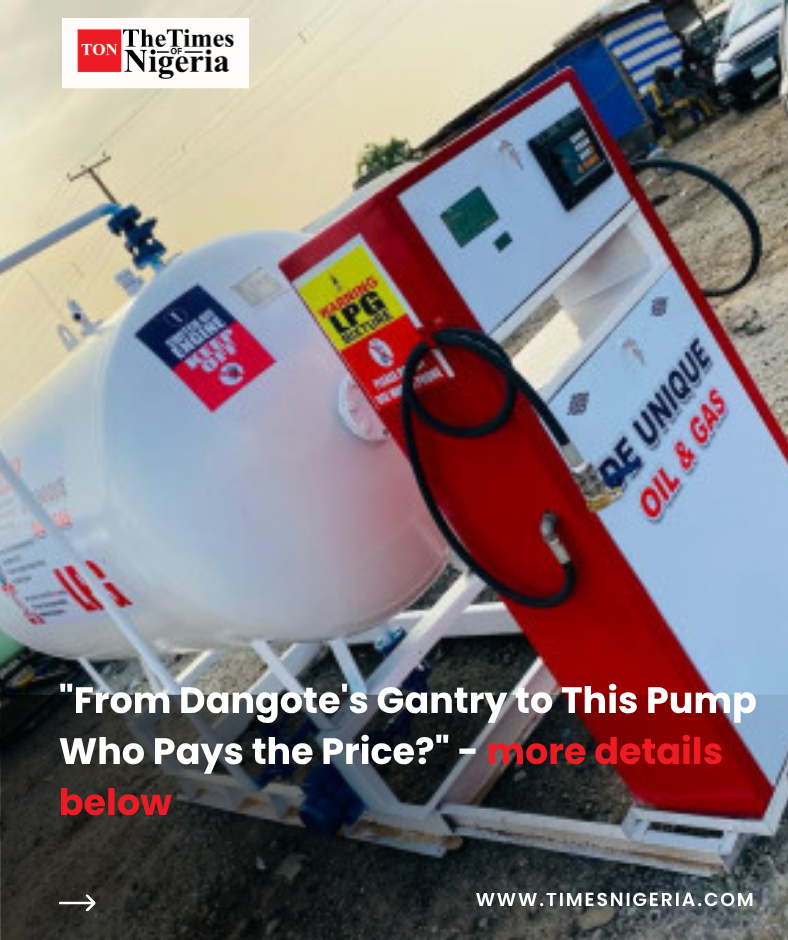
Cooking gas price Nigeria 2025
Retail price / kg (current)
Dangote ex-gantry price / kg
Month-on-month rise (Apr 2025)
Avg. 12.5 kg cylinder (May 2025)
Cooking gas the fuel that powers millions of Nigerian kitchens has surged to around ₦1,000 per kilogramme at retail outlets, squeezing households already battered by inflation and a weakening naira.
A fresh round of price adjustments at the Dangote Petroleum Refinery has set off a chain reaction across the domestic LPG market.
The Dangote Effect How One Refinery Moves a Market
In a market as interconnected as Nigeria’s downstream gas sector, pricing decisions at the depot level rarely stay contained.
The Dangote Petroleum Refinery recently revised its Liquefied Petroleum Gas (LPG) ex gantry price upward twice within 48 hours first from ₦760 to ₦800, then again to ₦825 per kilogramme cementing its role as the dominant price setter in the domestic LPG supply chain.
Industry operators described the adjustment as a “key trigger” for downstream price revisions nationwide.
The Nigerian Association of Liquefied Petroleum Gas Marketers confirmed that retail prices have already climbed to approximately ₦1,000 per kilogramme, a level that many households are struggling to absorb given existing pressures on personal income.
The prices have already increased to ₦1,000 per kg at retail stations.
This is because of the cost of logistics haulage and other loading costs, particularly haulage.
Even the Dangote Refinery has increased its price
Three Forces Pushing Prices Higher
Marketers and energy analysts point to a convergence of pressures not a single cause behind the ongoing price climb.
Key Price Drivers
- Logistics & Haulage Costs: Trucking LPG from depots to retail stations has grown significantly more expensive, driven by elevated diesel prices and operational bottlenecks at major gas terminals like Apapa in Lagos. These distribution costs are passed directly to end consumers.
- Global Crude Oil Prices: Since LPG is a byproduct of crude oil refining, international oil price fluctuations directly affect the cost of producing and sourcing propane and butane.
A rise in Brent crude translates almost immediately into higher ex depot LPG rates. - Supply Chain Vulnerabilities: Nigeria’s LPG supply chain remains fragile. Periodic loading delays, security disruptions in parts of the North and Niger Delta, and a partial reliance on imports expose the domestic market to shocks that domestic infrastructure cannot yet buffer.
- Naira Depreciation: A weaker naira against the US dollar inflates the cost of imported LPG and raises expenses for equipment and operations denominated in foreign currency, compounding pressure across the supply chain.
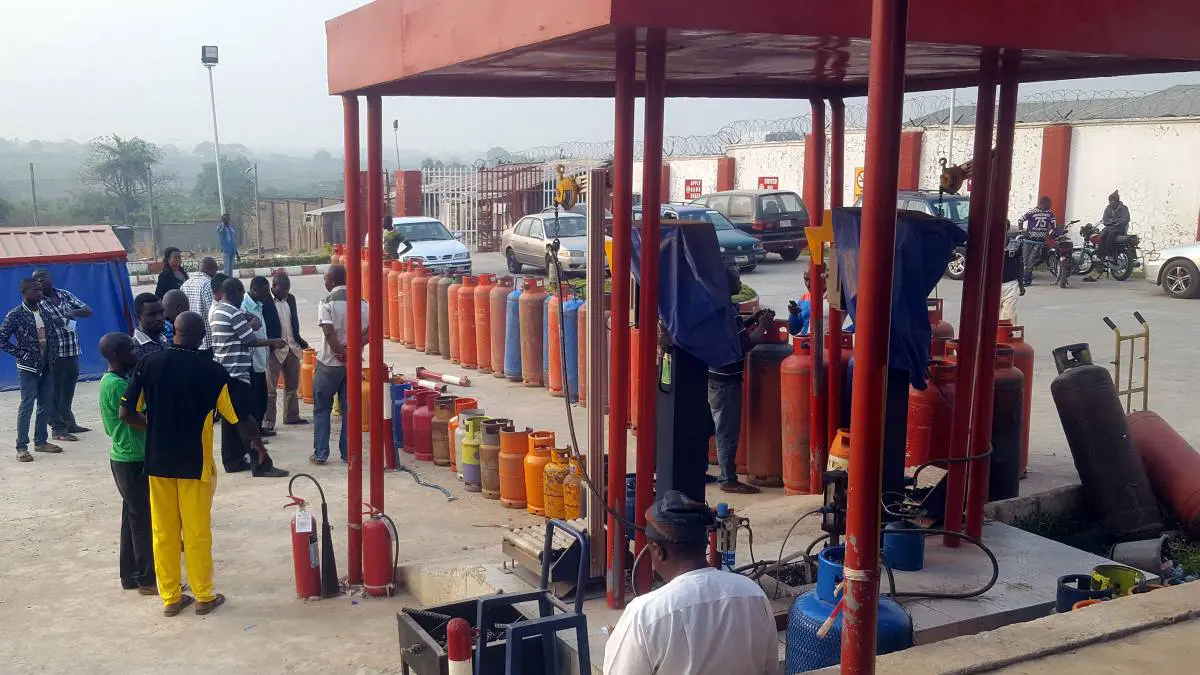
Regional Price Disparities Not All Nigerians Pay the Same
While the national average has grabbed headlines, the on the ground reality is uneven.
Geographic proximity to supply hubs, infrastructure quality, and state level logistics determine how much a household ultimately pays to fill its cylinder.
| Region / State | 12.5 kg Cylinder (Approx.) | Per kg Rate |
|---|---|---|
| Ijebu Ode, Ogun State (Cheapest) | ₦15,000 | ₦1,200 |
| Kaduna / Shagamu (Intermediate) | ₦16,250 | ₦1,300 |
| Rivers State | ₦18,750 | ₦1,500 |
| Plateau State (Most Expensive) | ₦19,375 | ₦1,550 |
| National Average (April 2025) | ₦17,500 | ₦1,400 |
Ogun State benefits from its closeness to Lagos Nigeria’s primary gas import and distribution hub keeping transport costs relatively low.
States further inland or in the South South, where infrastructure gaps are wider and route distances greater, continue to record the steepest prices.
A Threat to Nigeria’s Clean Cooking Ambitions
The timing of the surge is particularly damaging for government policy.
Nigeria’s Energy Transition Plan sets a target of moving at least 30 million households to cleaner cooking fuels by 2030, with LPG at the centre of that goal.
Persistent price spikes risk reversing what little progress has been made.
Field reports from Abuja’s satellite towns and outer Lagos reveal that many households are quietly drifting back to firewood and charcoal a development that carries serious public health and environmental consequences.
The World Health Organisation has repeatedly warned that indoor combustion from solid fuels raises the risk of respiratory disease, particularly among women and children.
Without deliberate government intervention, experts warn, Nigeria’s 2030 energy transition targets could become unachievable.
What Has to Change?
Stakeholders across the energy value chain are converging on a common set of remedies.
Calls include accelerating investment in domestic LPG infrastructure particularly modular bottling plants and last mile distribution networks to reduce Nigeria’s vulnerability to import price swings.
Policy analysts also highlight the need for fiscal reforms: targeted tax relief for gas distributors, foreign exchange interventions to stabilise input costs, and a structured price support mechanism for low income households.
The federal government’s 2024 ban on LPG exports was a step in the right direction, but industry voices stress that supply side investment, not export restrictions alone, will determine long term affordability.
For now, marketers caution that prices are unlikely to moderate significantly unless global crude oil softens or
targeted structural interventions arrive quickly.
Until then, Nigerian households face the prospect of budgeting more for the most basic act of cooking a meal.
If clean energy becomes a privilege for the rich, Nigeria’s sustainability efforts will collapse.
The Bottom Line
Nigeria’s cooking gas price crisis is not a single event story it is the visible surface of deeper structural issues: infrastructure deficits, foreign exchange vulnerability, logistics inefficiencies, and a domestic gas supply chain that remains a work in progress despite the country sitting on some of the world’s largest natural gas reserves.
The Dangote Refinery’s pricing power, while a marker of how far domestic refining has come, also underscores
how much a single facility’s decisions can ripple through millions of kitchens.
Until the supply chain is broader, more resilient, and less dependent on global commodity swings, Nigerians will continue to feel the heat long before the cooking begins.