





















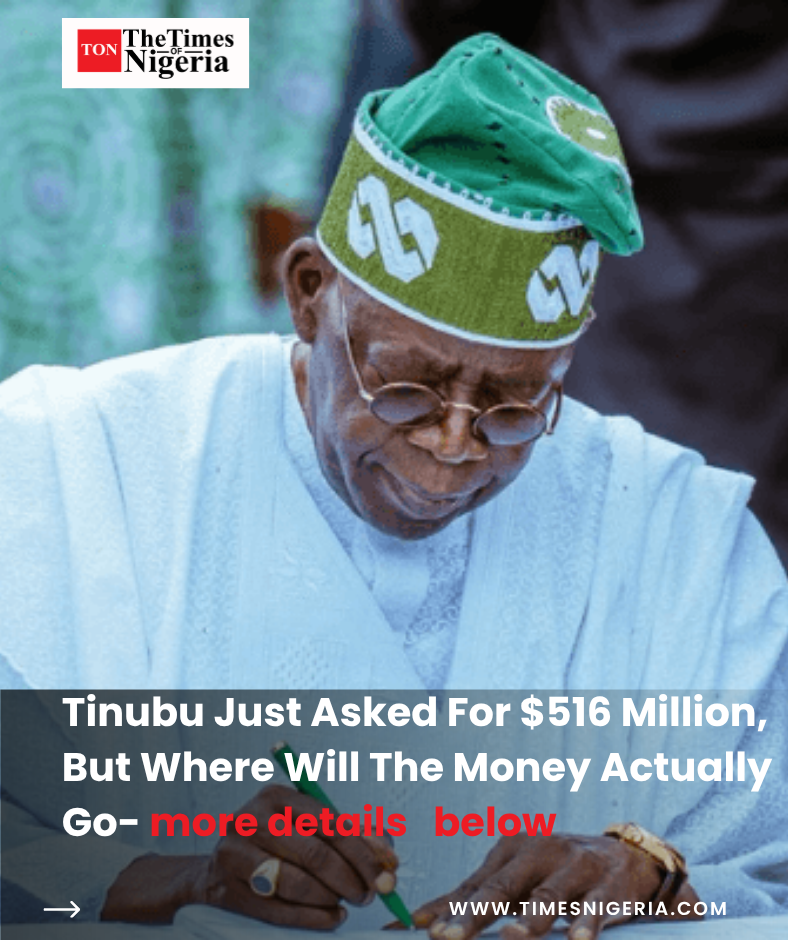
Tinubu $516M loan request
In a move that has sparked immediate national debate, President Bola Tinubu has formally submitted the Tinubu $516M loan request to the Nigerian Senate, asking lawmakers to grant approval for the fresh external
borrowing.
The development, reported on Wednesday, adds a significant new chapter to Nigeria’s ongoing conversation about fiscal sustainability, mounting debt obligations, and the government’s long term economic strategy
under the current administration.
What Is the Tinubu $516M Loan Request About?
The president indicated that the funds are intended to support critical sectors of the Nigerian economy, with details around the specific deployment of the loan still being awaited by members of the public and civil society
organizations.
The loan, which amounts to over five hundred million United States dollars, is expected to come from international financial institutions or bilateral lenders, though the full terms and conditions including interest rates and repayment timelines have not been fully disclosed at the time of
publication.
Nigerians and financial analysts are closely watching how the Senate will respond to this latest borrowing proposal from the presidency.
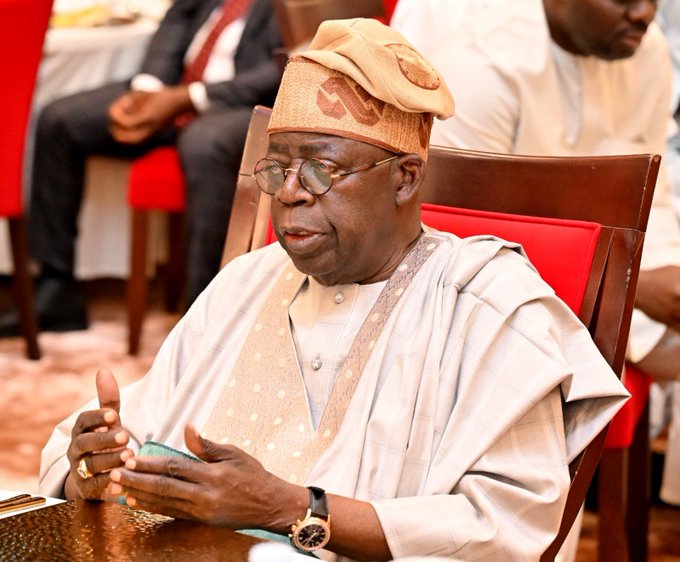
Senate Reaction to the Tinubu $516M Loan Request
The Tinubu $516M loan request landed before the Nigerian Senate at a time when the country’s debt profile has already attracted criticism from economists, opposition politicians, and international credit
agencies.
Nigeria’s total public debt stands at several tens of trillions of naira, and many lawmakers have previously raised red flags about the pace and volume of borrowing under successive administrations.
While the Senate is yet to issue an official statement at the time of this report, insiders suggest that deliberations are expected to be rigorous.
Some senators are reportedly seeking full documentation on the purpose and projected economic impact of the loan before any vote is cast.
This is consistent with recent legislative trends, where the Senate has demanded more transparency on external borrowing proposals before granting approval.
Civil society groups and financial watchdogs have already begun to react to the Tinubu $516M loan request, with several organizations calling for greater public accountability around what the funds will be used
for and how repayment will be structured so as not to further burden ordinary Nigerians.
Nigeria’s Rising Debt A Broader Concern
The Tinubu $516M loan request does not exist in isolation.
It comes against the backdrop of a broader national conversation about Nigeria’s ballooning debt profile.
The Debt Management Office (DMO) has confirmed in previous reports that Nigeria’s debt to GDP ratio, while still within certain benchmarks, continues to move in a direction that calls for caution.
Critics argue that continued borrowing without proportional revenue generation reform is a recipe for a long term debt crisis. ‘
Supporters of the administration, however, argue that strategic borrowing particularly for infrastructure and human capital development is necessary to unlock economic growth in a country that is still rebuilding from years of underinvestment.
What remains clear is that the Tinubu $516M loan request will test the Senate’s willingness to act as a check on executive borrowing powers.
With Nigerians already grappling with the effects of fuel subsidy removal, naira devaluation, and rising living costs, public sentiment around new loan approvals is understandably cautious.

Key Questions Nigerians Are Asking
As news of the Tinubu $516M loan request spreads across social media and mainstream news platforms, Nigerians are asking several pointed questions:
- Which sector will the $516 million be deployed into? Infrastructure, health, education, or debt refinancing?
- Who is the lender? Is this the World Bank, IMF, African Development Bank, or a bilateral partner?
- What are the repayment terms? Interest rate, duration, and collateral requirements remain undisclosed.
- Will the Senate approve it? Legislative deliberations are expected to begin in the coming days.
These are questions that the Tinubu administration will need to answer clearly and publicly if it hopes to build confidence around this borrowing proposal.
Conclusion
The Tinubu $516M loan request now sits with the Nigerian Senate, awaiting what is expected to be a closely watched deliberation.
As Nigeria navigates one of its most complex economic periods in decades, theoutcome of this loan approval process will have significant implications not just for government financing, but for public trust in the administration’s ability to manage borrowed funds transparently and effectively.
This blog will continue to monitor and report on the Senate’s response to the Tinubu $516M loan request as developments unfold.
Nigerians are encouraged to stay informed, engage their elected representatives, and demand full accountability on how every dollar of borrowed funds is utilized for national development.