























Dangote Refinery petrol price hike
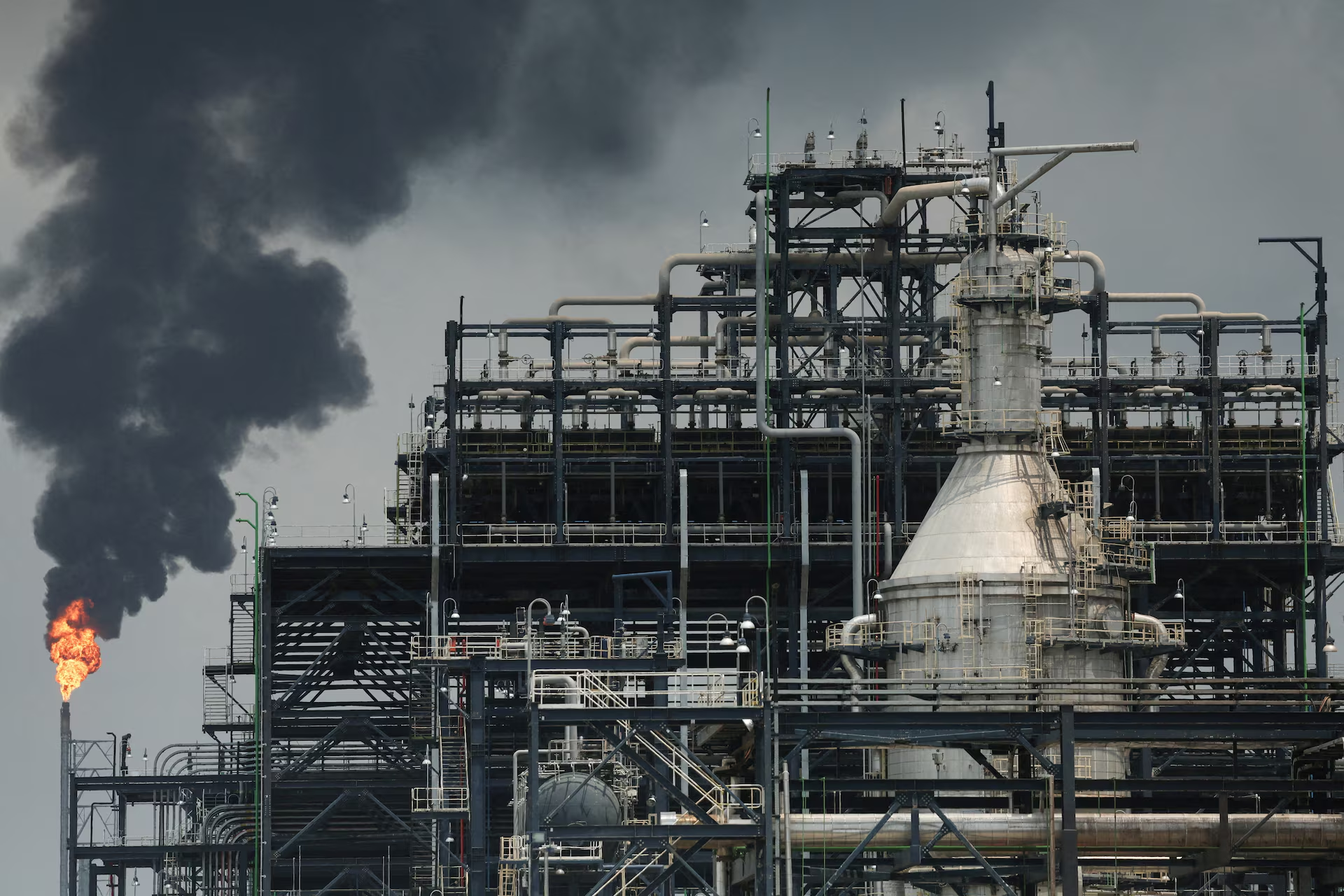
The Dangote Refinery petrol price hike has sent shockwaves across Nigeria’s downstream fuel market, as the 650,000 barrel per day facility raised its gantry price to N1,275 per litre the fifth upward revision in March 2026 alone.
The development comes on the back of a dramatic surge in global crude oil prices, with Brent crude climbing above $112 per barrel amid escalating geopolitical tensions involving Iran, the United States, and Israel. For millions of Nigerians already struggling with the high cost of living, the latest adjustment signals that relief at the pump remains elusive.
What Triggered the Latest Dangote Refinery Petrol Price Hike?
The sequence of price adjustments began in early March 2026 when international crude oil prices crossed the $80 per barrel threshold, prompting the refinery to suspend petrol loading operations.
From that point, the Dangote Refinery petrol price hike became a recurring headline.
The ex depot rate climbed from N774 per litre to N875, then to N1,075, before a brief reduction to N1,075 was reversed on March 13 as crude surged past $100 per barrel.
By March 21, 2026, the refinery had issued back to back upward revisions within a 12 hour window first to N1,245 per litre and then again to N1,275 per litre instructing marketers to disregard all previously communicated prices.
In a circular sent to marketers, the refinery stated: “The prices contained in our previous correspondence are no longer applicable and should be disregarded.”
The refinery attributed the adjustments to the volatile global crude oil environment, driven by renewed attacks on key energy infrastructure in the Middle East, including threats to the Strait of Hormuz a critical shipping corridor through which approximately 20 million barrels of oil pass daily.
How the Dangote Refinery Petrol Price Hike Affects Nigerians
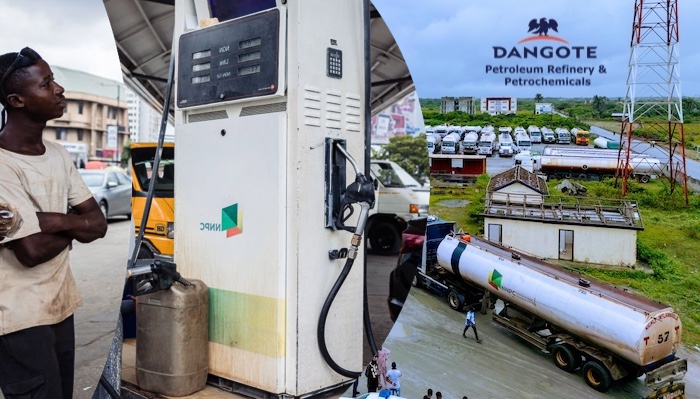
The real-world impact of the Dangote Refinery petrol price hike is felt immediately at retail filling stations across the country.
Following the latest gantry revision, MRS Oil Nigeria Plc one of the refinery’s key partner marketers issued a new pricing template to its dealers, setting the pump price at N1,332 per litre.
This represents a surge of approximately N70 per litre compared to prices recorded just days earlier.
The Nigerian National Petroleum Company Limited (NNPCL) retail outlets also adjusted their pump prices upward, with an increase of N106 per litre recorded at NNPCL stations following the refinery’s hike.
With domestic pump prices now surpassing the equivalent of $1 per litre at the official exchange rate, consumers face a significantly heavier financial burden for transportation, logistics, and everyday goods.
The Dangote Refinery petrol price hike carries outsized consequences for the Nigerian economy because the refinery now supplies approximately 61 percent of the country’s daily petrol demand around 39.6 million litres per day of the national 64.9 million litres per day requirement, according to Nigerian Midstream and Downstream Petroleum Regulatory Authority data for February 2026.
This dominant market position means that any pricing decision at the refinery ripples directly into the pockets of the vast majority of Nigerian consumers and businesses.
Expert Reactions and Economic Concerns
Energy economists have weighed in on the cascading effect of the Dangote Refinery petrol price hike, with most pointing to global market forces rather than domestic policy failures as the primary driver.
Professor Emeritus of Petroleum Economics, Wumi Iledare, described the increase as a direct consequence of the global shock caused by the Iran US Israel war, arguing that the refinery’s pricing reflects international crude oil realities.
Professor Godwin Oyedokun of Lead City University echoed this position, warning that the implications for Nigeria are both immediate and severe.
He noted that while the Dangote Refinery was expected to shield Nigeria from external oil price shocks through local production, the facility still sources crude oil at internationally benchmarked rates meaning global price surges are passed directly into domestic fuel costs.
Independent marketers and depot operators have also expressed concern.
Several private depot owners temporarily halted petrol sales during periods of rapid price revision, creating brief supply disruptions in certain markets.
The refinery also temporarily suspended loading operations on at least two occasions to reconcile stock levels with its updated pricing framework.
Broader Implications: Nigeria’s Fuel Market Vulnerability
The repeated Dangote Refinery petrol price hike in March 2026 has exposed a fundamental vulnerability in Nigeria’s downstream energy market despite having a world class refinery now operational, domestic fuel prices remain tightly coupled to global crude oil benchmarks.
The federal government’s decision to suspend petrol import licences for major oil marketers a move that consolidates Dangote Refinery’s market dominance means there is limited competitive pricing buffer available to consumers when crude prices spike.
Energy analysts warn that if crude oil prices approach the projected $120–$150 range a scenario raised by some market watchers given the Strait of Hormuz blockade threat the Dangote Refinery petrol price hike cycle could accelerate further.
The refinery, for its part, maintained that all price adjustments were driven by external market forces beyond its control, stressing that the pricing reviews reflected prevailing cost realities.
Meanwhile, at least three African nations South Africa, Ghana, and Kenya have reportedly made formal enquiries to the Dangote Refinery for fuel supply, as Middle East disruptions choke traditional global supply chains.
This growing international demand for the refinery’s output may further complicate domestic pricing dynamics in the months ahead.
Conclusion: What Nigerians Can Expect Next
The Dangote Refinery petrol price hike story is far from over.
With Brent crude continuing to trade above $112 per barrel and no near term resolution to the Middle East conflict in sight, energy experts caution that further upward adjustments remain likely.
The United States’ release of 172 million barrels from its Strategic Petroleum Reserve has so far failed to meaningfully calm global oil markets, with traders remaining sceptical about its long term impact on supply.
For Nigerians, the immediate priority is managing the cascading cost increases across transportation, food prices, and manufacturing that inevitably follow each fuel price adjustment.
Until geopolitical tensions ease and global crude oil prices stabilise, the Dangote Refinery petrol price hike cycle is expected to remain a defining economic challenge for households and businesses alike underscoring the urgent need for broader energy diversification strategies and stronger social safety nets to cushion the impact on vulnerable Nigerians.