
























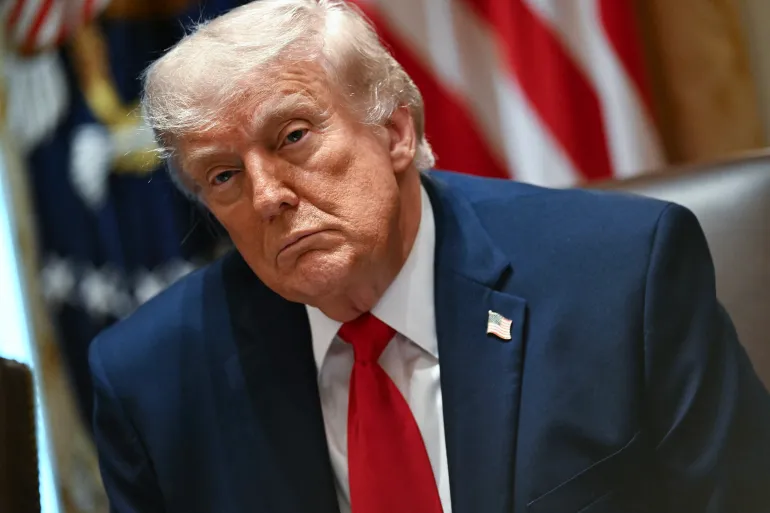
President Donald Trump has criticised the U.S. House of Representatives following the passage of a bipartisan resolution seeking to restrict his ability to continue military operations involving Iran without congressional approval.
In a post on his Truth Social platform, Trump dismissed the measure as “meaningless,” arguing that lawmakers backing the resolution were jeopardising ongoing efforts to secure a peace deal with Iran.
According to the president, the House vote came at a sensitive stage in negotiations and could undermine diplomatic progress aimed at ending hostilities with the Islamic Republic.
Trump also accused Democrats of placing political interests above national security concerns and aimed at four Republican lawmakers who supported the measure, branding them “grandstanders” and expressing disappointment in their stance.
The resolution passed the House by a slim 215-208 vote, receiving unanimous support from Democrats and backing from Republican representatives Thomas Massie of Kentucky, Brian Fitzpatrick of Pennsylvania, Warren Davidson of Ohio and Tom Barrett of Michigan.
The measure is based on the 1973 War Powers Resolution, which requires congressional authorisation for military engagements that extend beyond 90 days.
Supporters of the resolution argue that the administration has become increasingly involved in a prolonged Middle East conflict without a clear strategy for ending it. However, the White House maintains that a ceasefire that took effect on April 8 means the situation does not fall under the restrictions outlined in the law.
Despite periodic violations of the truce, including recent interceptions of Iranian missiles and drones aimed at Kuwait and Bahrain, Trump has remained optimistic that a broader peace agreement can be achieved.
Although the resolution faces long odds of becoming law due to insufficient support to override a potential presidential veto, its passage highlights growing bipartisan concern in Congress over the scope of presidential war powers. The measure now heads to the Senate, where it is expected to receive further consideration.