

















Iran 14 Million Defenders: President Pezeshkian Vows National Sacrifice Amid Fresh Strikes on Tehran
Iran 14 million defenders have registered their willingness to die for their country as explosions rocked the Iranian capital and Trump’s ultimatum deadline loomed, President Masoud Pezeshkian revealed, a declaration that signals just how deeply this conflict has escalated beyond diplomacy.
The President’s Defiant Declaration
In a statement, Pezeshkian said, “More than 14 million proud Iranians have so far registered to sacrifice their lives to defend Iran.” His remarks came as tensions escalated following renewed attacks on the capital, Tehran.
He made the remarks in a post on X. The Iranian President said that he too stands ready to be sacrificed for the country. “Over 14 million proud Iranians have, up to this moment, declared their readiness to sacrifice their lives in defense of Iran. I too have been, am, and will be a sacrificer for Iran,” Pezeshkian wrote on X.
What Triggered This Moment
Iranian President Masoud Pezeshkian said Tuesday that he was ready to sacrifice his life for Iran, writing on X that more than 14 million Iranians had already declared their readiness to do the same. The dual messages came after Trump threatened to strike Iranian power plants and bridges if Tehran did not reopen the Strait of Hormuz by Tuesday evening. The Strait of Hormuz carries roughly one-fifth of the world’s oil trade, making the standoff far more than a bilateral crisis.
The developments follow claims by the Israel Defense Forces (IDF) that it carried out a series of precision strikes targeting key Iranian military and industrial infrastructure in Tehran. In a statement posted on X, the IDF said airports across Tehran including Bahram, Mehrabad and Azmayesh Airports were struck. The Israeli military further alleged that Mehrabad Airport had been used by the Islamic Revolutionary Guard Corps’ Quds Force as a central hub for arming and financing proxy groups across the Middle East.
Explosions in Tehran
His remarks came amid reports of multiple explosions in Tehran, where heightened aerial activity raised concerns of a new phase in the ongoing conflict. According to Al Jazeera, at least three powerful explosions were heard across the Iranian capital as fighter jets circled overhead.
At least 18 people were killed, with two children among them, in strikes carried out in Alborz Province in Iran. “Zionist regime warplanes, with direct American support, cowardly targeted the homes and shelters of our defenseless citizens in Alborz Province,” a provincial official said. At least 24 people were also injured and immediately transferred to medical centers for treatment.
Kharg Island Under Attack
The crisis took an even more dangerous turn when Iran’s most critical oil facility came under fire. Explosions were reported on Iran’s crucial Kharg Island, which is home to a sprawling oil facility. Semi-official Iranian agency Mehr News said multiple strikes had been reported on the island, to which Iran pumps almost all of its crude production through underwater pipelines for export.
Reports from April 7, 2026, indicate that Kharg Island, the primary terminal handling roughly 90% of Iran’s oil exports, has been subjected to a devastating series of airstrikes. This escalation follows weeks of tension and a direct ultimatum from U.S. President Donald Trump regarding the ongoing blockade of the Strait of Hormuz.
Human Chains Around Power Plants
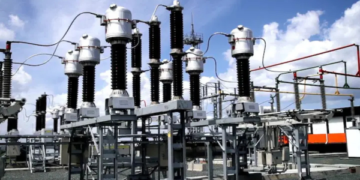
Beyond military posturing, ordinary Iranians were called to take action in a remarkable way. An Iranian official urged young people to gather around power plants across Tehran to send a message to the international community that “attacking public infrastructure” is a “war crime.” “Gather to tell the world that attacking public infrastructure is a war crime,” Alireza Rahimi said.
The post came hours before an Iranian official urged young people to form human chains around the country’s power plants as fears mounted over possible US strikes on civilian infrastructure.
Iran’s Warning to the Region
Iran has signaled that any attack on its energy network could trigger retaliation against civilian infrastructure elsewhere in the region. Iranian and IRGC officials warned that if Iran’s fuel and energy facilities were hit, Tehran could target Israeli power plants, gas rigs, desalination systems, and other strategic civilian sites.
The death toll from the broader conflict paints a devastating picture. More than 3,400 people have been killed across the Middle East. At least 1,400 people have been killed in Lebanon, and 23 have died in Israel. Iranian officials have not released a death toll, but U.S.-based rights group HRANA puts the total of those killed in Iran at almost 3,400, including more than 1,600 civilians. Thirteen U.S. service members have been killed, and two more died of noncombat causes.
Pakistan’s Mediation Efforts
Amid the chaos, a diplomatic window remains open. Pakistan’s “positive and productive” efforts to help stop the war in the Middle East are approaching a “critical, sensitive stage,” Iran’s ambassador to Pakistan said. “Pakistan’s positive and productive endeavours in Good Will and Good Office to stop the war is approaching a critical, sensitive stage,” Ambassador Reza Amiri Moghadam wrote in a post on X. “Stay tuned for more,” he added, without providing further details. Pakistan has been serving as a key intermediary between Iran and the U.S. amid a push for a last-ditch ceasefire.
A World Watching Nervously
As Iran 14 million defenders stand ready and strikes continue to hit civilian and military targets alike, the world watches nervously. Pezeshkian wrote that “more than 14 million” Iranians had declared their readiness to give their lives in defense of the country. The message amounted to one of the clearest public calls yet from Iran’s leadership for national sacrifice as the crisis deepened.
With the Strait of Hormuz closed, oil markets destabilized, airports struck, and the United Nations struggling to broker peace, the Iran crisis has become one of the most consequential geopolitical flashpoints of our time with no clear end in sight.