









Peter Obi Kwankwaso ADC Protest: Opposition Giants March on INEC Over Leadership Crisis
Nigeria’s opposition landscape was rocked to its core as the Peter Obi Kwankwaso ADC protest movement gathered momentum, with some of the country’s most powerful political figures converging in Abuja to push back against INEC’s decision to de-recognise the African Democratic Congress leadership a move they say is designed to cripple their 2027 ambitions.
The Biggest Names in One Room
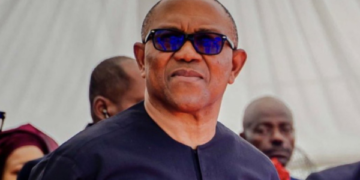
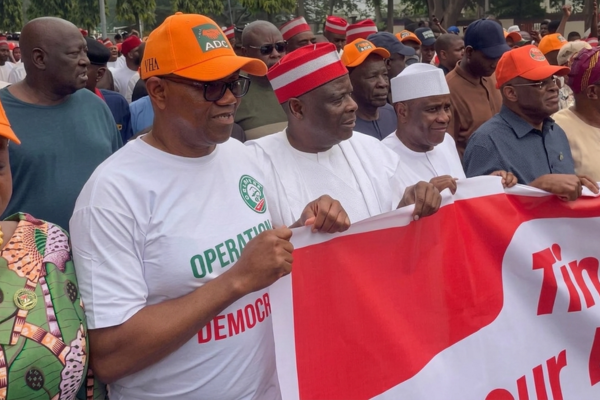
Prominent opposition figures, including former Vice President Atiku Abubakar, Labour Party’s 2023 presidential candidate Peter Obi, former Kano State Governor Rabiu Musa Kwankwaso, and former Sokoto State Governor Senator Aminu Tambuwal, along with other leaders of the African Democratic Congress (ADC), gathered for a press conference addressing INEC’s recent decision to remove Senator David Mark as the party’s National Chairman and delist members of the ADC’s National Working Committee from its official portal.
Among those present were former Vice President Atiku Abubakar, National Chairman of the party Senator David Mark, former Governor of Osun State Rauf Aregbesola, former Kano Governor Rabiu Musa Kwankwaso, former Anambra Governor Peter Obi, former Governor of Rivers State Rotimi Amaechi, former Governor of Cross River State Liyel Imoke, Alhaji Kashim Iman, former Governor of Edo State John Ogidie Oyegun, and former National Chairman of the ADC Ralph Nwosu, among others.
Sources indicate the leaders first convened at Atiku Abubakar’s residence before proceeding to the Yar’Adua Centre. It was a gathering of political heavyweights rarely seen in one room — and the message they came to deliver was unmistakable.
What INEC Did to Trigger the Protest
On Wednesday, the Independent National Electoral Commission (INEC) said it would no longer recognise Mark and Aregbesola as national chairman and national secretary of the ADC, as well as other members of the party’s National Working Committee, until the determination of the leadership tussle before the courts. The electoral umpire also said it will not monitor the national convention of the party slated for April 14.
According to INEC, the move follows “preservatory orders” issued by the Court of Appeal in Appeal No. CA/ABJ/145/2026, involving Senator David Mark and Nafiu Bala Gombe. The commission stated that “the names of the current National Working Committee members led by Senator David Mark would be removed from the INEC portal pursuant to the order of the Court of Appeal to maintain the status quo ante bellum.” The commission explained that the court had directed all parties to maintain the existing situation before the suit was filed and to refrain from actions that could undermine the ongoing proceedings.
The Obidient Movement Joins the Charge
The Peter Obi Kwankwaso ADC protest energy extended beyond the press conference. The Obidient Movement on Thursday, April 2, announced a nationwide protest, saying the action was aimed at “defending Nigeria’s democracy.” The Obidient Movement is a sociopolitical group primarily supporting Peter Obi, the 2023 Labour Party presidential candidate in Nigeria. Obi is presently a member of the African Democratic Congress.
“In Abuja, participants will converge at the ADC National Headquarters. The date and time will be announced accordingly, from where a peaceful march will proceed to the INEC Headquarters. Across the nation, Obidients and all well-meaning Nigerians are encouraged to organise, mobilise, and participate in a coordinated and disciplined manner.”
What Triggered the Government’s Fear
To understand why this crisis erupted when it did, the timeline matters. Obi’s visit on March 22, 2026, to former Kano Governor and 2023 NNPP presidential candidate Senator Rabiu Musa Kwankwaso, where he was warmly received by Kwankwasiyya members, intensified the ruling party’s hostility. The tipping point came at the ADC’s massive rally in Kano on March 30, 2026, where Kwankwaso officially joined the ADC. In what critics described as “a desperate move,” the government manipulated INEC to reinterpret an Appeal Court ruling, leading to the delisting of the ADC’s leadership.
An ADC chieftain noted that “a lot of people who have seen what has transpired within the short period of time — the movement, the political party, how Peter Obi came into the party and mobilised people, Alhaji Musa Rabiu Kwankwaso mobilising, more people coming — that of course scared the government in power. I find it difficult to understand — the government that has already been able to get 31 or 32 state governors behind him — why should he be afraid of running for a free and fair election?”
Peter Obi’s Own Response
Peter Obi explained why he continued to work with ADC figures facing corruption allegations. The former Anambra governor argued that none of the affected ADC members had been convicted. Obi also insisted that his background in business, banking, and governance made him the most qualified contender for the ADC presidential ticket ahead of 2027.
Meanwhile, Obi’s media office released a stark warning. A statement by the Peter Obi Media Office read: “The Media Office of Peter Obi strongly alerts the nation and the international community to a sinister scheme orchestrated by President Bola Ahmad Tinubu and his ruling party, aimed at denying Obi a platform for the upcoming 2027 poll. This underhanded plan has been in motion since the conclusion of the 2023 election, deliberately injecting crises into Obi’s Labour Party to prevent him from securing a foothold for the election. Despite Obi’s relentless efforts to restore peace within the party, government infiltrators, aided by a compromised judiciary, have consistently thwarted these attempts.”
ADC Rejects INEC’s Interpretation
ADC spokesman Bolaji Abdullahi rejected INEC’s interpretation of the court ruling, insisting that the status quo should reflect the leadership structure before the legal dispute — when Mark was in charge. He alleged that the move was part of a broader attempt by the ruling All Progressives Congress to destabilise opposition parties.
The ADC also alleged that “information reaching us is that a public protest is being planned in Abuja, sponsored by a particularly notorious minister. Their expectation is that a protest will give oxygen to a case that is already suffocating in the courts under the weight of its own illegality.”
Other Parties Circle Like Vultures
As the ADC battles for survival, rival parties began moving to capitalize on the chaos. The People’s Redemption Party stated that rather than allowing internal divisions to consume the strength of progressive movements, stakeholders across parties must begin to rethink strategy not as competitors, but as collaborators in a shared mission to rescue Nigeria. “I therefore extend a sincere invitation to key figures and stakeholders within ADC and beyond leaders such as Atiku Abubakar, Rauf Aregbesola, Peter Obi, Rabiu Kwankwaso and others to approach PRP. All emerging voices in the ADC need to consider aligning with a more stable and historically grounded platform.”
The Nigeria Democratic Congress (NDC) also called on prominent opposition figures to join its platform, saying a united front was needed to challenge the ruling APC. In a post on its official X handle, the party invited former presidential candidates Peter Obi, Atiku Abubakar, and Rabiu Musa Kwankwaso, as well as former Rivers State governor Rotimi Amaechi, to join the party as part of a collective effort to reshape Nigeria’s political landscape.
The Bigger Picture for 2027
The Peter Obi Kwankwaso ADC protest represents far more than an internal party dispute. Political observers view INEC’s stance as a significant setback for the opposition alliance, which has been positioning the ADC as a viable alternative to the ruling All Progressives Congress.
With the ADC frozen, the PRP and NDC circling, and the Obidient Movement threatening street protests, Nigeria’s opposition finds itself fighting a war on multiple fronts. The ADC is one of the largest opposition parties, with some prominent politicians as members, including Atiku Abubakar, Peter Obi, and Kwankwaso who came second, third, and fourth respectively in the last presidential election.
As the Peter Obi Kwankwaso ADC protest saga unfolds, one question dominates every political conversation in Nigeria: Is the opposition strong enough to survive this storm, or will the crisis hand Tinubu a clear path to 2027 re-election without a credible challenger? International democracy experts in West Africa warn that when electoral bodies are drawn into partisan battles, the real loser is always the electorate. INEC’s official portal continues to reflect the suspended status of the ADC leadership as the Federal High Court case remains unresolved.