






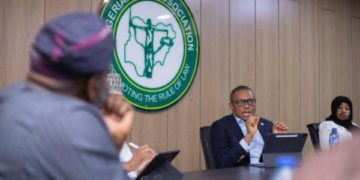
















The Nigerian Bar Association (NBA), Nsukka Branch, has raised concerns over the continued refusal of courts within its jurisdiction to resume physical sittings, despite operating largely through virtual proceedings for nearly three years.
The protest has drawn attention to growing concerns among legal practitioners about access to justice, judicial efficiency, and the integrity of court proceedings in the area.
According to reports, the adoption of virtual hearings was initially introduced due to security challenges affecting parts of the region. However, members of the legal profession are now questioning whether the conditions that necessitated the arrangement still exist and why normal court operations have not been restored.
Lawyers argue that the prolonged reliance on virtual proceedings has created significant practical and professional difficulties. Many practitioners reportedly travel to rural locations and gather in makeshift settings to participate in court sessions, often sharing a single electronic device to connect to proceedings. They contend that such conditions undermine the dignity and professionalism expected within the justice system.
Concerns have also been raised about the potential impact on the fairness and credibility of judicial proceedings. Legal practitioners note that witnesses and counsel may sometimes occupy the same physical space during virtual hearings, creating circumstances that could affect the perception of impartiality and compromise established courtroom standards.
While acknowledging the role of technology in modern judicial administration, the NBA maintains that virtual hearings should complement, rather than replace, physical court sittings where security and infrastructure permit.
According to the association, the administration of justice requires not only efficiency but also a formal environment that safeguards judicial independence, transparency, and public confidence.
The development has sparked wider discussions about the state of the judiciary in Enugu State and the need for authorities to address concerns affecting the justice sector. Stakeholders argue that prolonged dependence on virtual proceedings could create barriers for litigants, lawyers, and witnesses who may lack reliable access to digital facilities.
Legal observers have called on the Enugu State Government, judicial authorities, and the national leadership of the NBA to review the situation and provide clarity on the factors preventing the return of physical court sittings in Nsukka and surrounding areas.
They emphasize that access to justice extends beyond the hearing of cases and includes ensuring that judicial processes are conducted in a manner that upholds public trust, accountability, and the rule of law.
As calls for intervention grow, attention is expected to focus on whether the security concerns that led to the adoption of virtual hearings remain significant enough to justify the continued suspension of regular courtroom proceedings.