

























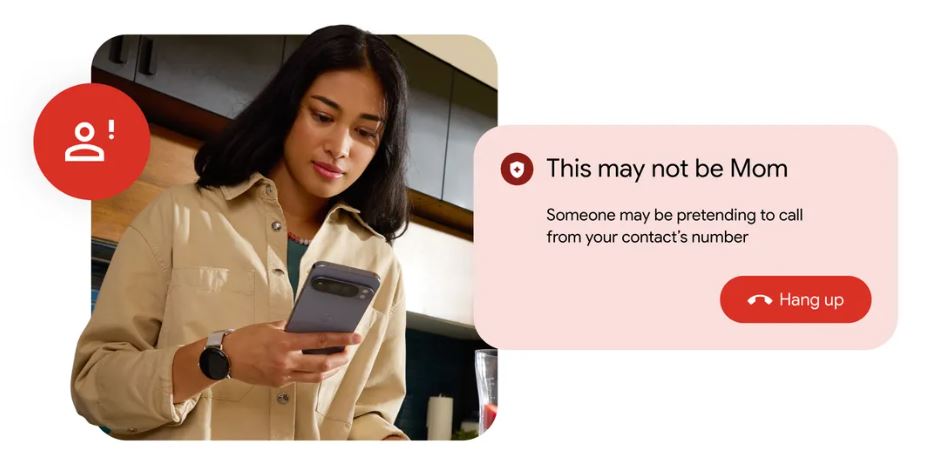
Google has rolled out an advanced AI-powered Fake Call Detector to tackle the alarming surge in voice-cloning scams, which caused global losses exceeding $400 billion in 2025.
The new feature, integrated into the Phone by Google app, analyses incoming calls in real-time and alerts users when it detects synthetic or AI-generated voices. The rollout began in early June 2026, starting with Pixel devices and gradually expanding to other Android phones running Android 12 and above.
Voice cloning scams have become increasingly sophisticated, with fraudsters using just a few seconds of audio from social media to impersonate family members, friends, or officials in fake emergencies. These scams often pressure victims into making urgent money transfers.
“We are seeing a dramatic increase in the use of voice cloning in scams. This new detector helps give users the confidence to know when they might be speaking to a synthetic voice”, a Google spokesperson explained the motivation behind the launch on Wednesday.
The ‘Fake Call Detector’ tool runs on-device to protect privacy and uses Rich Communication Services (RCS) to verify calls. It checks for an encrypted authenticity signal between devices. If the signal is absent or indicates spoofing, the recipient receives an immediate warning such as “This may not be a real person” or “Possible AI voice detected.”The feature works most effectively when both caller and recipient use the Google Phone app, though it provides broader protection against spoofed numbers.
In Nigeria, voice cloning scams have risen sharply, with fraudsters frequently impersonating children abroad or relatives to exploit family emotions. The $400 billion global loss figure from 2025 underscores the scale of the problem, according to global fraud assessments.
The new detector is expected to offer significant protection for Android users, who dominate the Nigerian smartphone market.
While the new tool is a welcome development, Google and cybersecurity experts advise users to always verify urgent financial requests via alternative channels, such as video calls, and be cautious about sharing personal voice recordings on social media. Other tips include keeping their Google Phone app updated for the latest security features and enabling the detector when it becomes available on their device.
Google’s initiative forms part of broader efforts to counter the misuse of AI. Experts anticipate similar protective features from other smartphone manufacturers soon.
As voice cloning technology becomes more accessible, this proactive step by Google represents an important advancement in digital security for everyday users.