
























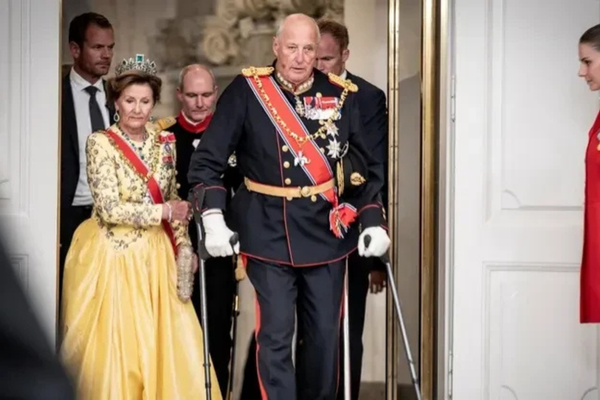
King Harald V of Norway, Europe’s oldest monarch, has died at the age of 89, ending a reign marked by modernisation, resilience and a willingness to challenge royal traditions.
The Royal Palace confirmed that Harald died at the National Hospital in Oslo on Friday at 6:35 a.m. local time.
His death means his son, Crown Prince Haakon, automatically succeeds him as King Haakon VIII.
Harald’s death marks the end of an era. He was Europe’s longest-reigning and oldest monarch, remaining on the throne despite a wave of royal abdications across the continent.
Although Norway’s monarchy is largely ceremonial, Harald enjoyed widespread public support. He was known for his warmth, humility and unconventional approach to royal duties.
Born in 1937 in Asker, near Oslo, Harald was the first Norwegian prince born on Norwegian soil in centuries.
His childhood was disrupted by World War II. Nazi Germany occupied Norway when he was three, forcing his mother to flee the country with Harald and his sisters.
They eventually travelled to the United States, while his father and grandfather went to Britain and continued Norway’s resistance from exile.
Harald became king in 1991 following the death of his father, King Olav V. His reign coincided with Norway’s transformation into one of the world’s wealthiest countries through its oil and gas resources.
One of Harald’s most notable challenges to royal convention came through his marriage to Sonja Haraldsen, his longtime sweetheart and a commoner.
After years of public debate over whether he could marry outside royal circles, Harald married Sonja in 1968. She later became Queen Sonja and a highly respected member of the Norwegian royal family.
Harald is survived by Queen Sonja, King Haakon VIII and his daughter, Princess Märtha Louise.
His nearly 35-year reign leaves behind a legacy of resilience, humility and quiet defiance, shaped by both his wartime experiences and decades of service to Norway.