
























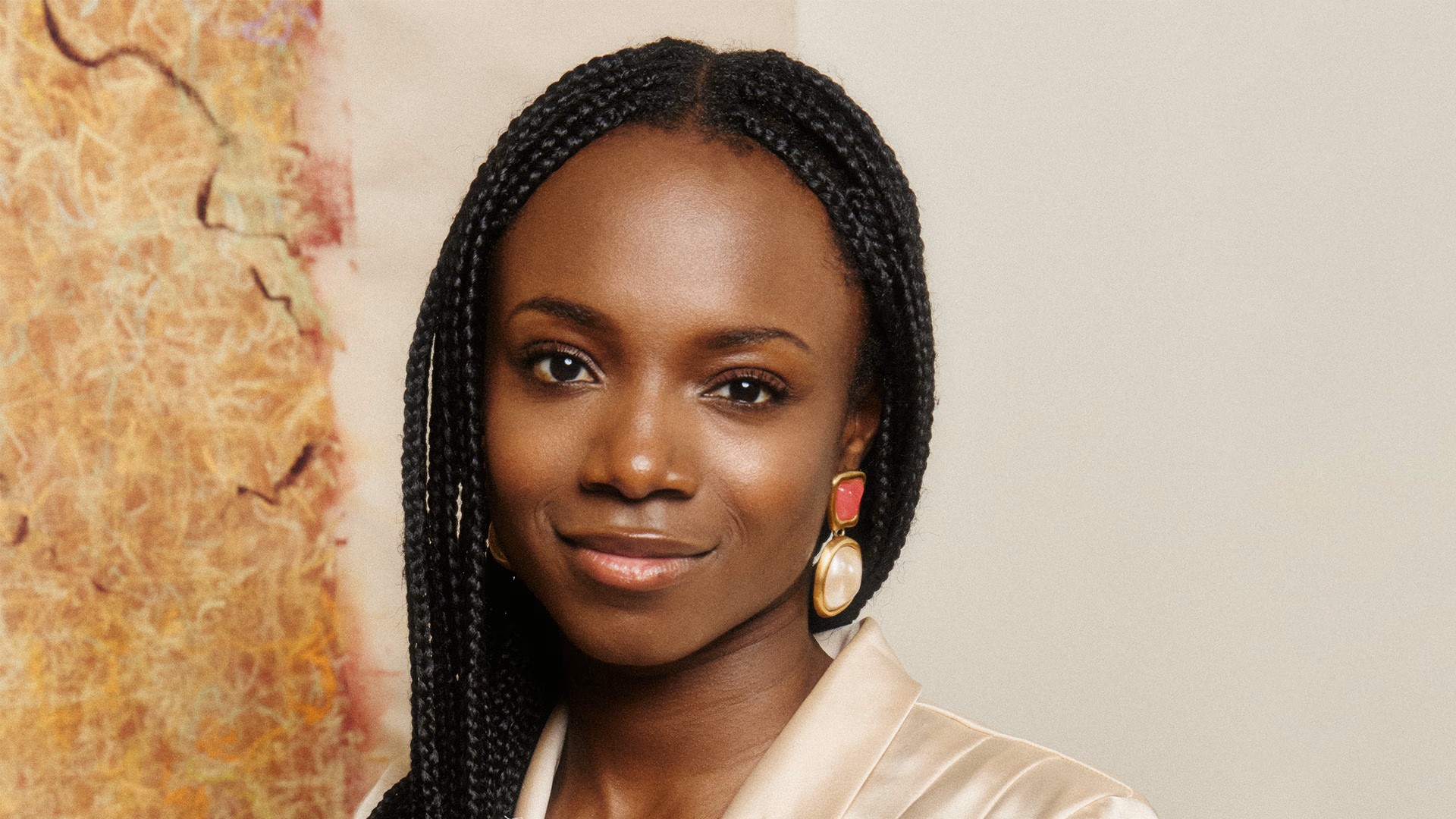
Nigerian-American engineer and Harvard graduate, Yinka Ogunbiyi, is changing the hair braiding industry with innovative technology. She is the founder and CEO of HaloBraid, the company behind the world’s first patented braid-assist robotic system designed to support professional hair braiders.
The idea for HaloBraid was born during the COVID-19 lockdown. After spending
four days trying to braid her own hair, Ogunbiyi realized millions of people faced the same challenge.
Drawing on her background in biomechanical engineering and her joint MS/MBA from Harvard Engineering School and Harvard Business School, she saw an engineering problem waiting to be solved.
She partnered with fellow Harvard graduate and Nigerian engineer David Afolabi to develop the technology. The team built more than 450 prototypes over 18 months and tested thousands of braids before creating a working solution.
HaloBraid functions as a collaborative robot, or “cobot,” designed to assist rather than replace professional stylists. Hairdressers still handle sectioning, knot creation, styling, and finishing touches.
The robot focuses on the repetitive mid-shaft weaving process, which accounts for about 80 percent of a typical braiding session, significantly reducing the time required.
“I don’t think anything will get lost from the experience. If anything, it enriches it,” Ogunbiyi said. She explained that the technology simply handles repetitive movements that consume the most time and place the greatest strain on stylists.
Beyond improving speed, HaloBraid also addresses health challenges faced by braiders, including arthritis, carpal tunnel syndrome, and spinal strain caused by years of repetitive work.
In 2026, HaloBraid secured $7 million in seed funding led by Seven Seven Six, the venture capital firm founded by Alexis Ohanian. Investors also included AlleyCorp and Bling Capital.
Even before its commercial launch, the company had attracted a waiting list of more than 7,000 salons. HaloBraid also reported that 95 percent of surveyed Black women would choose protective hairstyles more often if appointments were shorter.
Powered by machine learning, the device performs the repetitive weaving process up to five times faster than manual braiding while maintaining professional-quality results. The company is also developing other technologies to make textured hair care easier, including tools that simplify braid removal.
Through HaloBraid, Ogunbiyi aims to preserve the artistry of professional hair braiding while giving both stylists and clients back valuable time.