
















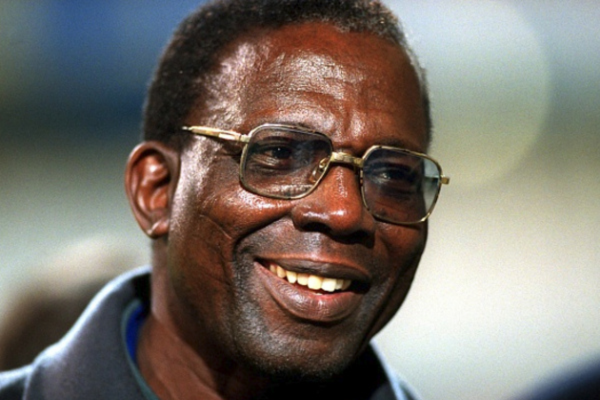
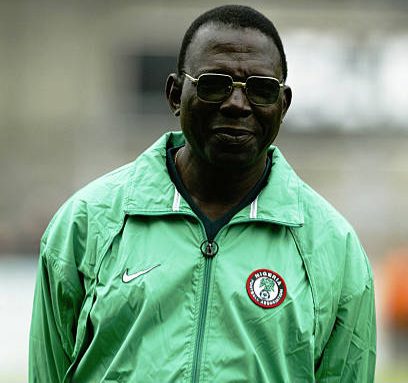
Nigerian football has lost one of its greatest pioneers. Adegboye Onigbinde, the first indigenous coach of the Super Eagles and one of the most respected football minds the country has ever produced, died on Monday, March 9, 2026, at the age of 88 ust four days after celebrating his birthday.
His passing marks the end of an era for Nigerian football, and tributes have been pouring in from across the country and the wider football world since the news broke on Monday evening.
The Family Announcement
Onigbinde’s family confirmed his passing on Monday, March 9, 2026, through a WhatsApp message signed by a relative, Bolade Adesuyi. The announcement came just four days after he celebrated his 88th birthday on March 5.
The family’s statement was dignified and deeply moving, capturing the full weight of the man they had lost:
“With great gratitude to God for a life well spent, we announce the passing of this great man, a Modakeke High Chief, the first indigenous Nigerian Super Eagles football coach, father, husband, grandfather, great-grandfather, brother and friend, High Chief Festus Adegboye Onigbinde. We thank God for the fulfilled life and your contributions to the Nigerian nation and the world as an unequalled football coach. We pray that your soul will rest perfectly in the bosom of your and our Lord Jesus Christ. Good night, till we meet to part no more.”
The family also disclosed that the veteran football tactician had been ill for some time before his passing. Funeral arrangements are yet to be announced.
Early Career and Rise to Prominence
Born on March 5, 1938, Adegboye Onigbinde carved his name into Nigerian football history through decades of dedication, discipline, and an unmatched passion for developing the game at every level.
He first took charge of the national team in 1983, succeeding Brazilian coach Otto Gloria. His appointment was historic in itself at a time when Nigerian football was still largely dependent on foreign coaches, Onigbinde’s emergence as a credible indigenous tactician broke new ground and inspired a generation of local coaches who came after him.
He held the traditional title of High Chief in Modakeke, Osun State, and was widely respected for his immense contributions to the growth and professionalisation of football in Nigeria. Beyond the trophies and tournaments, those who knew him spoke of a man of extraordinary character disciplined, principled, and deeply committed to the idea that Nigerian coaches could stand shoulder to shoulder with the world’s best.
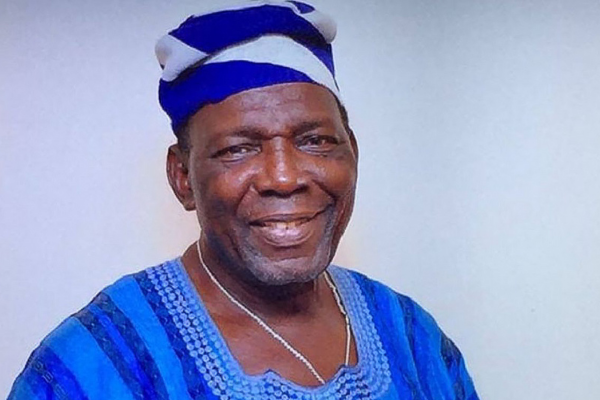
The 1984 AFCON Final: Nigeria’s Silver Medal
One of the defining chapters of Onigbinde’s first stint as national team coach came at the 1984 Africa Cup of Nations, held in Côte d’Ivoire. Under his guidance, Nigeria then still known as the Green Eagles navigated the tournament all the way to the final, a feat that announced the country as a genuine continental power.
The final, however, ended in heartbreak. Nigeria lost 3-1 to Cameroon , finishing as runners-up in what remains one of the most memorable AFCON finals of that era. Despite the defeat, Onigbinde’s achievement in reaching the final with an indigenous coaching approach was celebrated as a milestone moment for Nigerian football.
That same year, he took charge of Shooting Stars Sports Club and guided the Ibadan side to the final of the African Cup of Champions Clubs, where the Nigerian side eventually lost their place in the tournament to Zamalek SC. It was a period that cemented his reputation as one of the sharpest football minds on the continent.
Making History at the 2002 FIFA World Cup
Nearly two decades after his first stint, Onigbinde was called upon again and he answered with the same quiet confidence that had always defined him.
He returned to the dugout in 2002, replacing the late Shuaibu Amodu , and immediately set about the task of preparing Nigeria for the biggest stage in world football. What followed would seal his place in history permanently.
He became the first indigenous coach to lead the Super Eagles to the FIFA World Cup, guiding a youthful Nigerian squad to the tournament co-hosted by Japan and South Korea. The significance of that achievement cannot be overstated no Nigerian-born coach had ever done it before, and Onigbinde did it with composure, tactical intelligence, and a deep belief in homegrown talent.
Nigeria’s campaign ended in the group stage after defeats to Argentina and Sweden, alongside a goalless draw with England. But the result mattered far less than the journey and the door that Onigbinde had permanently opened for indigenous coaches in Nigerian football.
His tenure shaped the careers of future stars like Jay-Jay Okocha and Julius Aghahowa , players who went on to become legends of Nigerian football and who carried lessons learned under Onigbinde’s watchful eye onto the grandest stages of the sport.
A Legacy Beyond the Touchline
What made Adegboye Onigbinde truly exceptional was not just what he achieved as a coach, it was what he gave back to the game long after his time on the touchline had ended.
Beyond his achievements with the national team, he played a significant role in football education and development across Africa. Onigbinde served as an instructor for both the Confederation of African Football (CAF) and FIFA, mentoring young coaches and contributing to training programmes aimed at strengthening football structures on the continent.
This was a man who understood that his greatest contribution to Nigerian football would not be measured in trophies alone but in the coaches he trained, the systems he helped build, and the standards he set for those who came after him. His work with CAF and FIFA ensured that his influence spread far beyond Nigeria’s borders, touching football development programmes across the African continent. For more on his contributions to African football development, see coverage from Channels Television and the Confederation of African Football.
Nigeria Mourns: Tributes Pour In for Adegboye Onigbinde
Since the news of his passing broke on Monday evening, tributes have flooded in from across the Nigerian football community and beyond. Former players, fellow coaches, football administrators, and ordinary fans have all taken to social media to express their grief and pay their respects to a man who gave so much to the game.
Many have highlighted the poignant timing of his death passing away just four days after celebrating his 88th birthday, as if he had waited to mark one final milestone before departing. Others have spoken about the man behind the coach his warmth, his wisdom, his generosity with knowledge, and his unwavering belief that Nigeria had the talent and the intelligence to compete at the highest levels of the game.
The Nigerian Football Federation is expected to issue an official statement in the coming hours, with further tributes anticipated from the national team, football clubs, and government officials who recognised his contribution to the country.
Final Thoughts
The death of Adegboye Onigbinde leaves a void in Nigerian football that will not easily be filled. He was more than a coach, he was a trailblazer, a teacher, a High Chief, and a man who dedicated his life to proving that Nigerian football could stand on its own feet without always looking to foreign expertise for answers.
He took the Green Eagles to an AFCON final. He took the Super Eagles to a World Cup. He trained coaches across an entire continent. And he did all of it with a dignity and professionalism that earned him respect wherever football is played.
Nigeria has lost a giant. But the legacy of High Chief Festus Adegboye Onigbinde the first, the pioneer, the unequalled will endure for as long as football is played on Nigerian soil. Rest well, Coach.
Stay with us for updates as tributes continue to pour in.