










Table of Contents
Boko Haram releases a video of 416 abducted Borno victims and what it contains has shaken Nigeria to its foundations. In a six-minute, 43-second clip obtained by journalists on Thursday, April 10, 2026, the terrorist faction known as Jama’atu Ahlis-Sunna Lidda’Awati Wal-Jihad (JAS) displayed the captives from Ngoshe community in Gwoza Local Government Area of Borno State mostly women and children, with some men and infants begging Nigerian leaders to secure their release. The video is the most chilling proof yet of the scale of a hostage crisis that the Nigerian government has been slow to confront, and that 416 of its own citizens are paying for with their freedom and potentially their lives.
1. The Disturbing Video — What It Shows
The video, released by the JAS faction of Boko Haram under the leadership of Imam Abu Umaimatul Muhajjir, shows the abducted victims assembled together in an unknown location alive, but clearly in distress. The clip was made, according to the group’s spokesperson, at the request of the Borno South Youths Alliance (BOSYA), which has been quietly mediating for the captives’ release.
A masked JAS spokesman said in the video: “We are Jama’atu Ahlis-Sunna Lidda’Awati Wal-Jihad (JAS) under the leadership of Imam Abu Umaimatul Muhajjir. As you can see, they are fine we do not harm them or rape them. We are doing this because religion taught us so.”
After making its statement, the group turned the camera toward the victims, allowing them to speak directly. The footage the most concrete evidence yet that Boko Haram has released a video of 416 abducted Borno victims has been described by witnesses and analysts as a deliberate act of psychological warfare designed to pressure the Nigerian government into negotiations while demonstrating the group’s continued territorial and human reach.
2. Who Are the 416 Abducted Victims?
The 416 abducted Borno victims are predominantly from Ngoshe community a recently resettled town in Gwoza LGA, Southern Borno, located near the Mandara Mountains. This community had already suffered years of Boko Haram displacement before its residents bravely returned to rebuild their lives only to be overrun again.
The victims include:
- Women — including nursing mothers and elderly women
- Children — some brought into captivity without clothing
- Infants — described by mediators as being in extremely fragile condition
- Men — a smaller number visible in the video
- Sick individuals — reportedly being given medicine by the captors
According to Samaila Kaigama, President of the Borno South Youth Alliance, the figure of 416 differs significantly from earlier media reports that had underestimated the true number of captives. The confirmation of 416 living captives obtained directly from the abductors through days of engagement represents the first verified count of the hostage crisis since the March attack.
3. What the Victims Said on Camera — Their Words Are Heartbreaking
The most devastating portion of the video in which Boko Haram releases footage of 416 abducted Borno victims is when the captives themselves speak. One woman, identified as being from Ngoshe community, addressed the camera directly:
“We are the people of Ngoshe who were abducted during the last attack. We are grateful to Allah, we are hale and healthy with women and children. Some of the sick people here are treated, given medicine and taken care of. Some of our children are brought here without clothes and are given clothes to wear. We thank God. They gave us where to sleep and provided us with food.”
Then came the most haunting part of her statement:
“The truth is, we are restless and worried about our families and relatives’ well-being. Some were killed by airforce bombs. Some were affected by different calamities. Some of our families don’t even know whether we are dead or alive — but we are grateful this video will show signs of life and health.”
She then made a direct appeal by name to President Bola Tinubu, Vice President Kashim Shettima, Borno State Governor Babagana Zulum, and Senator Ali Ndume begging each of them to act for their release.
4. The Borno South Youth Alliance — Mediators Operating in the Shadows
The existence of the Borno South Youth Alliance (BOSYA) as a back-channel mediator between the Nigerian state and the JAS faction of Boko Haram is itself a significant revelation. In a statement issued Thursday night, BOSYA President Samaila Kaigama confirmed that the group had been “actively and discreetly mediating” for the captives’ release for weeks.
The statement read: “The Borno South Youth Alliance wishes to inform the public that we have been actively and discreetly mediating for the release of our Southern Borno brothers and sisters who were abducted when insurgents overran Ngoshe. Following days of engagement, discussions, and humanitarian appeals, we were provided with an official figure of 416 victims currently alive in captivity by the abductors.”
BOSYA also made a direct appeal to the international community specifically naming the United Nations, global leaders, and US President Donald Trump to support efforts for the safe and immediate release of the captives. The group also called on both the Nigerian federal government and the Borno State government to demonstrate “visible and measurable efforts” in securing the victims’ freedom.
5. How Ngoshe Was Overrun — The March 2026 Attack That Started This Crisis
To understand how Boko Haram came to hold 416 abducted Borno victims, you must go back to the night of March 4-5, 2026 when JAS militants launched a devastating assault on Ngoshe shortly after residents had broken their Ramadan fast.
According to Vanguard Nigeria, the terrorists first attacked the 82 Division Task Force Battalion military base in Ngoshe, overwhelming soldiers with superior numbers and firepower. Once the military base was dislodged, the attackers moved into the community itself killing the Chief Imam of Ngoshe, several community elders, and a number of soldiers, before carrying out the mass abduction of women, children, and men.
According to Daily Trust, JAS subsequently released a video declaring they had renamed Ngoshe “Daula Islamia” Islamic State and vowed to hold the town through Eid al-Fitr. Thousands of civilians fled to the neighbouring town of Pulka, where they remain displaced. When survivors attempted to return weeks later, Boko Haram planted IEDs along the Ngoshe-Pulka road killing four and injuring 24 more.
6. Nigeria’s Response — Too Little, Too Late?
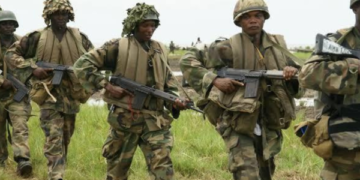
Since the March attack, the Nigerian military’s Operation Hadin Kai has conducted airstrikes and ground operations in the Gwoza area. Troops also foiled a major abduction attempt on March 30, rescuing over 150 civilians along the Buratai-Kamuya axis. On April 9, 2026 the day before the hostage video emerged Boko Haram and ISWAP attacked Pulka and Benesheikh again, further demonstrating the group’s continued operational reach.
Senator Ali Ndume, representing Borno South, has repeatedly warned that soldiers lack adequate equipment to confront the terrorists. He stated bluntly that military personnel are doing their best but are outgunned and that the federal government must act decisively, not just rhetorically, on its declared state of emergency in the security sector.
For full context on Nigeria’s counter-insurgency challenges, the UN’s Office of the High Commissioner for Human Rights has documented the systematic violations that persist in northeast Nigeria underscoring how deeply entrenched this crisis remains despite years of military operations.
7. What Must Happen Next to Free 416 Nigerians
The fact that Boko Haram has released a video of 416 abducted Borno victims begging for rescue is not just a propaganda victory for JAS it is a national emergency that demands an immediate, comprehensive response. Every hour that passes is an hour longer for the infants, the nursing mothers, the elderly, and the sick among those 416 captives.
What Nigeria must do urgently:
- Acknowledge the full scale of the crisis 416 confirmed captives, not the lower figures previously circulated.
- Empower and resource BOSYA and other mediators to continue back-channel negotiations under proper government oversight.
- Deploy adequate military equipment attack helicopters, armoured vehicles, and electronic surveillance to the Gwoza-Mandara Mountains theatre.
- Engage international partners the UN, the African Union, and bilateral allies to add diplomatic and intelligence pressure for the captives’ release.
- Prepare a humanitarian reception plan for when the captives are freed including medical care, trauma support, and resettlement assistance.
These 416 Nigerians went to sleep in their homes in Ngoshe on a Ramadan evening. They woke up as hostages. Nigeria owes them more than a government statement. It owes them their lives and their freedom — and the time to deliver both is running out.
Stay updated on Nigeria’s security crisis in our News section.