










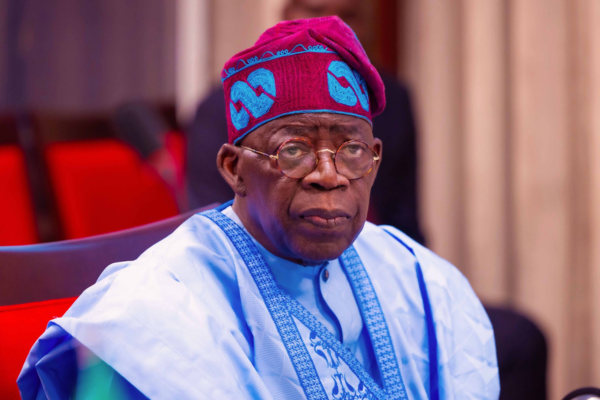
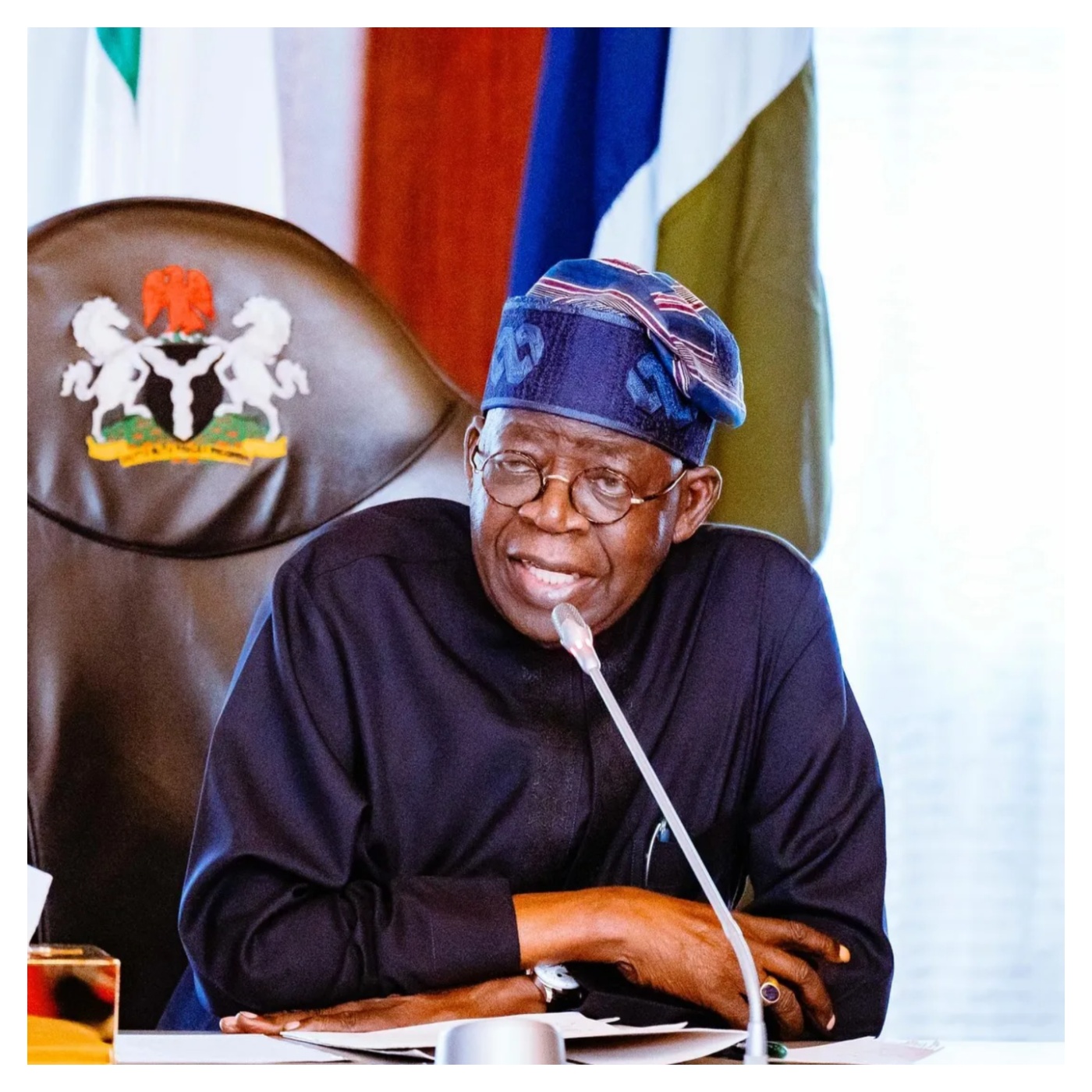
President Bola Tinubu has sent a direct and defiant message to every terrorist group operating within Nigeria’s borders and to every Nigerian watching from home: Nigeria will never surrender. The president made the declaration on Monday, March 9, 2026, while hosting religious and traditional leaders for an interfaith breaking of the Ramadan fast at the Presidential Villa in Abuja, and the message was as clear as it was forceful.
From the security crisis gripping the nation, to the state of the economy, to the role of faith leaders in building national unity Tinubu’s Nigeria will never surrender speech covered it all. Here is a full breakdown of everything the president said and what it means for Nigeria going forward.
Declaration 1: Tinubu Says Nigeria Will Never Surrender to Terrorists
The most powerful moment of the evening came when President Tinubu declared that Nigeria will never surrender to the forces of violence and instability that have plagued the country for years. Speaking directly to the gathering of religious and traditional leaders and, through them, to the entire nation the president’s words carried the weight of a commander in chief drawing a clear and unmovable line.
“Nigeria will never surrender. We are not discouraged. We are going to win and win well,” the president declared to the assembled gathering of traditional rulers and religious leaders from all six geopolitical zones of the country.
The statement was not made lightly. Nigeria is currently battling a complex web of security threats from Boko Haram remnants in the northeast, to bandits terrorising the northwest, to separatist agitation in the southeast and kidnapping networks operating across multiple states. Against that backdrop, Tinubu’s Nigeria will never surrender declaration was both a rallying cry and a firm signal to those threatening the country’s peace.
Declaration 2: Terrorists Are Getting Desperate and Losing Ground
Beyond the broad declaration of national resolve, President Tinubu offered a more specific assessment of the security situation — one that, if accurate, represents genuinely encouraging news for millions of Nigerians living under the shadow of insecurity.
The president declared that terrorist groups operating in Nigeria are becoming increasingly desperate as sustained military pressure continues to weaken their operations, saying the terrorists “leave trails of blood in their wake” because “they are getting barraged and defeated.”
This is a significant claim. For years, critics of the federal government have argued that Nigeria’s military responses to insurgency and banditry have been reactive rather than strategic putting out fires rather than dismantling the networks that start them. If Tinubu’s assessment is correct and the security forces are genuinely gaining the upper hand, it would mark a turning point that Nigerians have waited a long time to see. However, many observers will be watching closely to see whether ground realities in affected communities reflect the optimism of Aso Rock.
Declaration 3: The Economy Has Turned the Corner
Security was not the only front on which President Tinubu delivered bold declarations. He also addressed the Nigerian economy directly and his assessment was notably upbeat, even as many ordinary Nigerians continue to struggle with the consequences of painful reforms introduced since his administration took office in May 2023.
Tinubu told the gathering that the economy has turned the corner, with pensioners gradually receiving relief, and that no state governor is currently running to banks to borrow money to pay workers’ salaries a scenario he described as a marked improvement on the situation his administration inherited.
He acknowledged the difficulty of the path that led to this point. “It was very daunting and challenging when we took over. But today I can say with pride and joy that we have survived,” he said.
The remarks will inevitably be met with mixed reactions. While macroeconomic indicators including reduced foreign exchange volatility and improved government revenue have shown some improvement, millions of Nigerians are still contending with high food prices, expensive fuel, and a cost of living that remains crushingly high for the majority of the population.
Declaration 4: We Saved Nigeria From Bankruptcy
In what may have been his most sweeping economic claim of the evening, President Tinubu stated plainly that his administration had pulled Nigeria back from the edge of financial collapse a declaration that speaks directly to the most contentious debates about his economic legacy so far.
The president said his administration saved Nigeria from bankruptcy, and that pensioners are gradually getting relief as the economy stabilises. He described his gratitude for the opportunity to serve and reaffirmed his personal commitment to continue faithfully discharging his duties as president.
The claim that Nigeria was saved from bankruptcy refers, in part, to the removal of the fuel subsidy in May 2023 a decision that freed up hundreds of billions of naira in government spending but caused an immediate and severe spike in fuel prices and inflation. His administration has consistently argued that the short-term pain of that and other reforms was necessary to prevent a deeper, longer-term economic collapse. Critics, however, continue to debate whether the burden of those reforms has been distributed fairly.
Declaration 5: Faith Leaders Are the Foundation of National Unity
Addressing the room full of traditional rulers and religious leaders directly, President Tinubu used the occasion to underscore something he clearly believes deeply that Nigeria’s unity cannot be sustained by government alone.
Tinubu acknowledged the critical roles of the religious and traditional leaders in promoting peace, stability, and moral guidance within their communities, stating that no agent of instability would be allowed to undermine the nation’s peace, unity, and sovereignty.
The gathering itself an interfaith breaking of the Ramadan fast that brought together Christian and Muslim leaders alongside traditional rulers from all six geopolitical zones was symbolic of exactly the kind of unity Tinubu spoke about. The Etsu Nupe, Yahaya Abubakar, expressed gratitude for the occasion, calling it a symbol of unity, while Archbishop Daniel Okoh of CAN pledged the church’s support for the administration’s efforts to transform the economy and strengthen security.
How Nigerians Are Reacting to Tinubu’s Nigeria Will Never Surrender Speech
As always when the president speaks, reactions across Nigerian social media have been sharply divided reflecting the deep polarisation that characterises public opinion on the Tinubu administration.
Supporters have welcomed the president’s defiant tone on security, arguing that strong and unequivocal leadership language sends an important message both to terrorist groups and to the international community about Nigeria’s resolve. They have also pointed to the interfaith nature of the gathering as evidence of a president genuinely committed to bridging religious and ethnic divides.
Critics, meanwhile, have questioned whether bold words on a presidential podium translate into meaningful change on the ground in the villages of Zamfara, the forests of Borno, or the highways of the Southeast where ordinary Nigerians face daily threats to their safety. Some have also pushed back on the economic optimism, arguing that the “turned the corner” narrative does not match the lived experience of millions of Nigerians still struggling to afford basic necessities.
For wider context on Nigeria’s current security situation, see reporting from Premium Times and Channels Television.
Final Thoughts on Tinubu’s Nigeria Will Never Surrender Declaration
Monday’s address was, in many ways, a microcosm of the Tinubu presidency itself bold declarations, sweeping optimism, and a clear belief that Nigeria is on the right path, delivered into a room full of people who want to believe it, while a sceptical public watches from outside.
Whether Tinubu’s Nigeria will never surrender declaration becomes a defining moment of national resolve or simply another speech that fails to match the reality on the ground will depend entirely on what happens next. On the streets of Maiduguri, in the farms of Kaduna, and in the markets of Lagos, ordinary Nigerians are not listening for speeches. They are watching for results.
The president has drawn his line. Now comes the harder part: can his administration deliver on the promises that line represents?
Stay with us for the latest updates on Nigerian politics and security.