








By Samuel Abasiekong-Abasiekong
Atiku Abubakar, a Nigerian politician from Jada village in Mayo Belwa Local Government Area of Adamawa State was born in November 25, 1946
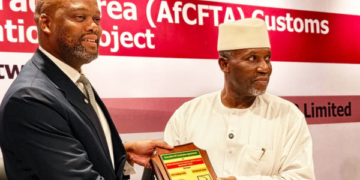
Atiku joined the Nigerian Customs Service in 1969 after graduating from Ahmadu Bello University with a Diploma in Law.
He later further his studies and earned a Master’s degree in International Relations from Anglia Ruskin University in 2021
While in the Custom Services, Atiku voluntarily retired in April 1989 at aged 43 when he rose to the position of Deputy Director, which was the second-highest position in the service at the time.
After retirement, Atiku went on to build a successful business career and later joined politics, hence he became the Vice President of Nigeria in 1999 under President Olusegun Obasanjo.
After serving as the 11th Vice President of Nigeria from 1999 to 2007 under Obasanjo, Atiku Abubakar has contested elections to be Nigeria President four times, including in 1993, 2007, 2019, and 2023, but lost each time.
His fifth outing will be in 2031, if he will contest again.
Atiku Abubakar is the Co-founder of Intels Nigeria Limited, an oil servicing business. He also has businesses and interests in education sector, real estate, agriculture, and manufacturing
Married to four wives with 28 children, the former Chairman of the National Economic Council and head of the National Council on Privatization has been a member of several political parties, including the SDP, PDP, AC, ACN, APC and later returned to the PDP.
Atiku Abubakar like championing “True Federalism” in his campaigns and always advocates for a more decentralized governance structure in Nigeria.
1993:
In 1993, Atiku had put up machinery to contest Nigeria Presidential election but later stepped down for MKO Abiola, allowing Abiola to win the SDP’s presidential ticket.
Atiku Abubakar’s decision paved the way for Abiola’s historic June 12, 1993, victory.
Abiola’s main opponent in the 1993 presidential election was Bashir Tofa of the National Republican Convention (NRC).
2003:
Atiku Abubakar didn’t contest the presidential election in 2003 as the main candidate. Instead he was the running mate for second term to Olusegun Obasanjo, the presidential candidate of the People’s Democratic Party (PDP). Their ticket won the re-election, with Obasanjo becoming the President of Nigeria and both served together till 2007.
Some of the notable opponents of Obasanjo/Atiku presidential bid in 2003 were:
Muhammadu Buhari (ANPP) ran with Chuba Okadigbo as his vice-presidential candidate
Olusegun Obasanjo (PDP) scored 24,456,140 votes representing 61.94% of total votes
Muhammadu Buhari (ANPP) scored 12,710,022 votes representing 32.19% of total votes
2007:
Atiku Abubakar contested the 2007 presidential election on the platform of the Action Congress (AC), His running mate was Benjamin Nwabueze
Some notable opponents in the 2007 presidential election were Umaru Musa Yar’Adua (PDP) who won the election.
Muhammadu Buhari (ANPP) lost
It’s worth noting that Atiku Abubakar had considered Bola Tinubu as his running mate but ultimately opted Benjamin Nwabueze
In the 2007 Presidential election Atiku Abubakar scored 2,637,848 votes, representing 7.45% of the total votes cast
Muhammadu Buhari (ANPP) scored 6,605,299 votes
Umaru Musa Yar’Adua scored 24,638,063 votes, representing 69.60% of the total votes cast, winning the election
2011:
Atiku Abubakar didn’t contest the 2011 presidential election.
The notable candidates in that election were:
Goodluck Jonathan (PDP): Won the election with a significant majority
Muhammadu Buhari (CPC): Lost, scoring 31.98% of the vote, with Pastor Tunde Bakare as his running mate
Nuhu Ribadu (ACN) Also contested, but didn’t win
Votes scored were as follow:
Goodluck Jonathan (PDP) scored 22,495,187 votes representing 58.87% of total votes
Muhammadu Buhari (CPC) scored 12,214,853 votes representing 31.97% of total votes
Nuhu Ribadu (ACN) scored 2,079,151 votes representing 5.44% of total votes
2015:
Atiku Abubakar didn’t contest the 2015 presidential election.
He supported Goodluck Jonathan, the PDP candidate in that election instead
The main candidates in the 2015 presidential election were: Muhammadu Buhari (APC) who won the election with Prof. Yemi Osinbajo as his running mate
Goodluck Jonathan (PDP) lost, with Namadi Sambo as his running mate
The votes scored were:
Muhammadu Buhari scored 15,424,921 votes representing 53.96% of total votes cast
Goodluck Jonathan, 12,853,162 scored votes representing 44.96% of total votes cast.
2019
Atiku Abubakar contested the 2019 presidential election on the PDP platform, with Peter Obi as his running mate but Atiku lost to
Muhammadu Buhari of (APC)
Muhammadu Buhari (APC) scored 15,191,847 votes representing 55.60%
He won in 19 States
Atiku Abubakar (PDP), scored 11,262,978 representing 41.22%. Atiku won in 17 States FCT (Federal Capital Territory)
2023:
Atiku Abubakar contested the 2023 presidential election on the People’s Democratic Party (PDP) platform. His running mate was Ifeanyi Okowa, the immediate former Governor of Delta State.
Some of the notable opponents in the 2023 presidential election were: Bola Tinubu (APC)
Peter Obi (Labour Party) and Rabiu Kwankwaso (NNPP)
Here are the numbers of votes scored by each candidate:
Bola Tinubu (APC) scored 8,794,726 votes
Atiku Abubakar (PDP) scored 6,984,520 votes
Peter Obi (Labour Party) scored 6,101,533 votes
Rabiu Kwankwaso (NNPP) scored 1,496,687 votes.
2027
With the 2027 Presidential election to elect the 17th President of the Federal Republic of Nigeria drawing near, would Atiku contest again? Will he be Nigeria President some day?
©️ Compiled by:
Samuel Abasiekong-Abasiekong
(Reporting in French and English languages)
E-mail: abasiekongabasiekong@gmail.com
+234 8062700985