
















Zakat-ul-Fitr 2026
In anticipation of Eid‑ul‑Fitr 2026, Muslim communities across the globe are preparing to give Zakat‑ul‑Fitr, a form of charity that every eligible Muslim is required to pay before the Eid prayer.
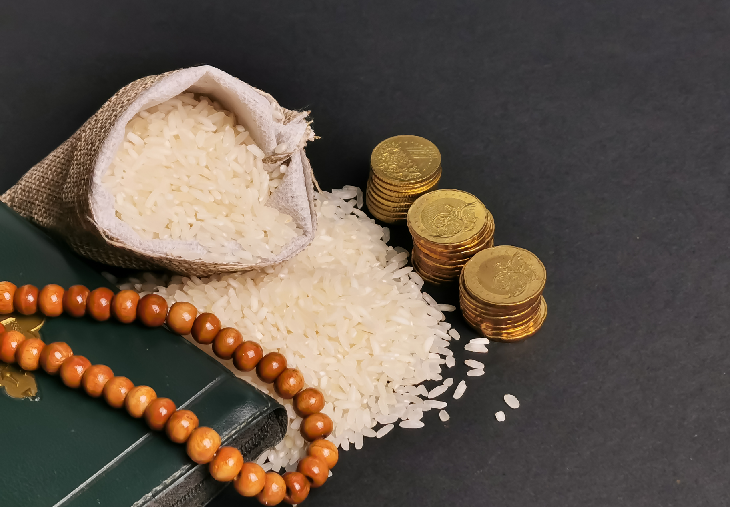
Scholars have explained that Zakat‑ul‑Fitr is a fixed amount tied either to staple foods such as rice, wheat, or dates, or their cash equivalent.
The act not only purifies the fasting individual but also supports those in need, ensuring they can enjoy the festival alongside others.
This year, as economic challenges and rising food costs affect many, fulfilling this obligation
remains especially meaningful.
“Zakat‑ul‑Fitr is not just a ritual; it is a way to strengthen the bonds
of community and help ensure that everyone can participate in the joy of Eid.
Understanding Zakat‑ul‑Fitr 2026: Who Should Pay and How Much?
Zakat‑ul‑Fitr is mandatory for every Muslim who possesses more than what is necessary
for personal and family needs.
This includes adults, children, and dependents, with the head of the household responsible for calculating and paying the total for the entire family.
For newborns or those unable to earn, guardians should ensure their share is covered.
Traditionally, the amount is measured by one saa’ of staple food per person, roughly
equivalent to 2.5–3 kilograms
In modern practice, many Muslims opt to pay the monetary equivalent based on local market prices, to simplify distribution.
Local Islamic authorities have published guidelines for 2026, with amounts varying from country
to country.
The key principle is to provide enough to feed one person, allowing recipients
to celebrate Eid with proper meals.
Adults and dependents ; obligation applies to everyone who has sufficient means
Newborns ; obligation is paid by guardians if born before the last sunset of Ramadan
Those unable to fast or earn ; obligation still applies if they meet financial criteria
Who Should Receive Zakat‑ul‑Fitr 2026?
Zakat‑ul‑Fitr is intended for individuals who are financially vulnerable, enabling them
to participate in Eid celebrations without hardship.
Recipients typically include:
The poor (al-Fuqara’) who lack basic resources.
The destitute or needy (al-Masakeen) in severe financial difficulty.
Other eligible categories, such as debt-burdened individuals or travelers in need.
Scholars emphasize that the charity should ideally reach recipients before the Eid prayer maximizing its spiritual and social impact.
In contemporary practice, many give through trusted mosques or charities which ensure the donations are distributed fairly and promptly.
Local mosques ; often organize early collection and distribution
Registered Islamic charities ; provide reliable channels for cash or food donations
Direct distribution ; families may also deliver Zakat to known needy individuals
The Spiritual and Social Significance of Zakat‑ul‑Fitr 2026
Beyond its legal obligation, Zakat‑ul‑Fitr embodies the values of compassion, community,
and equity
As Ramadan concludes, it reinforces the collective responsibility to support
the less fortunate.
In 2026, these values are highlighted by global economic uncertainty
and rising food costs.
Giving Zakat‑ul‑Fitr enables communities to share blessings and
promote social cohesion.
The act also strengthens interpersonal bonds reminding believers that faith is expressed
through action.
By providing for the needy, Muslims fulfill both a spiritual duty and a social one, ensuring that Eid is inclusive, celebratory, and joyous for all.
Tips for Fulfilling Zakat‑ul‑Fitr 2026 Properly
1. Calculate the total for your household — include every dependent.
2. Verify local rates— the monetary equivalent may vary depending on staple food prices.
3. Pay on time — ideally a few days before Eid to allow recipients to benefit immediately.
4. Choose trusted channels — direct distribution, mosques, or registered charities.
5. Confirm distribution — ensure donations reach the intended recipients before Eid.