











2027: Bode George Tells Atiku to Drop Presidential Bid, Wait Until 2031
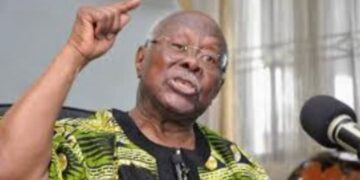
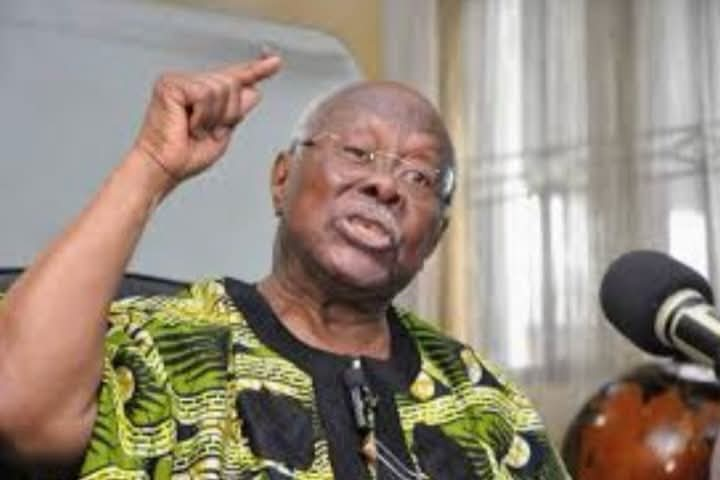
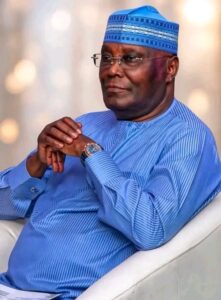
Former Deputy National Chairman of the Peoples Democratic Party (PDP), Chief Olabode George, has urged former Vice-President Atiku Abubakar to abandon his 2027 presidential ambition and wait until 2031 when, according to him, power should return to the North.
George said Atiku’s determination to contest the 2027 presidential election contradicts the established power-sharing understanding between Northern and Southern Nigeria.
The PDP chieftain made the remarks on Wednesday, November 25, 2026, during a news conference in Lagos organised to mark his 81st birthday.
He argued that the South should be allowed to complete its eight-year presidential tenure before the presidency returns to the North.
According to him, the arrangement was designed to promote political stability, fairness, national unity and equitable distribution of political power.
George questioned why Atiku, who is from the North, would continue pursuing the presidency in 2027 when the South has yet to complete its expected eight-year turn.
“Is Atiku the only Northerner in Nigeria? Why is he contesting for this office every four years? Why is he inordinately ambitious? He is 80 years old already,” George reportedly asked.
He advised the former Vice-President to suspend his presidential ambition in 2027 and reconsider his political future in 2031.
“He should return in 2031 when the seat returns to the North. By then, he will be close to 85 years old, and Nigerians will decide if they want to vote for him or not,” George said.
Background to Nigeria’s Power Rotation Debate
Nigeria’s North-South power rotation arrangement has remained an important feature of political negotiations since the return to democratic governance in 1999.
The understanding is rooted in the principle of equitable power-sharing among the country’s major political and geographical interests.
Former President Olusegun Obasanjo, from the South, governed between 1999 and 2007 before the presidency moved to the North under Umaru Musa Yar’Adua in 2007.
Following Yar’Adua’s death in 2010, his deputy, Goodluck Jonathan, completed the tenure and subsequently won the 2011 presidential election, extending Southern leadership until 2015.
Former President Muhammadu Buhari then governed for two terms between 2015 and 2023, before President Bola Tinubu, from the South, assumed office on May 29, 2023.
George’s argument is that if Tinubu secures re-election in 2027, the South would complete eight years in power by 2031, making it the North’s turn under the rotational arrangement.
Zoning Is a Political Convention, Not a Constitutional Requirement
However, Nigeria’s power rotation arrangement is not expressly established as a constitutional requirement governing presidential eligibility.
Section 131 of the 1999 Constitution, as amended, specifies the qualifications for election as President, while Section 137 outlines disqualifying conditions.
Neither provision establishes a North-South rotational timetable for presidential candidates.
Consequently, the zoning arrangement remains a political understanding whose observance depends largely on political parties, negotiations and consensus among political stakeholders.
The PDP has historically embraced zoning and power rotation as part of its political philosophy, although disagreements over its application have repeatedly generated internal divisions.
The party’s decision to throw its 2023 presidential ticket open, eventually producing Atiku as its candidate against other contenders, including Southern politicians, illustrated the difficulties associated with enforcing the arrangement.
Atiku’s 2027 Ambition and the Emerging Political Debate
George’s intervention adds another dimension to the growing debate over regional power rotation ahead of the 2027 presidential election.
Atiku, who contested the presidency in 2007, 2011, 2015, 2019 and 2023, remains a major figure in Nigeria’s opposition politics and is associated with the African Democratic Congress (ADC).
His political ambition has continued to generate discussions about political experience, regional representation, generational change and the future direction of opposition politics.
George, however, maintains that national interest, political fairness and respect for the power-sharing understanding should take precedence over individual presidential ambitions.
His position is likely to reignite discussions over whether Nigeria’s political parties should maintain the informal North-South rotation arrangement or allow presidential contests to be determined strictly by party primaries and electoral competition.
The debate is expected to remain significant as political parties and their presidential hopefuls position themselves for the 2027 general election.