



















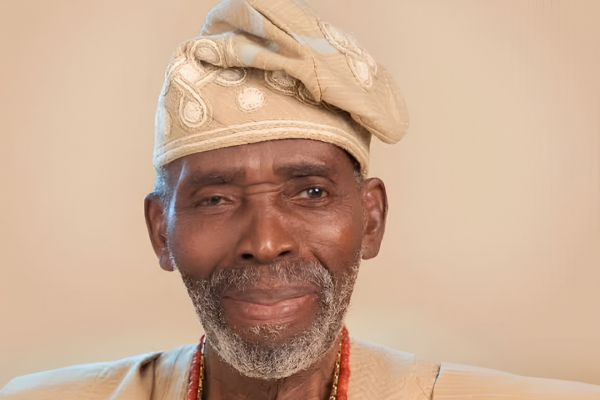
The death of veteran Nigerian actor Olu Jacobs at 84 has sparked renewed interest in the remarkable film career of one of Africa’s most celebrated performers.
Jacobs, who died on September 16, 2026, built a career spanning more than five decades across theatre, television and cinema.
Trained at London’s prestigious Royal Academy of Dramatic Art (RADA), he reportedly appeared in more than 200 credited screen roles.
He became particularly known for portraying kings, fathers, chiefs and influential elder statesmen, bringing authority and gravitas to his characters.
Among his early international films was Ashanti (1979), where he played Commissioner Batak alongside Michael Caine and Peter Ustinov.
He also appeared in The Dogs of War (1980) as a Customs Officer, starring alongside Christopher Walken.
In Baby: Secret of the Lost Legend (1985), Jacobs portrayed Colonel Nsogbu in the Disney adventure film.
He later featured as Boomako in Roman Polanski’s Pirates (1986), alongside Walter Matthau.
As Nollywood expanded in the 2000s, Jacobs became a familiar face in major Nigerian productions.
His notable films included Greatness (2007), Smoke & Mirrors (2008), League of Gentlemen (2009), Bent Arrows (2010) and Sacred Lies (2011).
He also starred in White Chapel (2011) and played Ezomo in Lancelot Imasuen’s historical epic Adesuwa (2012).
In 2013, he appeared as Bankole in Potomanto, a Ghanaian-Nigerian thriller centred on organ trafficking.
His later works included The Antique (2014), Bloody Ring (2014) and Oloibiri (2015), a film exploring the impact of oil extraction in the Niger Delta.
Jacobs also featured in Dry (2015), Stephanie Linus’ acclaimed film addressing child marriage.
Other notable appearances included One Fine Day (2015), The Royal Hibiscus Hotel (2017), Victims (2017) and Unveil (2017).
In The Royal Hibiscus Hotel, he starred alongside his wife and fellow veteran actress, Joke Silva.
Beyond acting, Jacobs and Silva co-founded the Lufodo Group, contributing to the development of Nigeria’s entertainment industry.
His career therefore extended beyond individual performances, with his work spanning international productions, Nigerian television and the rise of modern Nollywood.
With hundreds of productions reportedly associated with his career, Olu Jacobs leaves behind a lasting legacy as one of Africa’s most recognisable acting figures.