















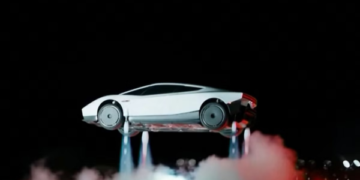





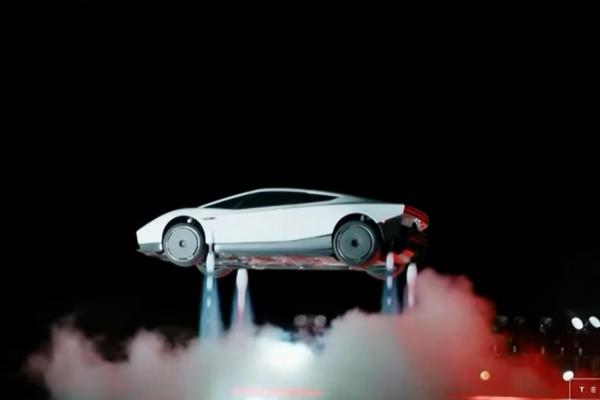
Tesla CEO Elon Musk has unveiled a new version of the Roadster equipped with thrusters, setting a target of 2028 for production of the futuristic vehicle.
The demonstration took place on Thursday at a SpaceX test facility in Texas and was livestreamed on X, drawing renewed attention to the long-running ambition to develop flying cars.
During the presentation, the vehicle launched from a steep ramp before landing on its wheels, showcasing technology Musk said could help make flying cars a reality.
“Flying cars are real,” Musk declared, while acknowledging that the project’s success was not guaranteed.
According to Musk, the Roadster uses ultra-high-pressure air tanks to generate the thrust needed to propel it into the air.
He described the project as a collaboration between Tesla, the electric vehicle manufacturer, and SpaceX, his aerospace company.
“What happens when you have a collaboration with the world’s best car company and the world’s best rocket company,” Musk said.
However, details about the vehicle’s flight capabilities, operating range, passenger safety systems and potential commercial applications remain unclear.
The demonstration alone does not establish that the Roadster can fly independently or operate as a conventional flying car.
Musk’s proposed 2028 production timeline will depend on further development, engineering tests and compliance with applicable road and aviation safety regulations.
Flying cars have fascinated engineers and the public for generations, but turning the concept into a practical commercial product has proved challenging.
American aviation pioneer Glenn Curtiss unveiled an early flying-car prototype in 1917, laying the groundwork for decades of experimentation with vehicles designed to travel on roads and in the air.
Since then, manufacturers have explored different designs, but many projects have encountered challenges involving propulsion, vehicle control, development costs and regulatory approval.
Recent advances in electric motors, battery technology and lightweight materials have renewed interest in the sector.
Nevertheless, developing a vehicle that can safely transition between road travel and flight remains a complex engineering task.
The use of thrusters in Tesla’s proposed Roadster also raises questions about how the system would control the vehicle in the air, how long it could remain airborne and what safeguards would protect occupants and people nearby.
The available details do not establish whether the vehicle will be capable of sustained flight, how it would operate in public spaces or what approvals would be required before commercial sales.
Musk’s 2028 target has therefore set an ambitious timeline for a project that combines automotive engineering with aerospace technology.
Whether the Roadster can progress beyond its high-profile demonstration to become a commercially available flying vehicle will depend on further testing, verified performance and regulatory clearance.