







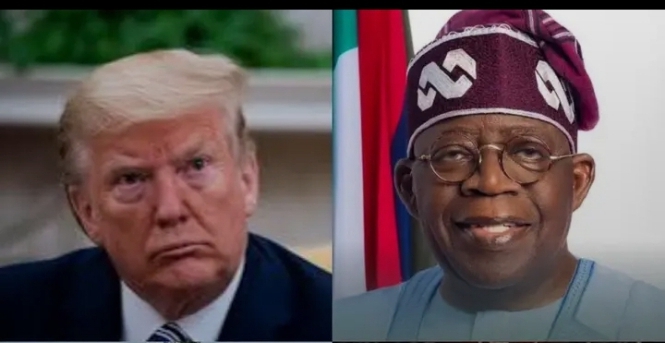
US Congress Sets November 12 Hearing on Alleged Killings of Christians in Nigeria, Mounts Pressure on Tinubu Government
The administration of President Bola Ahmed Tinubu is facing renewed international scrutiny as the United States Congress prepares to investigate alleged killings of Christians and the worsening insecurity in Nigeria.
The US House of Representatives has scheduled a congressional hearing for Thursday, November 12, 2026, to examine religiously motivated violence, attacks on vulnerable communities and the Nigerian government’s response to the security crisis.
The hearing is expected to focus on the protection of Christian communities, particularly in areas affected by persistent attacks, as well as the broader security challenges confronting the country.
The session, titled “One Year Later: Assessing Nigeria’s Efforts to Protect Christians and Secure the Middle Belt,” will be chaired by Republican Congressman Chris Smith, Chairman of the House Foreign Affairs Subcommittee on Africa.
Smith’s office described the hearing as his 14th congressional session focused on the persecution of Christians in Nigeria.
US officials, security experts to testify
According to information released by the US House of Representatives, the hearing will feature two panels of witnesses comprising senior US government officials and experts on religious freedom and African security.
The first panel will feature Frank Garcia, Assistant Secretary of State for African Affairs, and Riley Barnes, Assistant Secretary of State for Democracy, Human Rights and Labour.
Both officials are expected to brief lawmakers on the US government’s assessment of religious violence in Nigeria and the country’s efforts to address the crisis.
The second panel will feature Nina Shea, Senior Fellow and Director of the Centre for Religious Freedom at the Hudson Institute; Ryan Brown, Chief Executive Officer of Open Doors US; and Oge Onubogu, Director and Senior Fellow of the Africa Programme at the Centre for Strategic and International Studies.
Their contributions are expected to provide perspectives on religious freedom, attacks on vulnerable communities and the broader security situation in Nigeria.
The hearing will commence at 11 a.m. Washington time, equivalent to 5 p.m. Nigerian time, at Room 2172 of the Rayburn House Office Building. It will also be streamed live on YouTube.
US-Nigeria relations under renewed scrutiny
The congressional hearing comes amid heightened diplomatic attention to Nigeria’s security situation following US President Donald Trump’s decision in November 2025 to redesignate Nigeria as a Country of Particular Concern (CPC) over alleged violations of religious freedom.
The designation, made under the International Religious Freedom Act, applies to countries considered to have engaged in or tolerated particularly severe violations of religious freedom.
Nigeria was previously designated a Country of Particular Concern in December 2020 during Trump’s first administration but was removed from the list in November 2021 under former President Joe Biden.
The renewed designation intensified pressure on the Nigerian government to demonstrate stronger action against attacks on religious communities and ensure accountability for perpetrators.
Nigerian government rejects religious persecution narrative
However, the Federal Government has consistently rejected attempts to portray Nigeria’s security crisis as exclusively a campaign of religious persecution against Christians.
Nigerian authorities have maintained that insecurity is driven by multiple factors, including terrorism, banditry, farmer-herder conflicts, communal disputes and organised criminal activities.
The government has also argued that both Christians and Muslims have suffered from attacks by armed groups across different parts of the country.
Nevertheless, repeated killings, kidnappings and displacement in parts of the Middle Belt, particularly Benue and Plateau states, have continued to attract domestic and international concern.
The forthcoming hearing is therefore expected to intensify discussions about Nigeria’s responsibility to protect its citizens, regardless of religious affiliation, and the effectiveness of its security operations.
Possible implications for Tinubu administration
Although the congressional hearing will not amount to a judicial determination of religious persecution, its proceedings could influence future US policy decisions towards Nigeria.
Lawmakers are expected to consider possible diplomatic, security and other policy measures that Washington could pursue to encourage the Nigerian government to strengthen civilian protection and prosecute those responsible for attacks.
The outcome could also have implications for security cooperation and diplomatic relations between both countries, particularly as the United States continues to monitor Nigeria’s response to terrorism and religious violence.
The hearing places the Tinubu administration under renewed international scrutiny over its ability to protect vulnerable communities, restore security and demonstrate measurable progress in addressing persistent attacks across the country. U.S.