






















US Launches Strikes on Iran’s Qeshm Island Amid Trump’s Midterm Election Pressure
The United States has carried out military strikes on Iran’s Qeshm Island in the strategically important Strait of Hormuz, raising fresh concerns over a possible escalation of the conflict.
US officials told CBS News, the BBC’s US partner, that the attacks were limited and defensive, following an alleged attack by Iran’s Islamic Revolutionary Guard Corps (IRGC) on a US aircraft.
Iran’s state news agency, IRNA, reported explosions on Qeshm Island on Monday. However, the IRGC did not directly comment on the reported American strikes.
Instead, the Iranian military claimed it had shot down two US MQM-170 drones south of the island and another MQ-9 drone east of the Strait of Hormuz.
The US military has yet to issue an official statement on the reported operation.
The strikes come amid renewed diplomatic efforts to prevent a return to full-scale hostilities following the US midterm elections scheduled for Tuesday.
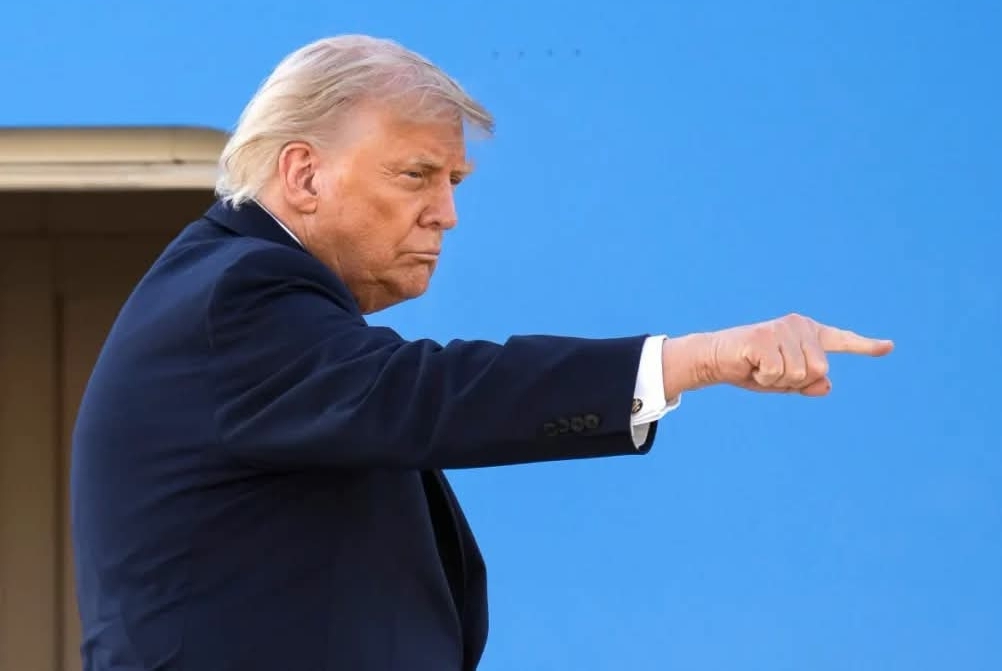
President Donald Trump is facing declining approval ratings and growing pressure from members of his Republican Party to bring the war to an end.
The conflict began in February when the United States and Israel launched military attacks against Iran.
Speaking to reporters on Monday, Trump said he was in no hurry to intensify military operations against Tehran.
In an interview with Axios, he claimed that US actions had severely weakened Iran’s economy.
“One way or the other, we will do something, but there is no rush. We crippled them financially,” Trump said.
He further claimed that Iran was running out of money and fuel, adding that its population was becoming increasingly frustrated with the conflict.
In another interview with Fox News, Trump suggested that Washington could target Iran’s underground nuclear facility known as Pickaxe Mountain.
He described such an operation as relatively straightforward, claiming it could be completed within an hour.
However, when asked whether the United States planned to resume major military strikes against Iran after the midterm elections, Trump denied that such a decision had been made.
Meanwhile, the Associated Press reported that Israeli Prime Minister Benjamin Netanyahu had urged Trump to authorise another wave of attacks against Iran after the elections.
The report cited two regional officials familiar with a telephone conversation between the two leaders over the weekend.
Iran Warns US As Diplomatic Talks Continue
Iran’s chief negotiator with Washington and parliament speaker, Mohammad Bagher Ghalibaf, said on Tuesday that the responsibility for preventing another war rested with the United States.
“The ball is now in America’s court to prevent war,” he declared in a televised address.
Ghalibaf maintained that Iran remained prepared for military confrontation while insisting that Tehran had also presented Washington with a strong and reasonable response.
It was not immediately clear which proposals he was referring to.
However, Iranian Foreign Minister Abbas Araghchi disclosed on Monday that intensive negotiations with Washington were continuing through Qatari and Pakistani mediators.
Qatar’s Foreign Ministry spokesman, Majed al-Ansari, also confirmed on Tuesday that both countries were reviewing proposals presented to them.
He expressed optimism that diplomatic efforts could produce an agreement.
According to al-Ansari, Qatar was facilitating the exchange of proposals between Washington and Tehran as negotiations continued.
Strait Of Hormuz Remains Major Flashpoint
Last week, Iranian negotiators reportedly presented mediators with a proposal to reopen the Strait of Hormuz within 48 hours, subject to the United States meeting seven conditions.
The reported conditions include lifting the naval blockade of Iranian ports and releasing frozen Iranian financial assets.
The Strait of Hormuz is one of the world’s most important energy shipping routes, normally handling approximately one-fifth of global oil and gas shipments.
However, the strategic waterway has been effectively disrupted since the outbreak of the war, following Iranian missile and drone attacks on commercial vessels and the subsequent US naval blockade.
Washington and Tehran reportedly reached a preliminary agreement in June to end the conflict and reopen the waterway.
The arrangement collapsed within weeks after attacks on commercial shipping resumed and the United States reinstated its blockade.
Iran has maintained that it must retain some degree of control over the strategic waterway.
Tehran also began targeting vessels using a southern shipping route through Omani waters, which bypasses the route it prefers through Iranian territorial waters.
Meanwhile, the US military has continued providing security for oil tankers transporting petroleum through the Strait of Hormuz to sustain exports from Gulf Arab countries.
The latest strikes on Qeshm Island underscore the fragile security situation in the region, as military confrontation, diplomatic negotiations and domestic political pressure in Washington continue to shape the direction of the conflict.