

















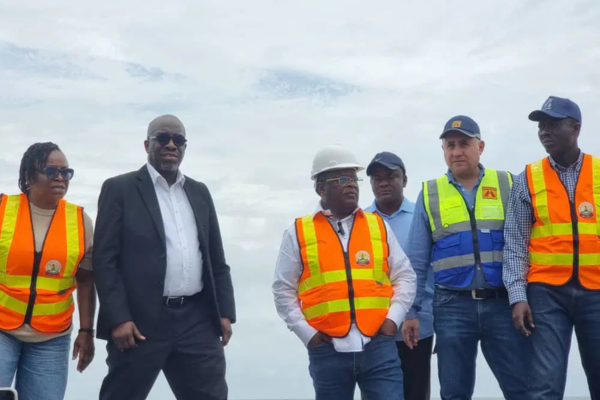
Minister of Works David Umahi has expressed confidence that the 750-kilometre Lagos-Calabar Coastal Highway will be completed within the next three years.
Umahi gave the assurance during an interview with ARISE News, reaffirming President Bola Tinubu’s administration’s commitment to delivering the major infrastructure project.
The highway is designed to connect Lagos with Calabar, cutting across several coastal states and improving transportation links across southern Nigeria.
The minister’s projection comes amid public concerns over the project’s cost, construction progress, environmental impact and alignment.
Umahi has insisted that construction is ongoing and the project has not been abandoned. He previously reported that the first 47.47-kilometre section in Lagos had been completed, while work on the second section was progressing towards a projected November 2026 completion.
Construction has also been reported on sections of the highway in Akwa Ibom, Cross River, Ogun and Ondo states. However, these progress claims have not all been independently verified.
Explaining the engineering challenges, Umahi said the highway requires different designs to accommodate variations in terrain, soil conditions and environmental requirements along the route.
He maintained that detailed surveys and designs were being undertaken for individual sections to ensure compliance with engineering standards and address the difficulties associated with coastal construction.
The project is one of the Federal Government’s flagship transport infrastructure initiatives, expected to improve access to commercial centres, coastal communities, ports and tourism destinations.
When completed, the highway could reduce travel time on some routes, facilitate trade and logistics, and attract investment across the South-West and South-South regions.
However, critics have raised questions about its cost, procurement process and potential consequences for coastal communities and ecosystems.
Umahi has defended the project’s cost, arguing that meaningful comparisons with other highways must consider road specifications, bridges, drainage infrastructure, pavement materials and challenging terrain.
Environmental protection remains another major concern, particularly in ecologically sensitive coastal areas. Transparent contracting, effective safeguards and regular disclosure of project expenditure will be essential to sustaining public confidence.
The highway’s anticipated economic benefits will ultimately depend on timely delivery, construction quality and effective management of challenges such as funding constraints, land disputes and environmental concerns.
Umahi’s three-year completion target now sets a key benchmark for the project, with Nigerians expected to monitor construction milestones, expenditure and the government’s ability to deliver on its promise.