




















A new report by the United States Commission on International Religious Freedom has revealed that about 30,000 armed Fulani militants are currently active across Nigeria, operating in groups of between 10 and 1,000 members.
According to the May 2026 report, the militants have emerged as some of the most dangerous non-state actors responsible for violations of religious freedom and rising insecurity across the country.
The document, titled “Nonstate Violators of Religious Freedom in Nigeria: Fulani Militants,” stated that attacks allegedly carried out by armed Fulani groups have intensified violence in the Middle Belt and parts of Southern Nigeria, resulting in thousands of deaths, mass displacement and growing religious tensions.
The commission noted that the attacks accounted for more deaths among religious communities in the past year than those linked to organised insurgents or criminal gangs operating in Nigeria.
While many of the assaults reportedly targeted Christian communities, the report also said Muslim populations have suffered killings, kidnappings and raids by the same armed groups.
USCIRF explained that although the militants do not operate under a unified leadership structure, some factions reportedly collaborate with bandit groups and extremist organisations pursuing financial or ideological goals.
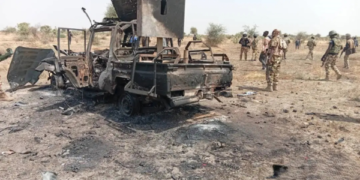
The report stated that the attackers often storm vulnerable rural communities at night on motorcycles, using automatic weapons and machetes to spread fear, force residents to flee and seize control of land and resources.
According to the commission, continued attacks by Fulani militants and other armed groups have displaced more than 1.3 million people across the Middle Belt, with many victims now living in overcrowded camps lacking adequate security, sanitation and humanitarian support.
USCIRF highlighted several deadly incidents recorded in 2025 and early 2026, including mass killings in Benue and Plateau states. One attack in Benue reportedly left at least 200 people dead, including displaced persons sheltering in a Catholic mission.
The report also referenced the Yelwata massacre in Benue State, where over 200 Christians, mostly women and children, were reportedly killed and more than 3,000 residents displaced during a violent raid.
The commission alleged that some attacks were deliberately carried out during Christian celebrations such as Christmas and Easter to heighten fear and psychological trauma among affected communities.
In February 2026, suspected Fulani militants reportedly killed at least 32 people in Niger State and attacked Holy Trinity Parish in the Kafanchan Diocese of Kaduna State, killing worshippers and abducting several persons, including a Catholic priest.
USCIRF further documented kidnappings affecting both Christian and Muslim worship centres, including the abduction of an imam and seven worshippers from a mosque in Plateau State, where kidnappers allegedly demanded a N16 million ransom.
The report said differing interpretations of the violence have complicated efforts to fully understand the motives behind the attacks, with some analysts blaming environmental and economic pressures while others describe the killings as targeted religious persecution.
USCIRF criticised Nigerian authorities for what it described as weak and delayed responses to attacks, noting that affected communities have repeatedly accused security agencies of failing to respond swiftly during emergencies.
The commission added that despite recent government operations, peace efforts and security crackdowns, insecurity remains widespread across central Nigeria, warning that the crisis may persist unless authorities address the deeper political, economic and religious factors fuelling the violence.