


















The US soldier’s arrest has reignited Okinawa anger over military crimes**, with residents expressing renewed frustration over decades of incidents involving American service members stationed on the Japanese island.
For many locals, the latest case has revived painful memories and concerns about the impact of the large US military presence on communities across Okinawa.
“Honestly my first reaction was, ‘Not again,’” 52-year-old longtime Okinawa resident Ai Sato told the BBC.
“Nothing has changed since I was a child. How many times are we going to repeat the same thing, create more victims, cause their families to suffer, and ultimately, cause the people of Okinawa to grieve?”
Another resident, 62-year-old Ginowan resident Akemi Oshiro, said the repeated incidents have made the latest case particularly disturbing.
“I know we shouldn’t get used to terrible things like this, but because they keep happening, I’ve stopped being surprised.”
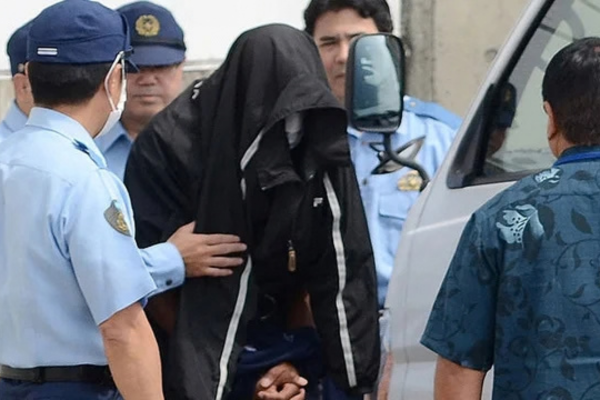
US Marine Lance Corporal Devin Jacob Ballard, 20, was arrested by Japanese police on Sunday following the death of 39-year-old Anna Yagi.
Okinawa prefectural police said Yagi was found dead early on October 3 in a hotel room in Naha.
According to reports citing police, security footage allegedly showed a man believed to be Ballard entering the hotel with Yagi and later leaving alone with her belongings.
Local media reports have also alleged that Yagi appeared to have been strangled with a cord. **The investigation remains ongoing**, and the allegations have not been established in court.
Ballard was assigned to the III Marine Expeditionary Force and stationed at Marine Corps Air Station Futenma in Ginowan City.
Police said he remains in Japanese custody because the alleged offence was unrelated to his official military duties.
The question of whether a US service member was acting in an official capacity can determine which country has primary jurisdiction over a case.
Under the US-Japan security arrangements, jurisdiction can become particularly important when a suspected offence involves American military personnel.
In cases where Japan has jurisdiction but the suspect is initially held by US authorities, arrangements can affect when Japanese authorities obtain custody.
The circumstances surrounding Ballard’s case have therefore drawn attention not only because of the alleged crime but also because of the long-running debate over how criminal cases involving US military personnel should be handled.
Japanese Prime Minister Sanae Takaichi registered an official protest with Washington following the incident.
However, some Okinawa residents say official statements expressing concern are not enough.
Sato said she was disappointed by what she described as familiar government responses following incidents involving US military personnel.
“I am deeply disappointed by the same kinds of government comments we have been hearing for decades that they will protest or that they take the matter seriously.”
She also called for direct engagement between Japanese and US leaders and urged the government to pursue concrete measures aimed at preventing similar incidents.
Following news of the suspected killing, around 100 people reportedly took part in protests in Naha and Tokyo. Anger has also spread across social media, with some users demanding justice and an end to what they see as a recurring problem.
One social media user summed up the frustration in a simple message: “Enough is enough.”
The latest case comes against the backdrop of decades of tension between Okinawa residents and the large US military presence on the island.
The 2016 rape and murder of a 20-year-old local woman triggered widespread protests, with tens of thousands of people demonstrating against the US military presence. A former US Marine was later sentenced to life imprisonment for the crime.
The United States currently has about 55,000 military personnel stationed in Japan, with a significant concentration based in Okinawa.
Although Okinawa is one of Japan’s smaller prefectures, approximately **70% of the land in Japan used exclusively by the US military is located there**.
For residents, the concerns extend beyond serious crimes. They have also raised complaints involving noise, aircraft accidents, traffic incidents and other disruptions associated with the military presence
Okinawa was returned to Japanese control in 1972 after decades of US administration following the Second World War.
According to the Okinawa Prefectural Government, **6,409 arrests for criminal offences related to US military personnel have been recorded since the reversion**.
Past incidents have continued to shape public sentiment.
In 1995, three US servicemen were convicted after abducting and sexually assaulting a 12-year-old Japanese schoolgirl. More recently, in 2025, a US Marine was convicted of choking and sexually assaulting a Japanese woman.
These incidents have contributed to persistent calls from some Okinawa residents for greater accountability and changes to the relationship between local communities and US military installations.
For many Okinawa residents, the latest arrest represents more than an isolated criminal investigation. It has reopened broader questions about safety, accountability and the future of the US military presence on the island.
Hitomi Miyagi, a 48-year-old mother of two, told the BBC that Okinawa remains an unsettling place for residents decades after the Second World War.
“We will not stop raising our voices hoping for an Okinawa, where we can live in peace.”
As Japanese authorities continue investigating the circumstances surrounding Anna Yagi’s death, the case is likely to remain closely watched by residents and officials alike.
For Okinawa communities already carrying decades of frustration, the latest US soldier’s arrest has once again placed questions of military accountability, public safety and justice at the centre of national debate.