



















The Middle East war has reached a terrifying new level. In one of the most shocking diplomatic exchanges in recent memory, Iran has now directly threatened U.S. President Donald Trump with elimination and the world is holding its breath. The Iran threatens Trump elimination warning, issued by top Iranian security official Ali Larijani, came as both sides traded increasingly dangerous rhetoric in a conflict that is spiralling further out of control by the hour.
From oil blockades to sleeper cells, from classified intelligence reports to Trump’s own mixed messages here is a full breakdown of the six most explosive developments in this rapidly escalating war.
1. Iran Threatens Trump With Elimination
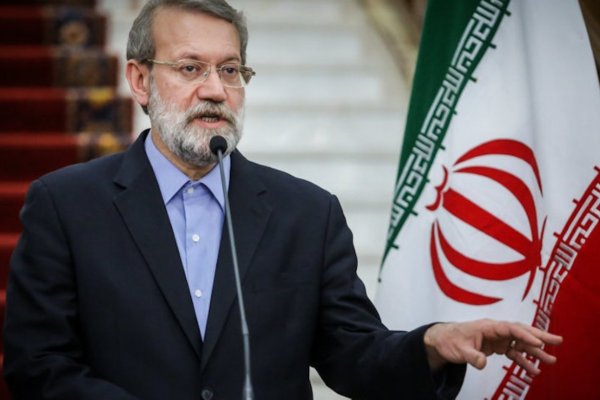
The moment that has stunned the world came when Ali Larijani one of Iran’s most powerful security officials posted a direct and chilling warning to Donald Trump on X. The Iran threatens Trump elimination message was unmistakable in its intent and its audacity.
Larijani wrote: “The sacrificial nation of Iran doesn’t fear your empty threats. Even those bigger than you couldn’t eliminate Iran. Be careful not to get eliminated yourself.”
This was not a vague diplomatic statement. It was a targeted, personal warning directed at a sitting U.S. president one with a documented history of Iran-linked assassination plots against him. The message landed like a thunderbolt across international media, with security analysts noting that it represented one of the most direct threats ever made publicly by a senior Iranian official against a U.S. head of state.
Iran has previously been accused of orchestrating plots to assassinate Trump, including during his first term. Against that backdrop, Larijani’s words carry a weight that goes far beyond mere rhetoric and the White House has not taken them lightly.
2. Trump Fires Back: “I Will Hit You 20 Times Harder”
President Trump, characteristically, did not respond to the Iran threatens Trump elimination warning with measured diplomacy. He responded with escalation.
Trump threatened to hit Iran “20 times harder” if Tehran moved to stop oil tankers from passing through the Strait of Hormuz the narrow waterway through which roughly 20% of the world’s oil supply flows every single day. The threat came just hours after Trump had told reporters the war might be over “very soon” a contradiction that has left allies and analysts struggling to understand where U.S. policy actually stands.
In a separate social media post, Trump described the early results of the war as “way beyond expectation” while simultaneously warning that the U.S. had “won in many ways, but we haven’t won enough.” The mixed messaging has raised serious concerns among NATO allies and Gulf states about whether Washington has a clear and coherent endgame or whether it is improvising in real time in one of the world’s most volatile regions.
3. Iran’s Oil Blockade and the Strait of Hormuz
Beyond the personal threats, Iran has deployed one of its most powerful economic weapons threatening to choke off the global oil supply entirely.
Tehran vowed it will not allow even “one liter of oil” to leave the Middle East until U.S. and Israeli attacks on Iranian territory cease. The declaration represents a dramatic escalation of economic warfare that has already sent oil markets into turmoil worldwide.
Iran declared the Strait of Hormuz closed, which led Iraq a major oil producer to shut down some of its production. Meanwhile, the ongoing fighting caused Saudi Arabia’s largest oil refinery to suspend production, while Bahrain, Kuwait, Qatar, and the United Arab Emirates all reported strikes on their oil refineries over the past week.
The consequences for ordinary people around the world are already being felt. Oil prices have surged dramatically since the conflict began, with fuel prices rising in the United States, Europe, and across Africa. Economists are warning that a prolonged blockade of the Strait of Hormuz could tip the global economy into recession a prospect that has alarmed governments from Beijing to Brussels.
4. Iran Activates Sleeper Cells Across the Globe
The conflict is no longer confined to the Middle East. One of the most alarming developments of recent days has been the reported activation of Iranian sleeper cells in countries far beyond the region a move that transforms this from a regional military confrontation into a potential global security emergency.
Reports indicate that Iran is activating sleeper cells globally as the conflict intensifies, with Iranians also fleeing to Armenia amid the fighting. Security agencies across Europe and North America have reportedly been placed on elevated alert as a result.
Separately, Iran’s judiciary warned that Iranians living abroad could face the seizure of their assets if they cooperate with countries Tehran considers hostile a threat clearly aimed at deterring members of the Iranian diaspora from supporting U.S. and Israeli strikes. The warning cited legislation that makes cooperation with the United States, Israel, or other “hostile” governments punishable by asset confiscation and even the death penalty.
For the millions of Iranians living in the United States, Europe, and beyond, the message from Tehran was stark and deeply personal: support the enemy, and your family’s assets back home will pay the price.
5. The Classified Report That Should Worry Trump
Even as Trump declares victory and his officials speak of a campaign that has “only just begun,” a bombshell classified intelligence assessment has quietly undermined the central assumption driving the entire operation.
A classified report by the U.S. National Intelligence Council found that even a large-scale military assault on Iran would be unlikely to oust the Islamic Republic’s entrenched military and clerical establishment a sobering assessment that directly contradicts the optimism being projected publicly by the Trump administration.
Experts are united in assessing that a regime-change mission in Iran would require many months of effort and the deployment of ground forces a move that would spark unrestrained Iranian retaliation in all directions, including beyond the Middle East. A longer war would not only produce significant U.S. casualties but also exacerbate the adverse economic consequences already evident, including a spike in energy prices significantly increasing the chances of a global recession.
In other words: America’s own intelligence community does not believe this war can achieve what Trump appears to want and the longer it goes on, the worse the consequences for everyone, including the United States itself. For wider reporting on the intelligence assessment, see The Washington Post and Al Jazeera.
6. The Human Cost: Over 1,300 Dead and Counting
Behind the geopolitical chess match and the explosive rhetoric lies a human catastrophe that grows more devastating with every passing hour.
More than 1,300 people in Iran have been killed as a result of the ongoing fighting, according to the Iranian Red Crescent Society, while 13 people have died in Israel from Iranian retaliatory fire. In Lebanon, the death toll from Israeli strikes has surpassed 400, including dozens of children.
Newly surfaced video appears to show what experts say is an American Tomahawk missile striking the area of a school in Iran where more than 170 people were killed, including many children. Trump has denied U.S. responsibility, but the footage has sparked international outcry with several European nations and human rights organisations calling for an independent investigation.
Iran has also spent significant time “offline” amid an internet blackout now stretching over 240 hours, according to cybersecurity watchdog NetBlocks cutting millions of ordinary Iranians off from the outside world as bombs fall on their cities.
Final Thoughts: What Does the Iran Threatens Trump Elimination Warning Mean for the World?
The Iran threatens Trump elimination warning is more than a headline. It is a window into just how dangerous this conflict has become and how quickly it could spiral into something even worse. Two nuclear-armed powers are now trading personal threats. A vital global oil route is being blocked. Sleeper cells are being activated on multiple continents. And a classified U.S. intelligence report says there may be no clean way out.
Even the European Union has weighed in, with EU President Antonio Costa stating that “so far, there is only one winner in this war Russia,” which benefits from rising energy prices, reduced military attention to Ukraine, and the global chaos that the conflict is generating.
The world did not ask for this war. The people of Iran, Israel, Lebanon, and the Gulf states are paying for it in blood. And as the rhetoric between Washington and Tehran reaches levels not seen in decades, the question that every world leader is quietly asking is the same one the rest of us are asking too: is there anyone in the room with the power and the will to stop this before it becomes something no one can undo?
This is a rapidly developing story. Stay with us for the latest updates.