
























Abia State Governor Alex Otti has unveiled plans to transform agriculture into a major driver of industrialisation, job creation and economic growth, with the state targeting food exports.
Otti said his administration would combine modern agricultural technology, private investment and research to boost production and position Abia as a net exporter of agricultural produce.
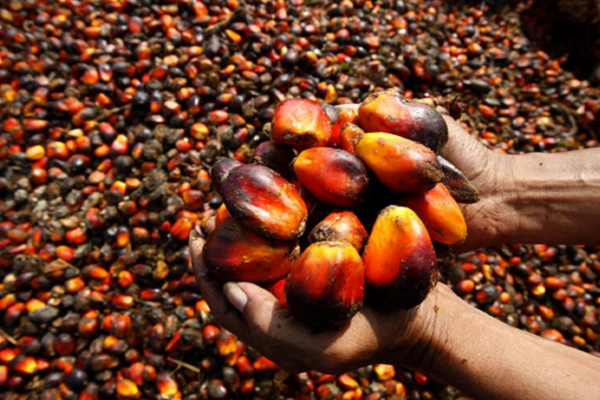
As part of the strategy, the governor has urged Presco Plc, an oil palm production and processing company, to commence its proposed investment at the government-owned Ulonna Farm Settlement in Umuahia.
He also announced a steering committee to develop a framework for making agriculture a catalyst for industrial and commercial development in the state.
Otti disclosed the initiative during the third Michael Okpara Memorial Lecture Series at Michael Okpara University of Agriculture, Umudike (MOUAU).
He said the administration intended to build on the agricultural legacy of the late Dr Michael Iheonukara Okpara by adapting it to modern economic realities.
The committee, to be chaired by the governor, will include representatives of the state government, MOUAU, PAYAZA Africa Limited and other stakeholders.
Its mandate includes identifying agricultural commodities in which Abia has a comparative advantage and recommending investments, infrastructure and technologies needed to develop commercially viable enterprises.
“We don’t only want to be self-sufficient in food production; we want to be a net exporter of food from Abia State,” Otti said.
The governor also welcomed a proposal to establish an Agricultural Technology Hub at MOUAU to promote research, innovation and the adoption of modern farming methods.
Presco Investment Targets Ulonna Farm Settlement
In a related development, Otti has called on Presco Plc to begin its proposed agro-industrial investment at Ulonna Farm Settlement, where the state government has approximately 4,200 hectares of land.
He made the appeal while receiving a Presco delegation led by its chairman, Rasheed Sarumi, at Government House in Umuahia.
Otti said the existing land could provide a starting point for the project while the government works to secure additional land to meet the company’s requirements.
He noted that Presco’s reported requirement of 10,000 hectares would leave a shortfall of slightly less than 6,000 hectares after accounting for the land available at Ulonna.
The governor acknowledged concerns and disputes over some community lands being considered for the project.
He urged the company to engage with the leadership of affected communities to resolve issues surrounding land ownership and access.
Otti assured Presco that his administration would facilitate efforts to obtain the additional land, while cautioning that resolving the issues would require time and cooperation.
He stressed that consultations with community leaders were essential to preventing avoidable disputes and ensuring the project could proceed.
Presco chairman Sarumi expressed confidence in the proposed investment, praising the state government’s understanding of business and its willingness to facilitate the project.
“The promise I made when we came was that this investment would be made because we have a government that understands business,” Sarumi said.
The investment could strengthen Abia’s agro-industrial sector through expanded agricultural production, processing capacity and commercial opportunities.
However, its progress will depend on resolving land-related concerns and putting the necessary arrangements in place.
University Leaders Advocate Agricultural Innovation
Speaking at the memorial lecture, MOUAU Vice-Chancellor, Professor Ursula Ngozi Akanwa, said the legacy of Michael Okpara demonstrated agriculture’s potential to drive economic prosperity, industrial growth and employment.
She called for strategic investments in research, education, rural development and infrastructure to unlock the sector’s potential.
The university’s Pro-Chancellor and Chairman of Council, Fidelis Edeh, also highlighted the importance of effective leadership and governance in achieving meaningful development.
Meanwhile, Prince Arthur Eze, represented by Prince Emeka Eze, described Otti as a prominent figure in contemporary Igbo leadership.
Delivering the memorial lecture, Seyi Ebenezer urged Nigerians, particularly young people, to embrace technology, digital innovation and modern business models in agriculture.
He argued that farming should be seen not merely as traditional cultivation but as a commercial sector capable of supporting innovation, entrepreneurship and economic transformation.
Abia’s agricultural strategy combines government coordination, private-sector investment and research-driven innovation.
The proposed steering committee is expected to identify priority commodities and recommend practical measures for developing them into profitable enterprises.
The planned Presco investment at Ulonna Farm Settlement is also central to efforts to attract agro-industrial businesses and increase the commercial value of agricultural production.
Achieving the state’s food-export ambition will depend on effective implementation, modern technology, reliable infrastructure and productive partnerships with investors and host communities.
The administration hopes these measures will move Abia beyond food self-sufficiency towards export-oriented agriculture and broader industrial development.