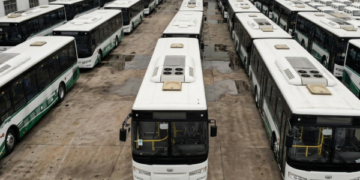





















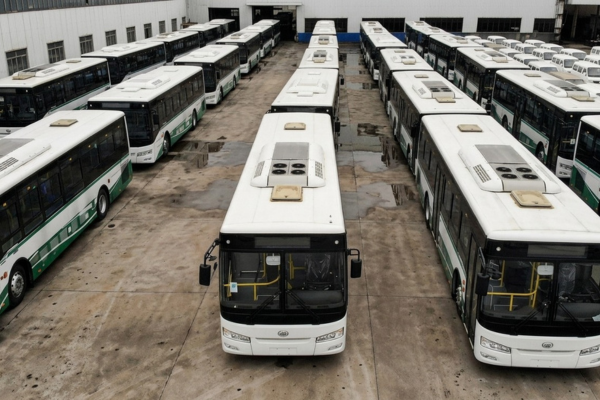
The Federal Government says Compressed Natural Gas (CNG)-powered buses and alternative-energy transport services have reduced public transport fares by up to 50 per cent on some routes across Nigeria.
The initiative, implemented under the National Affordable CNG Transit Programme ,seeks to lower transportation costs by encouraging the use of cheaper alternative fuels.
President Bola Tinubu said the programme is designed to ease the financial burden on households amid persistent economic challenges.
Figures released by the Presidency indicate varying levels of fare reductions across participating states.
In Adamawa, fares on some alternative-energy transit services reportedly dropped by 50 per cent, from ₦8,000 to ₦4,000.
In Oyo State, the fare on a government-supported Lagos-Ibadan CNG bus service reportedly fell from about ₦8,000 to ₦3,200 during its initial deployment.
Commuters travelling between Enugu and Nsukka also reportedly benefited from a reduction in fares from ₦2,500 to ₦1,500.
The government has equally reported lower fares on selected Abuja commuter routes served by CNG-converted commercial vehicles.
The programme forms part of broader efforts to cushion the impact of high fuel costs on Nigerians. Tinubu has urged federal and state authorities to promote cheaper transportation through CNG and electricity-powered vehicles.
The government is also investing in vehicle conversions, gas infrastructure and refuelling stations to support the transition.
The Presidential Initiative on CNG and Electric Vehicles has been engaging transport operators and other stakeholders to improve implementation and ensure that passengers benefit from the savings.
Proposed measures include displaying approved fares and route information on participating buses to discourage overcharging.
However, the programme’s impact remains uneven across the country. A report published by The PUNCH in October indicated that commuters in several states had yet to experience the expected reductions, with some operators maintaining existing fares or charging even more.
Limited bus deployment, inadequate refuelling infrastructure and vehicle maintenance costs have been identified as some of the challenges undermining the initiative.
The gap between government claims and commuters’ experiences raises questions about the programme’s reach and effectiveness.
Although CNG can reduce fuel expenses, transport operators still face costs associated with vehicle acquisition, spare parts, staff salaries and repairs. Consequently, cheaper fuel does not automatically guarantee lower passenger fares.
To achieve wider benefits, the government must expand the availability of CNG buses, improve refuelling infrastructure and strengthen monitoring of participating operators.
Transparent pricing and regular checks would also help ensure that commuters receive advertised fare reductions without compromising the financial sustainability of transport services.
Beyond affordability, CNG-powered transport could offer environmental benefits if supported by adequate safety standards, reliable infrastructure and proper vehicle maintenance.
Ultimately, the programme’s success will depend on whether the reported savings translate into consistent, affordable and accessible transportation for Nigerians.
For millions of workers, students, traders and small-business owners, the priority is not simply the introduction of alternative-fuel buses, but whether daily journeys become cheaper and more reliable.