












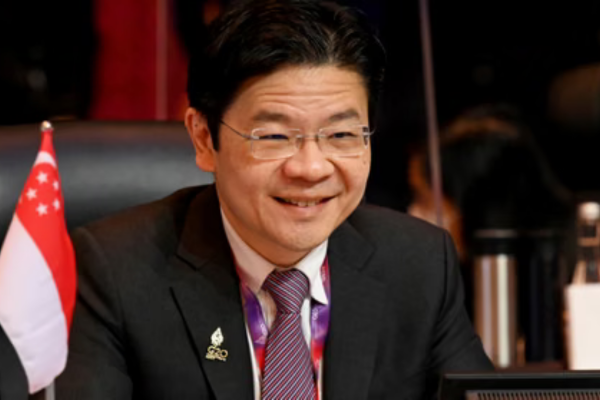
Singapore Prime Minister Lawrence Wong is set to receive a salary increase of more than 60%, with his annual remuneration rising from about S$2.2 million to S$3.6 million.
The increase will further widen the gap between Wong’s earnings and those of other political leaders around the world.
At about US$2.8 million annually, Wong would remain by far the world’s highest-paid political leader.
However, the decision has sparked criticism in Singapore, where citizens are grappling with inflation, job insecurity and rising living costs.
Under the new arrangement, Wong’s package will increase by approximately S$1.4 million a year.
Wong has pledged to donate the additional income to charity over a five-year period.
The government defended the salary adjustment, saying competitive remuneration is necessary to attract talented people from the private sector and senior civil service into politics.
Wong said the system should ensure that financial considerations do not discourage capable citizens from leaving lucrative careers to serve in government.
Singapore’s prime minister was already the highest-paid political leader before the latest increase.
For comparison, Hong Kong Chief Executive John Lee earns about US$719,000 annually, while Swiss President Guy Parmelin receives approximately US$606,000.
US President Donald Trump earns US$400,000 a year, while British Prime Minister Andy Burnham receives about US$230,000.
The salary increase will also affect other political office holders.
Singapore ministers currently receive a base package of around S$1.1 million, which will rise to approximately S$1.2 million.
Depending on their performance, some ministers could eventually earn about S$1.35 million by the end of the current government term.
A portion of ministers’ compensation is linked to national economic and social targets.
These include unemployment, income growth and gross domestic product growth.
The government has long argued that high salaries help Singapore attract highly qualified leaders and reduce incentives for corruption.
Singapore has also consistently ranked among countries perceived to have relatively low levels of public-sector corruption.
Wong acknowledged that the salaries remain far above what most Singaporeans earn.
The country’s median monthly income is about S$5,775, underscoring the huge difference between political and ordinary workers’ earnings.
The latest announcement has therefore triggered public criticism over its timing.
Some online commentators described the move as “tone deaf”, citing concerns over retrenchments, graduate employment and inflation.
Government figures also show that retrenchments have recently reached their highest level in more than five years.
Despite the criticism, supporters say Singapore must offer competitive salaries if it wants to attract the “best of the best” from the private sector.
The issue is particularly sensitive for the ruling People’s Action Party, which has governed Singapore since independence.
Political salaries became a major issue during the 2011 general election, when the PAP recorded its lowest vote share in decades.
Public concerns over ministerial pay and immigration policies featured prominently in the political debate.
The government subsequently reduced ministers’ salaries in 2012.
Wong’s predecessor, Lee Hsien Loong, had also pledged in 2007 to donate his salary increase to charity for several years.
The latest increase has now revived the long-running debate over political remuneration in Singapore.
While the government maintains that high salaries help attract capable leaders and preserve clean governance, critics argue that the timing is insensitive.
With many citizens facing economic uncertainty and rising living costs, the debate over whether political leaders should receive such substantial salaries is likely to continue.