
























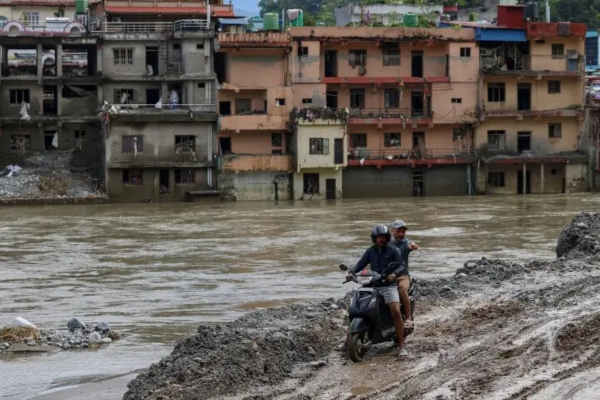
Nepal has estimated that rebuilding communities and infrastructure destroyed by last month’s devastating glacial floods will cost about $4.78 billion, as the government seeks sustained international assistance.
The August 26 disaster began with a tsunami-like flood along the China-Nepal border. Authorities say more than 1,400 people have died, while thousands remain missing.
Foreign Secretary Amrit Bahadur Rai said Prime Minister Balendra Shah is expected to highlight the disaster and its links to climate change when he addresses the United Nations General Assembly later this month.
Foreign ministry spokesman Lok Bahadur Chhetri said about $57.67 million would be needed for immediate recovery over the next six months, while roughly $4.71 billion would be required for long-term reconstruction.
Nepal contributes only a small share of global greenhouse gas emissions but remains highly vulnerable to climate-related disasters. Scientists have warned that rising temperatures are accelerating glacier melt across the Himalayas.
Chhetri said the government was conducting a comprehensive post-disaster assessment to determine the full scale of the destruction and resources required.
A preliminary United Nations assessment put damage to buildings at about $158 million, but warned that the overall economic losses would be much higher after roads, bridges, farmland and humanitarian infrastructure are assessed.
Rescue operations are still continuing, particularly in areas where hydropower tunnels were buried by mud. Hundreds of workers remain missing, although several people were rescued from tunnels days after the disaster.
Nepal’s disaster agency said rescuers had recovered 1,385 bodies, with about 5,130 people still missing. In neighbouring China, authorities reported 43 deaths and 519 missing people.
The combined toll stood at about 1,428 deaths, while more than 5,649 people remained missing, including hundreds of foreigners.
The UN has launched a $50 million emergency appeal to assist more than 84,000 people affected by the disaster as rescue operations gradually shift towards relief and recovery.
The enormous reconstruction estimate is expected to strengthen Nepal’s appeal for international support, with Shah’s upcoming UN address likely to focus attention on the growing climate risks facing vulnerable Himalayan communities.