
























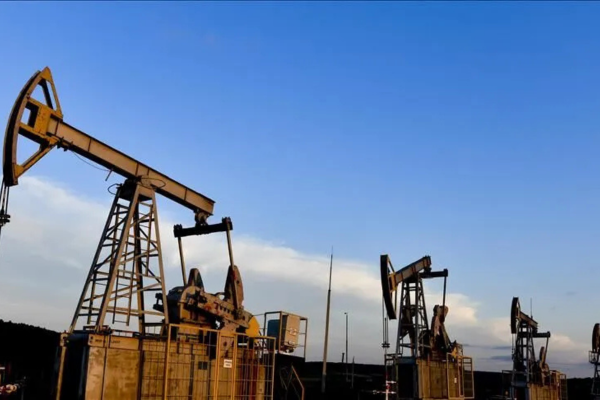
Global oil prices have surged above $100 a barrel as growing tensions in the Middle East raise fears of major disruptions to energy supplies.
Both major crude benchmarks gained more than three per cent on Monday, extending their rise above the $100 mark.
The latest rally followed Saudi Arabia’s closure of a key East-West pipeline after drone attacks linked to Yemen’s Houthi rebels.
Concerns also mounted after reports that a merchant vessel was struck in the Strait of Hormuz, one of the world’s most important oil-shipping routes.
The Houthis have also increased their presence around the Bab Al-Mandab Strait, another strategic maritime corridor connecting Europe and Asia.
The Strait of Hormuz is particularly critical because a significant portion of global seaborne oil shipments passes through the waterway.
Oman further heightened uncertainty by announcing the postponement of talks involving Iran and Gulf states over the future of the strategic waterway.
The developments have intensified concerns about prolonged supply disruptions and their impact on global energy markets.
Higher oil prices are also raising fresh inflation fears, with fuel and transportation costs expected to increase for consumers and businesses.
In the United States, average diesel prices reportedly exceeded $6 per gallon on Friday for the first time.
Rising energy costs could make it harder for central banks to bring inflation back to their targets.
Financial markets are also watching the US Federal Reserve closely, with investors expecting another interest-rate increase.
Recent inflation data has kept pressure on the central bank, as price growth remains above its two per cent target.
Analysts warned that higher interest rates, elevated bond yields and expensive oil could create additional pressure across financial markets.
Technology stocks were also hit as investors weighed concerns about the pace and risks surrounding artificial intelligence development.
Anthropic CEO Dario Amodei has called for AI companies to slow the development of increasingly advanced systems until potential risks are better understood.
OpenAI CEO Sam Altman and xAI founder Elon Musk have expressed support for greater caution over AI development.
The concerns contributed to losses among major Asian technology companies, including SoftBank, Kioxia and Advantest.
South Korea’s SK hynix and Samsung also declined, while Taiwan Semiconductor Manufacturing Company came under pressure.
South Korea’s Kospi index fell more than three per cent, leading losses across several regional markets.
European markets were mixed, with London gaining while Paris and Frankfurt moved lower.
Analysts said technology stocks could remain vulnerable if high oil prices combine with rising borrowing costs.
However, they stressed that the current selloff does not necessarily signal a collapse in AI demand.
More serious warning signs would include significant cuts in technology investment, cancelled data-centre projects and weaker orders for chips and memory products.
For now, investors are focused on developments in the Middle East, the Federal Reserve’s next policy decision and the wider economic impact of sustained oil prices above $100 a barrel.