







Wike-backed PDP elects new NWC
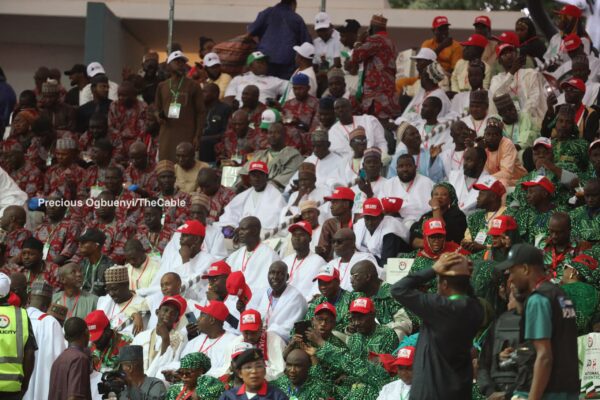
In a significant development for Nigeria’s main opposition party, the Wike backed PDP elects new NWC at its 2026 national convention held on Sunday, March 29, 2026, at the velodrome of the Moshood Abiola National Stadium in Abuja.
Abdulrahman Mohammed and Senator Samuel Anyanwu were returned as substantive National Chairman and National Secretary, respectively, through a consensus arrangement that drew over 2,500 delegates from across the country signalling a calculated show of unity by the faction loyal to FCT Minister Nyesom Wike.
What Happened at the PDP 2026 National Convention
The convention opened with a motion by Senator Natasha Akpoti Uduaghan, representing Kogi Central, to formally dissolve the party’s national caretaker committee.
This cleared the path for the emergence of a substantive leadership.
The motion was seconded and passed unanimously, after which the Wike backed PDP elects new NWC comprising 21 officers in total, including Mohammed and Anyanwu, who were returned unopposed via consensus.
The motion for the re election of the national officers was moved by House of Representatives Minority Leader, Kingsley Chinda, and received the unanimous approval of delegates present.
Other key positions filled include Aaron Chukwuemeka as Deputy National Chairman (South) and Yusufu Akirikwen as Deputy National Chairman (North).
Ogunshe Adedayo was appointed National Women Leader, and Hauwa Shinge as Deputy National Women Leader.
All NWC members were immediately sworn into office upon the conclusion of the exercise.
Several prominent party stalwarts were in attendance, including former Jigawa State Governor Sule Lamido, former Senate President Bukola Saraki, and former Kaduna State Governor Ahmed Makarfi their presence lending visible legitimacy to the event.
Background: The PDP Crisis That Led Here
The convention did not happen in isolation.
The PDP has been mired in a debilitating internal crisis since late 2025, which resulted in the party splitting into two rival factions.
One faction, led by Tanimu Turaki and backed by Bauchi State Governor Bala Mohammed and Oyo State Governor Seyi Makinde, held a parallel national convention in Ibadan in November 2025, where Turaki and others were elected to a rival National Working Committee.
In response, the Wike backed PDP elects new NWC structure was first formed through a 13 member National Caretaker Working Committee in December 2025, with Mohammed as Acting National Chairman and Anyanwu as Acting National Secretary, pending a formal convention.
That formal convention finally took place on March 29, 2026.
Crucially, on March 9, 2026, the Court of Appeal in Abuja upheld a Federal High Court judgment that declared the Ibadan convention null and void, ruling that the processes leading to it violated the Electoral Act, the Nigerian Constitution, and the PDP Constitution.
This legal victory significantly strengthened the hand of the Wike-backed faction ahead of Sunday’s event.
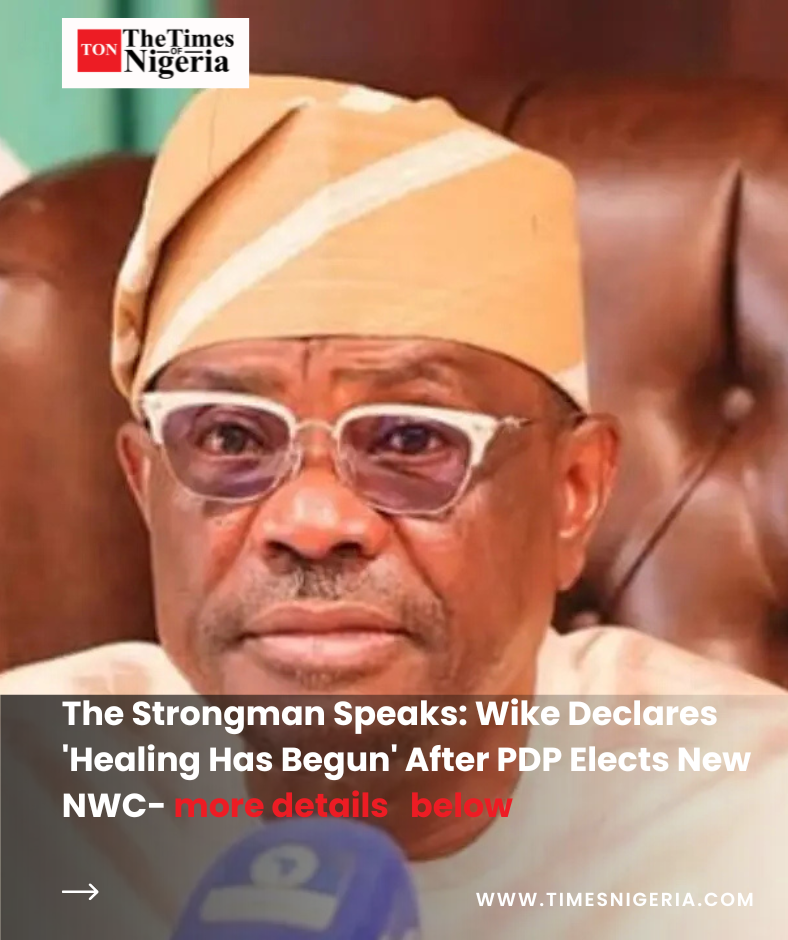
Wike Declares: “Healing Has Begun”
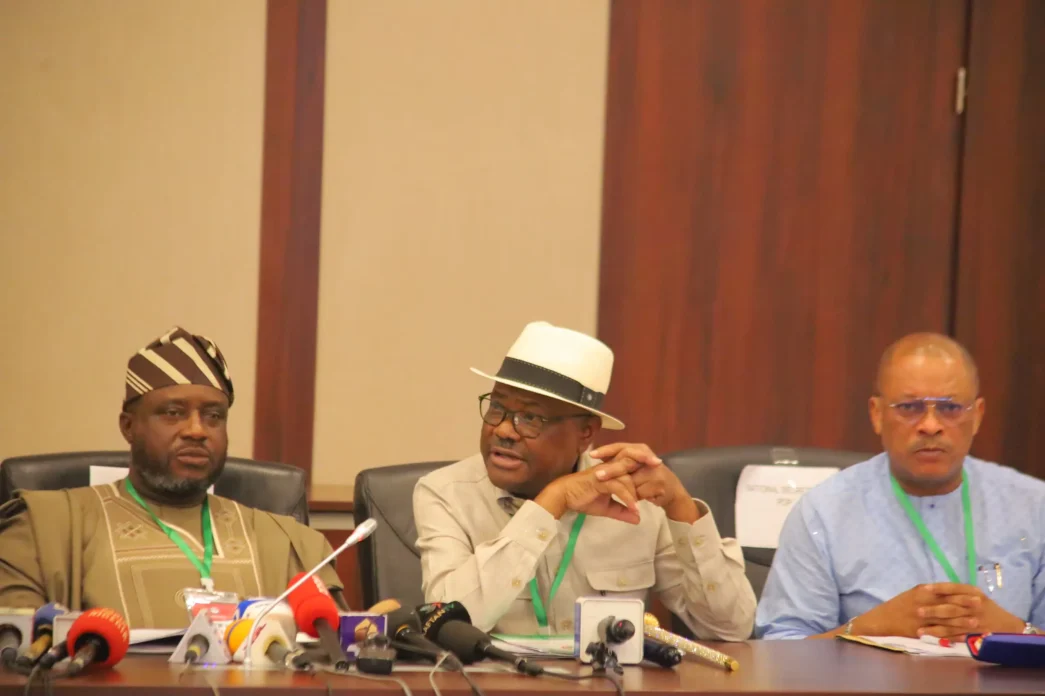
Addressing delegates at the convention, Nyesom Wike, identified by party members as the national leader of the faction, struck an optimistic but assertive tone.
He urged party members to recommit to rebuilding the PDP, stressing that leadership demands responsibility and dedication.
He expressed full confidence that the party would field candidates in the 2027 general elections and reclaim its mandate from those who defected to rival parties.
“The healing in the PDP has begun,” Wike declared, a statement that encapsulated the mood of a convention determined to project unity despite the party’s well-documented fractures.
Former Senate President Bukola Saraki echoed this confidence, asserting that the PDP remains vibrant and resilient.
Former Jigawa Governor Sule Lamido used the platform to appeal to aggrieved members to return to the party fold, saying:
“We are willing to forgive everyone.”
He also praised Wike for his continued loyalty, adding that those who predicted the party’s collapse had since “negotiated their way out.”
Reactions and Political Significance
The emergence of a substantive NWC through the Wike backed convention marks a turning point in the protracted battle for control of one of Nigeria’s oldest political parties.
By holding a convention backed by legal precedent given the court’s nullification of the Ibadan convention the faction has positioned itself as the more constitutionally grounded leadership of the PDP.
In his acceptance speech, newly elected National Chairman Abdulrahman Mohammed pledged not to disappoint the party faithful, signalling his awareness of the weight of expectation placed on the new NWC as the party prepares for the critical 2027 electoral cycle.
The Turaki led faction, however, has not conceded. Its members have vowed to pursue legal remedies, stating that they will “review the party’s constitution, the Electoral Act, and the Constitution of the Federal Republic of Nigeria” and take steps to protect what they describe as their members’ legal platform for electoral contests.
The PDP’s national secretariat at Wadata Plaza in Abuja also remains sealed by police, with litigation still pending over its control.
What Comes Next for the PDP
With the Wike-backed PDP elects new NWC process now formalised and its officers sworn in, attention turns to what the party does with this moment.
The new NWC is expected to focus immediately on party mobilisation, reconciliation outreach to estranged members, and strategic positioning ahead of the 2027 general elections.
Former Abia Governor and Convention Planning Committee Chairman, Okezie Ikpeazu, noted at the event that the party’s “door of reconciliation” remains open a phrase that suggests the Wike backed leadership is not entirely closing the door on the rival faction, even as it consolidates control.
The PDP’s ability to present a united front before 2027 will depend heavily on whether ongoing judicial proceedings resolve in favour of one faction, and whether a negotiated merger of the two sides remains possible. For now, the Wike backed PDP elects new NWC and moves forward emboldened by a court validated legal position, high profile endorsements, and a convention that project discipline over division.
As Nigeria’s political landscape continues to shift ahead of 2027, the developments within the PDP will remain closely watched by observers, opposition supporters, and ruling party strategists alike.
Whether this convention marks the beginning of a genuine PDP resurgence or the deepening of an unresolvable split remains the defining question of Nigeria’s opposition politics.