























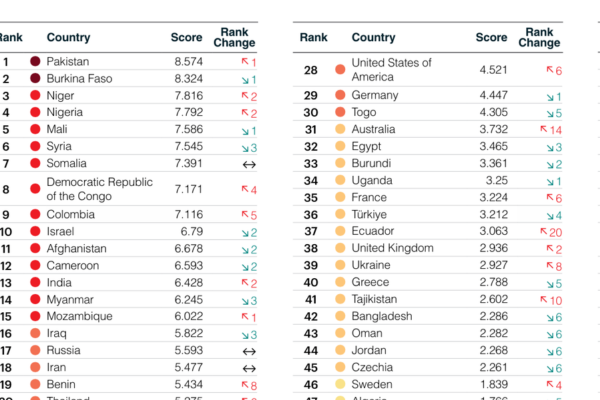
Global Terrorism Index ranking has come under renewed focus after the country was placed fourth in the latest global assessment, alongside reports of a sharp increase in terrorism-related deaths.
The new report paints a troubling picture of Nigeria’s security situation, especially as the country continues to battle insurgency, banditry, armed attacks and other forms of violent extremism. Being ranked among the most affected countries in the world highlights the seriousness of the threat and the human cost that comes with it.
What makes the report even more alarming is the scale of the increase in deaths, suggesting that insecurity remains a major challenge despite ongoing efforts by security agencies and government authorities.
Global Terrorism Index Shows Worsening Security Concerns
The latest findings suggest that Nigeria remains one of the countries most heavily impacted by terrorism. A fourth-place global ranking is a major concern on its own, but the rise in fatalities has made the situation even more disturbing.
The Global Terrorism Index result reflects not just the number of attacks, but also the broader effect of terrorism on communities, stability and national development. Beyond the statistics are lives lost, families displaced and communities forced to live under constant fear.
Over the years, Nigeria has faced repeated attacks from extremist groups, especially in parts of the North-East, while other regions have also experienced deadly violence linked to armed groups and criminal networks.
Rising Death Toll Raises Fresh Alarm
The increase in terrorism-related deaths is likely to deepen public concern over the country’s security response. Many Nigerians have continued to demand stronger action, better intelligence gathering and more effective protection for vulnerable communities.
That the Global Terrorism Index now reflects one of the largest increases in deaths suggests that the security challenge is not only persisting but evolving in dangerous ways.
For many observers, the report is a reminder that terrorism cannot be measured only by attack numbers. Its real impact is felt in destroyed livelihoods, disrupted education, weakened local economies and the growing humanitarian burden placed on affected areas.
Why the Report Matters
The Global Terrorism Index ranking has implications far beyond security headlines. It affects investor confidence, international perception, public morale and the urgency of policy decisions. A country facing sustained terrorist violence must also deal with its long-term impact on growth and national stability.
The report is therefore not just a warning sign but a call for serious reflection on how to better confront insecurity through stronger coordination, preventive measures and support for communities most at risk.
For more on global terrorism trends and conflict analysis, readers can explore the Vision of Humanity platform.
Final Note
The latest Global Terrorism Index report reinforces the scale of the security crisis facing the country. With Nigeria ranked fourth globally and deaths rising sharply, the findings underline the need for stronger and more urgent responses to terrorism and violent extremism.