























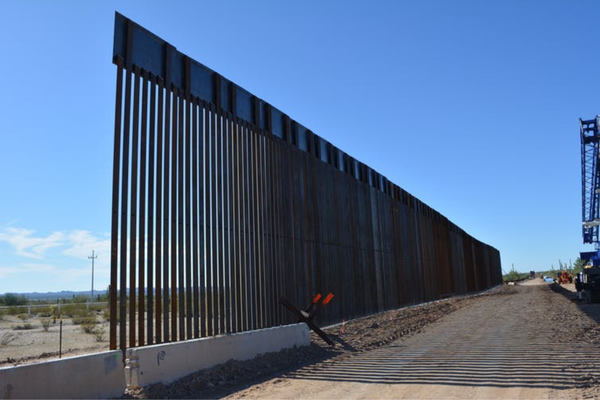
The Trump administration has continued construction of a border wall along part of the Tohono O’odham Nation’s reservation in southern Arizona, despite strong opposition from the Native American tribe.
The tribe alleges that federal contractors entered its territory without permission and are trespassing on sacred land.
U.S. Customs and Border Protection (CBP) says the project is necessary to tackle illegal immigration, drug trafficking and other criminal activities in the area.
The agency describes the region as one of the most dangerous smuggling corridors along the U.S.-Mexico border.
The dispute is part of the administration’s wider $46 billion border security programme, which includes 30-foot steel bollard walls, vehicle barriers and surveillance systems.
The Tohono O’odham Nation, which has about 37,000 members, said about 20 CBP officers and contractors entered tribal land early Tuesday to begin construction-related activities.
The tribe said contractors used drill trucks at three locations to conduct soil sampling and other work.
Tribal officials also released drone footage showing about 14 vehicles and an industrial drill at one of the sites.
According to the tribe, CBP officers arrived armed and masked and blocked tribal police from removing the contractors.
No physical confrontation had been reported at the time.
The tribe had previously erected “No Trespassing” signs in protest against the planned construction.
The Tohono O’odham Nation filed a lawsuit against the federal government in June, seeking to stop the project.
It argued that construction could cause significant damage to sacred mountains and other culturally important areas.
Earlier this month, U.S. District Judge Richard Leon ruled against the tribe and allowed the government to proceed with construction.
The judge noted that the planned wall would be located within the Roosevelt Reservation, a 60-foot-wide strip of federally owned land along the border.
The tribe, however, insists that the court ruling does not settle the trespassing dispute.
It argues that federal contractors still cross tribal land to reach construction sites, which it considers an unlawful entry.
CBP Commissioner Rodney Scott defended the project, saying it would help shut down a major corridor used by drug cartels and migrant smugglers.
The construction is being undertaken by SLSCO Ltd., a Texas-based company that has received more than $390 million in Department of Homeland Security funding for border wall projects since 2023.
Tribal officials said they are considering additional legal action to remove the contractors from their territory.
The dispute is part of wider opposition to the Trump administration’s border wall projects from Indigenous communities, landowners and environmental groups.
For the Tohono O’odham Nation, the controversy goes beyond border security.
The tribe says the wall cuts through its ancestral homeland and threatens its cultural heritage, property rights and sovereignty.
As construction continues and the legal battle unfolds, the dispute is raising broader questions about the limits of federal authority and the protection of tribal sovereignty in the United States.