





















Kaduna wedding attack
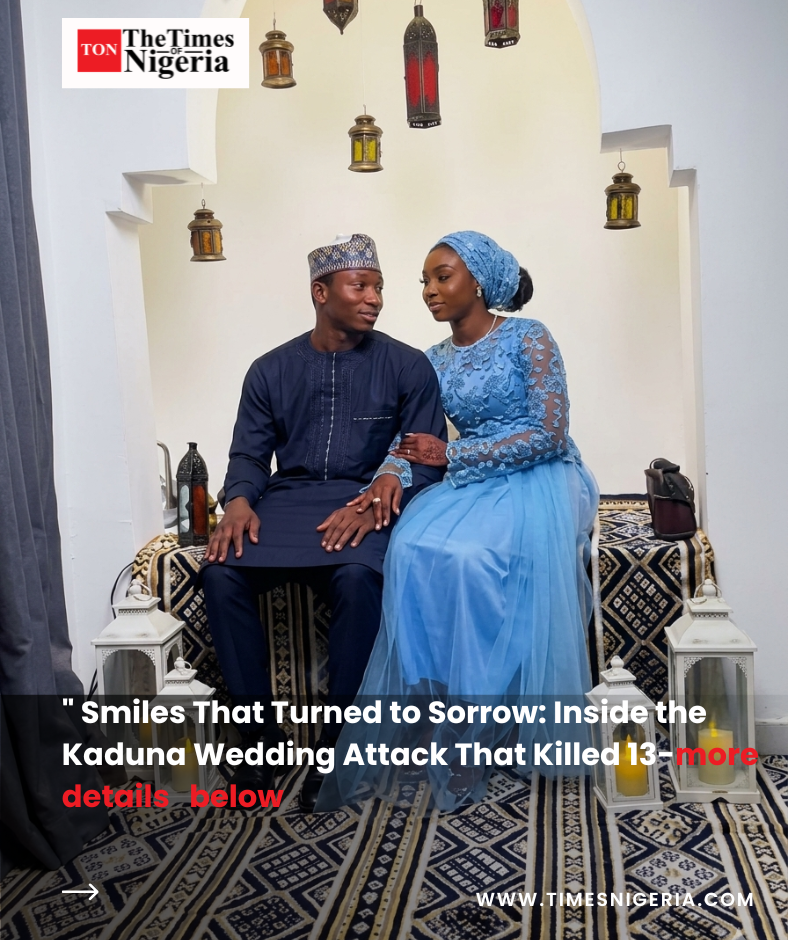
A joyous occasion turned into a scene of horror on Sunday night as armed bandits invaded a wedding ceremony in Kahir village, Kagarko Local Government Area of Kaduna State, killing 13 guests and abducting several others. The Kaduna wedding attack, which occurred at approximately 11:47 pm, has plunged the community into deep mourning and reignited urgent calls for improved security across the state.
What Happened During the Kaduna Wedding Attack
According to eyewitnesses, a large group of heavily armed bandits, carrying AK 47 rifles, stormed the wedding venue and opened fire indiscriminately inside the hall.
The attack was swift, calculated, and carried out under the cover of darkness, giving guests little time to flee.
The Kaduna wedding attack sent shockwaves through the entire community as panicked residents ran into surrounding bushes to escape the sporadic gunfire echoing through the night.
The violence unfolded without warning in what should have been a night of celebration for families and friends gathered to mark a joyous union.
The attackers reportedly moved through the venue with lethal intent before fleeing the area after carrying out the raid.
Casualties and Damage
At least 13 people were confirmed dead as a direct result of the Kaduna wedding attack.
A community resident, Shehu Bala, who confirmed the incident to reporters, identified several of the deceased, including Bako Danjuma, Williams Luka, Peter Williams, Joseph Yakubu, Victor Peter, and John Dan Asabe, among others.
In addition to the fatalities, numerous guests sustained gunshot injuries.
Most of the wounded were rushed to Kagarko General Hospital, while at least two individuals with severe injuries were transferred to Kaduna for specialized medical treatment.
An unspecified number of wedding guests were also abducted by the bandits during the chaos, further compounding the tragedy of the Kaduna wedding attack.
Eyewitness Accounts
Shehu Bala, a resident with close ties to the victims, expressed his anguish to journalists.
“I have two friends who were inside the hall and sustained bullet injuries,” he said. ”
It is difficult to know the exact number of those kidnapped because of the heavy shooting.”
The heavy and sustained gunfire caused widespread panic in Kahir village, with many residents fleeing into the bush to escape.
Community members described scenes of terror as armed men moved through the celebration, firing at guests.
The full human toll of the Kaduna wedding attack remained difficult to immediately assess due to the chaos of the night.
Authorities’ Response
A police source at the Kagarko divisional headquarters confirmed the incident, noting that authorities were still working to determine the exact number of people abducted.
The Kaduna State Police Command spokesperson, DSP Hassan Mansur, also verified the attack and stated that a comprehensive report would be issued once full details are obtained.
In a show of solidarity, Kaduna State’s Deputy Governor, Dr. Hadiza Sabuwa Balarabe, and Senator Sani Musa visited the injured victims receiving treatment at the hospital in Kagarko.
Their visit underscored the gravity of the Kaduna wedding attack and the government’s acknowledgment of the community’s pain, though residents and observers continue to demand more decisive action.
Broader Safety Concerns
The Kaduna wedding attack is not an isolated incident.
It adds to a deeply troubling pattern of banditry and armed violence that has plagued communities across Kagarko and the wider Kaduna State region.
Daily Trust had previously reported that several communities in Kagarko, including Janjala, have been subjected to repeated attacks.
Separately, fourteen people including a vigilante operative and his wife who were abducted three weeks prior to this latest incident, remain in captivity.
Southern Kaduna communities had also recently raised alarms about imminent threats from terrorists and armed gangs targeting Kachia, Chikun, and Kajuru Local Government Areas, warning that such threats had historically been followed by devastating attacks.
The persistence of these assaults on civilian gatherings churches, funerals, and now weddings reflects a security environment in which ordinary Nigerians can no longer feel safe in their most vulnerable and communal moments.
Conclusion
The Kaduna wedding attack that claimed 13 innocent lives on Sunday night is a grim reminder that the security crisis in Northwest Nigeria demands far more than periodic statements and hospital visits from officials.
As families grieve, investigators work to identify the abducted, and communities live in fear, pressure is mounting on state and federal authorities to deploy meaningful, sustained security measures to protect vulnerable rural communities.
The people of Kahir village and countless others across Kaduna State deserve nothing less than the full protection of the Nigerian state.