


















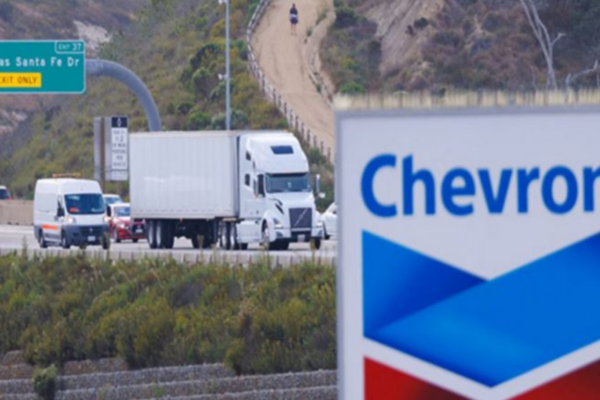
US oil giant Chevron is set to invest more than $7 billion in Venezuela over the next five years following a major oil agreement announced by President Donald Trump.
Chevron, the only major US oil company still operating in Venezuela, said it has been awarded additional acreage in the oil-rich Orinoco Belt.The company plans to more than double its current production in the country to about 600,000 barrels per day.
Chevron CEO Mike Wirth said the expanded operations reflected the company’s confidence in Venezuela’s long-term oil potential.“Chevron’s history in Venezuela spans more than a century, and our expanded position reflects our confidence in the country’s deep resource potential.”
Venezuela has the world’s largest proven crude oil reserves, estimated at more than 303 billion barrels, according to OPEC’s 2025 Annual Statistical Bulletin.
That figure is significantly higher than Saudi Arabia’s 267 billion barrels.However, Venezuela’s oil production remains far below its potential because of deteriorating infrastructure and international sanctions.
The country currently produces just over one million barrels of oil per day, compared with about 10 to 11 million barrels from Saudi Arabia and nearly 14 million barrels from the United States.US Energy Secretary Chris Wright attended a signing ceremony in Caracas on Wednesday, where Chevron, Italian energy company Eni and other firms formalised agreements with the Venezuelan government.
“President Trump’s mission in Venezuela is straightforward. The mission is to bring peace, freedom, opportunity and prosperity to the people of Venezuela,” Wright said.
He said the agreements could attract tens of billions of dollars in investment and create thousands of jobs.The White House also confirmed that it is partnering with North American Blue Energy Partners (NABEP) as part of Trump’s effort to restore US access to Venezuela’s oil industry.
However, the agreement has faced criticism from energy experts who warn that rebuilding Venezuela’s neglected oil sector could take years.Questions have also been raised about whether acting President Delcy Rodríguez has the constitutional authority to grant NABEP 100-year rights over 17 oil fields containing an estimated 65 billion barrels of reserves.
Ian Vásquez, vice president for international studies at the Cato Institute, questioned the legitimacy of the arrangement.He noted that Venezuela’s constitution requires approval from the National Assembly for such agreements.
“The deal lacks legitimacy since it was agreed to with a dictatorship that has clung to power for decades through violence and by committing what was probably the largest electoral fraud in Latin American history in 2024,” Vásquez said.Although Venezuela’s ruling-party-controlled National Assembly expressed support for the agreement, lawmakers did not formally debate or vote to approve it.
Wright dismissed the criticism, arguing that the deal would benefit both Venezuela and the United States.He said the agreement would bring capital, technology and investment to resources that are currently underground and largely undeveloped.
Trump has been pushing to reopen Venezuela’s oil sector to American businesses since the capture of former President Nicolás Maduro in January.The US president has also suggested that other major American oil companies could return to Venezuela.However, Exxon Mobil has rejected the idea.
Exxon CEO Darren Woods described Venezuela as “uninvestable” in January, while the company confirmed this week that its position remains unchanged.US oil companies remain wary because of Venezuela’s history of nationalising foreign-owned energy assets.The country nationalised its oil industry in 1976, creating the state-owned Petróleos de Venezuela S.A.
Another wave of nationalisation followed in 2007 under former President Hugo Chávez, when foreign companies were forced into state-controlled joint ventures.Chevron accepted the arrangement, while Exxon and ConocoPhillips refused and later had their Venezuelan assets confiscated.
Trump has claimed the new agreement could help lower gasoline prices in the United States.But energy analysts remain sceptical, pointing to the enormous investment required to repair Venezuela’s oil infrastructure.
Amy Jaffe, director of New York University’s Global Energy, Climate, and Sustainability Lab, said new facilities in the Orinoco region could take years to become operational.It could take 2 to 4 years to get new greenfield facilities online in the Orinoco region,” she said.US motorists are meanwhile facing higher fuel costs.
According to AAA, the national average price of regular gasoline rose overnight to $4.12 per gallon, representing a 93-cent increase from the same period last year.Chevron’s investment therefore represents a major bet on Venezuela’s vast but underdeveloped oil resources.
But legal disputes, political uncertainty and the country’s damaged infrastructure could determine how quickly the ambitious plans translate into higher production.With Exxon still staying out of Venezuela and US fuel prices rising, the full impact of Trump’s Venezuela oil strategy may take several years to become clear.