









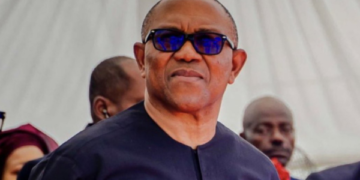











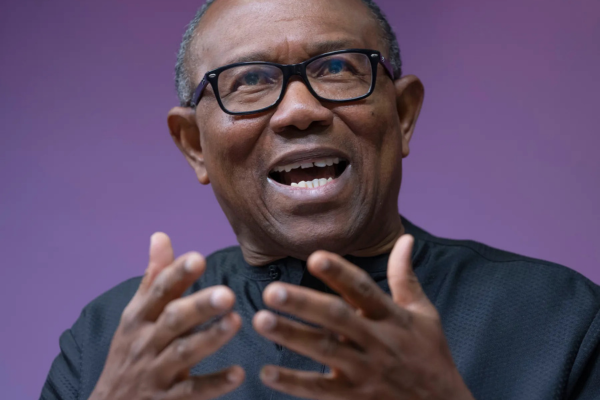
Minister of Works David Umahi has dismissed suggestions that former Labour Party presidential candidate Peter Obi is the South-East’s best option for Nigeria’s presidency.
Umahi argued that the region has several qualified individuals capable of contesting for the nation’s highest political office.
He made the remarks during an interview with ARISE News on Friday, October 23, 2026.
The former Ebonyi State governor said presidential aspirants seeking the South-East’s support should consult governors, political leaders and other influential stakeholders before making major political decisions.
Umahi criticised what he described as inadequate consultation by Obi ahead of his 2023 presidential bid.
He maintained that the South-East should not regard any individual politician as its only viable presidential candidate.
According to him, qualified aspirants from Ebonyi, Enugu, Abia, Imo and Anambra states should all be considered in discussions about the region’s political future.
The minister also stressed the importance of political negotiations and coalition-building, arguing that presidential candidates must secure support beyond their immediate constituencies.
Umahi defended South-East politicians who have aligned with President Bola Tinubu, saying their decisions should not automatically be interpreted as a betrayal of the region.
His comments come amid growing political discussions ahead of Nigeria’s 2027 general elections, with opposition alliances and regional interests expected to play significant roles.
Obi remains a prominent figure in opposition politics following his third-place finish in the 2023 presidential election.
His supporters point to his strong public following and electoral performance as evidence of his national appeal. However, critics question his political alliances and ability to build a sufficiently broad coalition to win the presidency.
Umahi’s position highlights divisions over the South-East’s political strategy, including whether the region should rally behind a popular candidate or negotiate broader alliances with established political parties.
As the 2027 elections approach, the debate over regional representation and the path to national power is expected to intensify.
Ultimately, the South-East’s political direction will depend on the decisions of its leaders, the strategies of competing parties and the choices of voters.