























Brent Oil Surges Past $100 as Middle East Conflict Deepens
Brent crude, the international benchmark for oil prices, has climbed above $100 a barrel as renewed fighting involving the United States, Iran and Yemen’s Houthi movement fuels fears of major disruptions to global energy supplies.
Brent reached its highest level since late July before easing to around $99.90 a barrel, as traders assessed the possibility of further military escalation across the Middle East.
The latest surge followed another round of attacks between Washington and Tehran. The United States reportedly struck five Iranian oil tankers after Iran targeted a US warship.
Four of the vessels were reportedly linked to Iran’s Islamic Revolutionary Guard Corps (IRGC) and were hit in the Gulf of Oman, while another was targeted near Kharg Island.
Iran later launched missiles at a US military base in Jordan, most of which were intercepted. Tehran also claimed attacks on US vessels and oil tankers in the Strait of Hormuz.
The developments have intensified concerns over the safety of the strategic waterway, through which about 20% of the world’s oil and liquefied natural gas supplies pass.
Before the latest conflict began on February 28, Brent crude was trading at about $70 a barrel, highlighting the sharp impact of the escalating tensions on global energy markets.
The oil market is also being pressured by attacks involving Yemen’s Iran-backed Houthi movement and Saudi Arabia.
The Houthis have targeted Saudi airports, oil facilities and tankers in the Red Sea, while Saudi Arabia has responded with military strikes.
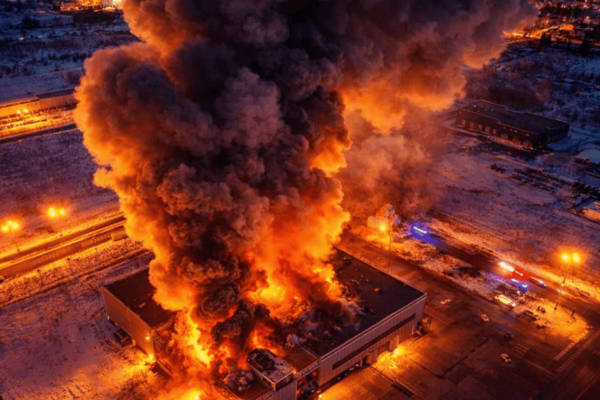
Saudi authorities said Tuesday’s Houthi attacks targeted civilian and economic sites in Abha, Khamis Mushait, Jazan and Najran, causing fires at energy facilities and temporarily disrupting operations.
The attacks reportedly injured 73 people, raising fresh concerns about the vulnerability of Saudi Arabia’s oil infrastructure.
Saudi Arabia is a major global oil producer, meaning prolonged attacks on its production or export facilities could have consequences for energy markets worldwide.
Attention has also turned to Iran’s Kharg Island, home to the country’s main oil-export terminal. About 90% of Iran’s crude exports reportedly pass through the facility.
US officials said the Iranian tankers targeted by American forces were part of a network allegedly used to finance the IRGC and its regional allies.
US Secretary of State Marco Rubio defended the strikes, warning that further Iranian attacks on US naval vessels could lead to additional action against Iranian tankers.
The latest escalation followed an Iranian Navy claim that it had seized an uncrewed US submarine in the Strait of Hormuz.
However, US Central Command disputed the claim, saying the underwater vehicle had malfunctioned more than a day earlier.
US Navy Captain Tim Hawkins said the drone was an older model being used to survey regional waters and did not contain sensitive classified equipment.
The renewed surge in crude prices is likely to increase pressure on fuel costs and businesses around the world.
Higher oil prices can raise the cost of petrol and other petroleum products, adding to inflation and increasing expenses for motorists and businesses.
Traders are now closely watching developments around the Strait of Hormuz and other major energy routes.
Any further attacks or disruption to oil infrastructure could push Brent crude well above $100 a barrel again.
For now, global energy markets remain on edge as the widening Middle East conflict threatens to increase oil-supply risks, market volatility and fuel costs worldwide.